
KILIMANJARO AND TREKKING | SUMMIT PREPARATION
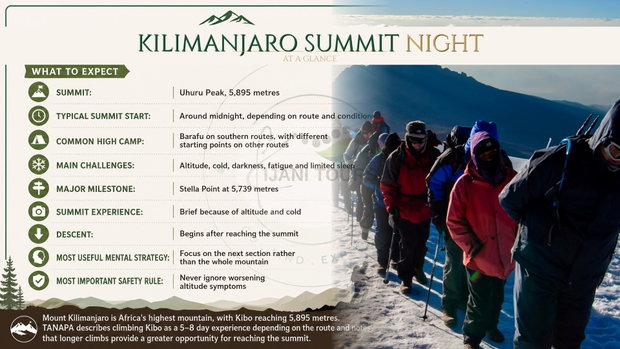
Kilimanjaro summit night is the final and most demanding stage of the journey to Uhuru Peak at 5,895 metres. After several days of trekking, climbers face darkness, cold, fatigue, limited sleep and reduced oxygen availability. The challenge is physical, but it is equally a test of patience, preparation and mental focus.
This guide explains what to expect from summit night, how to prepare your body and mind, why acclimatisation matters, what your guide is watching for, and how to recognise when altitude symptoms mean you should stop ascending. It also explores how choosing the right route, preparing your equipment and maintaining a steady pace can make the final ascent more manageable.
Most importantly, Kilimanjaro is not about forcing yourself to the summit at any cost. It is about making good decisions, taking the next step, and respecting the mountain.
When the darkness finally gives way to sunrise, Uhuru Peak is more than a destination. It is the result of every step that came before it.
Kilimanjaro Summit Night: How to Prepare Mentally and What to Expect
Kilimanjaro Summit Night: The Final Hours Before Uhuru Peak
At midnight, the mountain disappears. Your headlamp becomes your horizon.
Kilimanjaro summit night is the final and most demanding stage of the journey to Uhuru Peak at 5,895 metres. Starting around midnight, climbers face several hours of darkness, cold, fatigue, limited sleep and reduced oxygen availability. The challenge is physical, but it is also deeply mental.
The key to managing summit night is not trying to conquer the entire mountain at once. It is learning to focus on the next step, the next rest point and the next section of trail. A slow and consistent pace, good acclimatisation, proper preparation and trust in your guide are more valuable than rushing to prove your strength.
Preparation begins before the trek. Choose an itinerary that allows sufficient time for acclimatisation, train for long days of walking, prepare your summit clothing and equipment in advance, and understand the symptoms of altitude sickness. Most importantly, know the difference between normal fatigue and signs that require you to stop ascending.
Reaching Stella Point at 5,739 metres is a major milestone, but the final walk to Uhuru Peak still demands patience. When the sun finally rises over the Tanzanian landscape, and you reach the summit, the achievement is not simply standing at Africa's highest point. It is knowing that you managed thousands of small decisions and steps to get there.

Share This Page