
15 Days From Tarangire to the Northern Serengeti Migration.
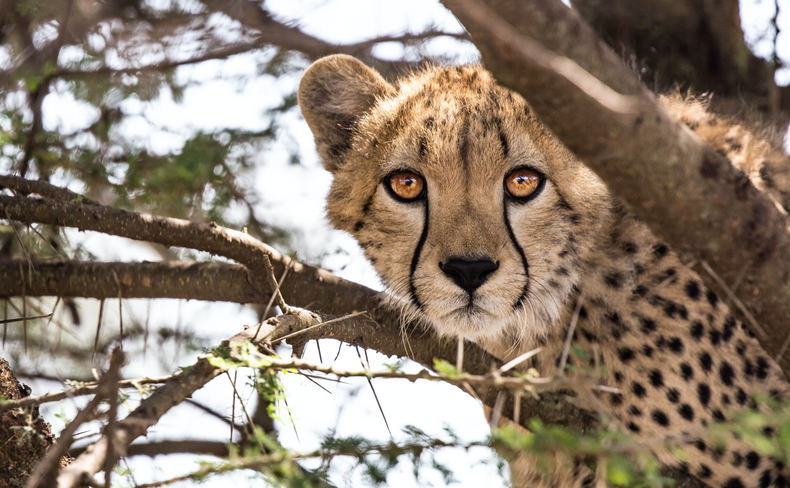
Over 15 days, you travel through Tarangire, Ngorongoro, Empakaai Crater, Lake Natron and the northern Serengeti migration with Tanzanian-owned Kijani Tours, trading a checklist of sightings for time to understand how Tanzania's people, water and wildlife actually connect, with several unhurried days in the Mara River region.
This is a private, 15-day journey across northern Tanzania built around a different question than most itineraries ask. Instead of chasing a checklist of species, it follows how people, water, wildlife, and conservation actually connect across seven landscapes: Arusha's forest, Tarangire's elephant country, Lake Manyara's rift-valley wetlands, the Hadzabe and Datoga communities of Lake Eyasi, the geological bowl of Ngorongoro Crater, the volcanic extremes of Lake Natron, and the migration corridor of the northern Serengeti.
The itinerary allocates four or more nights to the northern Serengeti specifically because a Mara River crossing can't be scheduled: guests get the Kijani Migration Watch, where each morning's plan is built around actual herd movement, plus a dedicated Slow Safari day with no fixed sightings to chase. Community time at Lake Eyasi, Lake Natron and with a Maasai community is coordinated locally, built around conversation rather than performance. It is a private departure for 2–6 guests, moderate in physical demand, available at Comfort, Premium or Luxury accommodation levels, and suited to travelers who would rather spend fourteen days understanding a place than rushing through it.
Itinerary
Day 1
Arrive in Tanzania: Meet Your Guide, Begin the JourneyYour Kijani guide meets you at Kilimanjaro International Airport and transfers you to Arusha.
We deliberately keep your first day light. After a long international flight, there is little value in rushing straight into a dawn game drive. Instead, you settle in, rest, and prepare for the journey ahead.
Later, meet your guide for a personal safari briefing. You discuss the route, seasonal wildlife conditions, community etiquette, photography, packing, and, most importantly, what you want to understand from Tanzania.
Are you interested in wildlife behavior? Birds? Photography? Culture? Conservation? Landscape and geology? Your guide uses this conversation to shape the experience around you.
Living Landscape Question: What do you want to learn from Tanzania?
Overnight: Arusha · Meals: Dinner
Day 2
Arusha National Park: Learning to Read a ForestYour first day in the wild begins in Arusha National Park. Rather than rushing from one sighting to another, you are introduced to the Kijani way of observing landscapes.
Depending on conditions, the day may include a guided walk with an armed ranger, giving you the chance to experience the ecosystem on foot. You learn to look for tracks, calls, feeding signs, and changes in vegetation. The forest becomes your first classroom.
Living Landscape Question: How does a forest reveal the animals that live within it?
Overnight: Arusha · Meals: Breakfast, lunch and dinner
Day 3
Tarangire: The Landscape of Water and ElephantsToday you enter Tarangire National Park. Tarangire is famous for elephants, but the deeper story is water. During the dry season, the Tarangire River and other permanent water sources become important to wildlife moving through the ecosystem.
Your guide encourages you to slow down around elephant herds. Watch how individuals communicate. Observe the matriarch. Look at the younger animals. Notice how the herd responds when another group approaches. The goal is not simply to photograph an elephant. It is to understand elephant society.
Living Landscape Question: How does water influence wildlife behavior and movement?
Overnight: Tarangire · Meals: Breakfast, lunch and dinner
Day 4
Lake Manyara: Forest, Wetland and Rift ValleyTravel toward Lake Manyara National Park, where the landscape changes again. Within a relatively compact area, you encounter groundwater forest, open woodland, wetlands, and the Rift Valley escarpment.
This is an ideal day to practice looking beyond individual animals. Your guide explains the relationship among habitat, water, and wildlife. Birders can slow the day down to appreciate the park's diverse birdlife, while travelers interested in photography can work with changing light and contrasting habitats. The Manyara treetop walkway can be added where appropriate.
Living Landscape Question: How can a single landscape contain several completely different ecosystems?
Overnight: Karatu · Meals: Breakfast, lunch and dinner
Day 5
Lake Eyasi: Living KnowledgeToday, the safari changes character. You travel toward Lake Eyasi and spend time with two communities whose relationships with the landscape are very different: the Hadzabe and the Datoga.
The experience is designed around learning rather than performance. With local coordination and your guide, you may begin early with Hadzabe community members to observe traditional tracking, hunting knowledge, fire-making, and gathering practices. Later, you visit a Datoga homestead to learn about traditional metalworking and pastoral life. The relationship between these communities becomes particularly interesting through the exchange of goods and skills.
Photography is permission-based. Your guide helps foster conversation rather than turning the encounter into a photo opportunity. Community fees and cultural activity fees are included in your safari price and are paid locally in accordance with the established system.
Traditional ecological knowledge is not simply information about nature. It is knowledge developed through generations of living within a landscape.
Living Landscape Question: What can traditional knowledge teach us about living from a landscape?
Overnight: Karatu · Meals: Breakfast, lunch and dinner
Day 6
Ngorongoro Crater: A World Created by GeologyDescend into the Ngorongoro Crater early in the morning. The crater is more than a wildlife destination. It is a geological system that has produced one of Africa's densest concentrations of large mammals and predators within a single, self-contained bowl.
Look for lion, elephant, buffalo, hippo, hyena, flamingo, and, with luck, black rhino. But your guide will also help you look beyond the animals. Where does the water come from? Why does Lerai Forest exist? Why are some species rarely found on the crater floor? How does pastoralism fit into the wider Ngorongoro Conservation Area?
This is one of the places where the relationship between people and protected landscapes becomes impossible to ignore.
Living Landscape Question: What happens when geology creates an ecosystem within another ecosystem?
Overnight: Ngorongoro Highlands · Meals: Breakfast, lunch and dinner
Day 7
Empakaai Crater: The One Before the Famous OneToday you leave the Ngorongoro Crater floor behind for a smaller, quieter caldera 40 kilometers north. Empakaai shares the same volcanic highlands as Ngorongoro, Olmoti and Ol Doinyo Lengai, the same rift system, a different chapter, and one most visitors to northern Tanzania never see.
The descent runs through dense montane forest, strangler figs, blue monkeys moving through the canopy, and the occasional buffalo or bushbuck. Where Ngorongoro's crater floor is grassland you drive across, Empakaai's is a lake you walk down to, ringed by forested walls nearly 300 meters high. Flamingos work the shallows below.
From the rim, on a clear day, the view opens east across the Rift to Ol Doinyo Lengai — the volcano waiting for you in two days. Some days, on the clearest mornings, Lake Natron itself is visible beyond it.
Empakaai, Ngorongoro, Natron and Ol Doinyo Lengai all belong to the same volcanic system. What looks like four separate stops on a map is really one landscape, seen from four different angles.
Living Landscape Question: What does a landscape look like before it becomes famous?
Overnight: Ngorongoro highlands (return) · Meals: Breakfast, lunch and dinner
Day 8
Lake Natron: Water, Salt and VolcanoesToday you leave the familiar northern safari circuit and travel toward Lake Natron. The landscape becomes increasingly dramatic as you enter the Rift Valley.
Lake Natron is a place of extremes. Water, salt, volcanic geology and wildlife come together in a landscape that can appear almost hostile. Yet, it's the primary breeding ground for East Africa's lesser flamingos, among the harshest nurseries any bird chooses on the continent.
This is where we introduce one of the signature experiences of the journey: The Water and Fire of Natron — Fire: Ol Doinyo Lengai. Freshwater: Ngare Sero. Saltwater: Lake Natron. Your guide explains how geology and water create radically different environments within the same landscape.
Living Landscape Question: How can life thrive in an environment that appears almost impossible?
Overnight: Lake Natron · Meals: Breakfast, lunch and dinner
Day 9
Ngare Sero and Maasai Community: Conservation as a Living SystemBegin in the Ngare Sero area, where freshwater creates an oasis in the dry Rift Valley landscape. A guided gorge walk lets you experience the environment on foot.
Later, spend time with a Maasai community. This is not a staged cultural performance. Instead, the emphasis is on conversation. Discuss livestock, water, education, changing livelihoods, conservation, the future of young people, and the pressures and opportunities facing communities living alongside wildlife.
Lake Natron is managed differently from a national park. Its Wildlife Management Area model offers insight into how communities can participate directly in conservation and tourism management. Your visit contributes through the applicable local fees and community arrangements.
Living Landscape Question: What does conservation look like when people live within the ecosystem?
Overnight: Lake Natron · Meals: Breakfast, lunch and dinner
Day 10
Into the Northern Serengeti: Entering Through Klein's GateToday marks the transition from community landscapes into the great wilderness of the Serengeti. The route heads north toward Klein's Gate rather than following the conventional southern approach.
The drive is substantial, and road conditions can affect timing, but the reward is a more logical route into the northern Serengeti. As you enter the ecosystem, the landscape begins to open. Your guide starts reading signs of the migration. Tracks. Dung. Grazing pressure. Bird activity. Predator movement. Distant herds.
Tonight, you sleep in the northern Serengeti. The migration is now the focus.
Living Landscape Question: What makes millions of animals move?
Overnight: Northern Serengeti · Meals: Breakfast, lunch and dinner
Day 11
Northern Serengeti: The Migration WatchToday there is no fixed wildlife checklist. Instead, you begin the Kijani Migration Watch. Each morning, your guide assesses recent herd movements, environmental conditions, and reports from the surrounding area. You then decide where to explore.
The objective is not to chase every radio call. It is to understand the movement. You may find wildebeest gathering near the Mara River. You may encounter herds moving across open plains. You may also find predators following them. Or you may spend hours watching the landscape with no crossing at all. All of these are part of the migration.
The Kijani Principle: We cannot control where the migration will be. We can control how much time we give ourselves to understand it.
Living Landscape Question: What makes millions of animals move?
Overnight: Northern Serengeti · Meals: Breakfast, lunch and dinner
Day 12
Northern Serengeti: Follow the HerdsAnother full day in the migration zone. This extra time is deliberate. The Great Migration is not a scheduled performance. Herds can gather at a river, hesitate, cross, turn back, or move elsewhere entirely.
Four or more nights in the region, depending on the final routing, give your guide time to respond to changing conditions rather than treating the river crossing as a one-day gamble.
Today can also be tailored to your interests. Photographers can prioritize light and positioning. Birders can slow down around specialist habitats. Wildlife enthusiasts can focus on predator-prey behavior. Travelers seeking a quieter experience can choose a slower game drive.
Living Landscape Question: What changes when you stop chasing sightings and start observing behavior?
Overnight: Northern Serengeti · Meals: Breakfast, lunch and dinner
Day 13
Northern Serengeti: A Slow SafariToday we deliberately slow down. No rushing from one sighting to another. No obligation to collect another species.
Choose a quiet vantage point overlooking open grassland, switch off the engine, and listen. The wind moves across the grass. Birds call. Wildebeest graze. Zebras move across the horizon. Predators wait. The landscape continues whether or not you are actively searching.
Overnight: Northern Serengeti · Meals: Breakfast, lunch and dinner
Day 14
Northern Serengeti: The Wild DecidesYour final full day in the Serengeti is intentionally flexible. Follow the herds. Look for predators. Return to a landscape you enjoyed earlier. Search for birds. Photograph the changing light. Or simply spend time somewhere beautiful.
In the afternoon, begin your final reflection. Think back to the journey. The elephants of Tarangire. The wetlands of Manyara. The people of Lake Eyasi. The geology of Ngorongoro. The water and fire of Natron. The migration of the Serengeti. You have traveled through different ecosystems, but they are not separate worlds. They are connected.
Living Landscape Question: What did Tanzania teach you about the relationship among people, wildlife, and place?
Overnight: Northern Serengeti · Meals: Breakfast, lunch, and dinner
Day 15
Reflection and DepartureEnjoy a final morning in the Serengeti. After breakfast, transfer to Kogatende Airstrip for your scheduled flight to Arusha, or continue with your onward travel plans.
Before leaving, complete your final Kijani Living Landscapes Passport reflection. Three questions: What did you see? What did you understand differently? What will you carry home?
The safari ends here, but the purpose of the journey is that your understanding does not.
Overnight: — · Meals: Breakfast
The Kijani Tours Safari Method
This Safari is built around six principles.The six Principles
• Observe. We give wildlife time to reveal natural behaviour.
• Understand. Your guide explains the ecological and cultural context behind what you see.
• Connect. Community encounters are built around respectful interaction rather than staged performances.
• Respect. We follow responsible wildlife-viewing and photography practices.
• Contribute. Your journey generates revenue for protected areas, community tourism and local service providers, while Kijani works toward deeper regenerative contributions.
• Reflect. The journey ends with questions, not just photographs.
Your Journey, Your Lens
Before departure, choose what you most want to explore.
• Wildlife Behaviour. Spend more time understanding animal behaviour, social structures and predator-prey relationships.
• Photography. Prioritise light, positioning, patience and ethical wildlife photography.
• Birdlife. Slow down around habitats and spend more time identifying behaviour and calls.
• Culture and Heritage. Go deeper into community history, livelihoods, traditions and contemporary change.
• Conservation. Focus on the systems that protect Tanzania's wildlife and landscapes.
• Landscape and Geology. Explore the Rift Valley, volcanic systems, forests, wetlands and the geological forces that created the ecosystems you encounter.
Your route remains the same, but your guide adapts the emphasis to you.
Travel That Leaves More Than Memories
The Kijani approach to regenerative travel starts with a simple principle: a journey should create value for the places that make the journey possible.
Your safari already contributes through conservation-area fees, national park fees, community fees, locally hosted experiences, guiding, accommodation and other services. Where community arrangements are in place, Kijani makes the flow of visitor revenue transparent rather than hiding it behind vague sustainability claims.
As Kijani's regenerative programme develops, selected journeys will also contribute to defined local conservation and community initiatives. We will tell you what your contribution supports. We will not simply say that your safari “gives back.”
Responsible Wildlife Viewing
Wild animals are not performing for visitors. During the safari, we ask guests to:
• Maintain appropriate distances from wildlife.
• Follow the guide's instructions.
• Never feed animals.
• Avoid shouting or sudden movements around wildlife.
• Avoid blocking animals' natural movements.
• Keep vehicle positioning responsible around sensitive sightings.
• Ask permission before photographing people.
• Respect community privacy and cultural boundaries.
• Leave natural areas as you found them.
The goal is not to get the closest photograph. It is to leave the animal's behaviour unchanged by your presence.
Accommodation
Choose the level that fits your travel style.
Comfort. Well-positioned lodges and tented camps offering reliable service, comfortable rooms and access to good guiding — chosen for solid guiding partnerships and easy access to key wildlife areas, without the premium price tag.
Premium. Higher-comfort camps selected primarily for their location, guiding quality and proximity to the landscapes and wildlife you have come to experience — typically smaller-footprint camps with more attentive staff ratios than a standard lodge.
Luxury. Private or small-scale tented camps chosen for seclusion, service, atmosphere and exceptional positioning — often just a handful of tents sharing a single, uninterrupted view.
In the northern Serengeti, location matters more than thread count. A seasonal camp positioned close to the migration can provide a more valuable wildlife experience than a more luxurious property several hours away.
What's Included
• Airport transfer on arrival at Kilimanjaro International Airport
• Private 4x4 safari vehicle with pop-up roof
• Professional English- and Swahili-speaking driver-guide
• 13 nights accommodation at your selected level
• Meals as specified in the itinerary
• Applicable national park and conservation-area fees
• Ngorongoro Crater service fees
• Arusha National Park walking and ranger fees where applicable
• Lake Eyasi community and cultural activity fees
• Lake Natron Wildlife Management Area fees
• Ngare Sero gorge walk and local guide
• Maasai community-hosted experience
• Drinking water during the safari
• Government taxes and applicable VAT on included park fees
• Kijani Living Landscapes Passport
Not Included
• International flights
• Tanzania visa
• Travel insurance and medical evacuation cover
• Domestic flight from Kogatende unless included in your quotation
• Tips for guides and camp staff
• Alcoholic beverages
• Personal purchases
• Optional Ol Doinyo Lengai climb
• Optional hot-air balloon safari
• Optional Manyara treetop walkway
• Other activities not specified as included
When to Travel
This version of the journey is primarily designed around the northern Serengeti migration season, particularly the period when wildebeest and other herds may cross the Mara River.
The peak period is generally August and September, with July and early October also possible depending on conditions. Migration is rainfall-driven, so there is no guaranteed date for a river crossing.
For travelers visiting Tanzania between January and March, we recommend building a different version of the journey around the southern Serengeti and the Ndutu calving season — see our Ndutu Calving Season itinerary. https://www.kijanitours.com/-ndutu-calving-season-safari-/ where newborn calves and predator activity create a completely different wildlife experience.
Is This Safari Right for You?
This journey is particularly suitable if you:• Want more than a conventional Big Five safari.
• Seek meaningful cultural encounters.
• Are interested in conservation and responsible travel.
• Enjoy learning from a local guide.
• Prefer time to rushed sightseeing.
• Appreciate wildlife behavior and photography.
• Are comfortable with some long road transfers.
• Want to understand Tanzania's landscapes as connected systems.
• Prefer private travel that can adapt to your interests.
It may not be ideal if your only priority is seeing as many species as possible in the shortest possible time. This is a slow safari that lets you notice things.
Frequently Asked Questions
Is this a Great Migration safari?
Yes. The itinerary is designed around the northern Serengeti and the Mara River migration zone during the appropriate seasonal window. However, no responsible operator can guarantee a river crossing. Your advantage is time in the area and a guide who can adapt daily to herd movement.
Will I definitely see a Mara River crossing?
No. The herds may gather and cross, gather and turn back, or be elsewhere entirely. We do not promise a natural event that nobody controls.
How many days do I need for a Serengeti migration safari?
At least three to four nights in the northern Serengeti if a river crossing matters to you. Migration timing is rainfall-driven and can shift by days or weeks, so a one- or two-night stop turns the whole trip into a single bet. This itinerary allocates four or more nights so your guide can follow changing herd movement instead of gambling the visit on one day.
Why spend several nights in the northern Serengeti?
Because migration is unpredictable. Multiple nights give you more opportunities to observe the herds without turning the entire experience into a rushed search for a single crossing.
What's the difference between this migration safari and a Ndutu calving season safari?
This itinerary is built around the northern Serengeti and Mara River crossings, strongest from roughly July to October. A Ndutu calving-season itinerary follows the herds south for the January-to-March calving period, when newborn wildebeest and concentrated predator activity create a different, more compact wildlife experience with less driving. Both are Great Migration experiences; they are just different chapters of the same annual cycle.
What makes this different from a normal Tanzania safari?
The route is only part of the difference. The experience is structured around people, landscapes, water, wildlife, and conservation. Community encounters, landscape interpretation, the Living Landscapes Passport, Slow Safari, and Migration Watch turn the itinerary into a connected learning journey.
Is Ngorongoro Crater worth visiting on this itinerary?
Yes, for most travelers. The Crater holds one of Africa's densest concentrations of large mammals and predators in a single, self-contained bowl, so wildlife viewing on the crater floor is unusually reliable regardless of season — a useful contrast to the migration's unpredictability. It's also one of the more visited sites on the northern circuit, so guests prioritizing solitude above all else may want to weigh that trade-off with their guide.
Is Lake Eyasi a staged cultural experience?
The experience is designed around locally coordinated encounters with Hadzabe and Datoga communities. Photography is permission-based, and cultural activities should not be treated as performances. Specific community partnerships should be named on the final product page only once confirmed by Kijani.
Does my safari benefit local communities?
Your journey includes applicable community and conservation fees, locally hosted experiences, and local tourism services. Kijani's product model is designed to make these relationships visible rather than simply using a generic ‘give back’ claim.
Is this safari physically demanding?
It is generally moderate. Most game viewing is vehicle-based, but the itinerary also includes walking experiences in Arusha National Park and Ngare Sero. There is also a longer transfer between Lake Natron and the northern Serengeti.
Can the itinerary be customized?
Yes. Because this is a private journey, the experience can be adjusted around your interests, subject to park regulations, seasonal conditions, road conditions, and accommodation availability.
Share This Page