

About This Tanzania UNESCO World Heritage Guide This guide to Tanzania’s UNESCO World Heritage Sites has been created by Wolfgang Valerian, based in Tanzania. Wolfgang works directly with travellers exploring Mount Kilimanjaro, Tanzania’s national parks, Zanzibar’s cultural heritage sites, and community-based experiences throughout the country. Through years of designing and operating responsible journeys, Wolfgang combines UNESCO information with practical field knowledge, local interpretation, and an understanding of how travellers can experience Tanzania’s...
TWENTY THOUSAND LIONS, ONE COUNTRYLions in Tanzania: Understanding Manes, Prides, and Where to Find Them
Posted by Wolfgang on Tue August 25, 2026 in Tanzania Wildlife Guide.
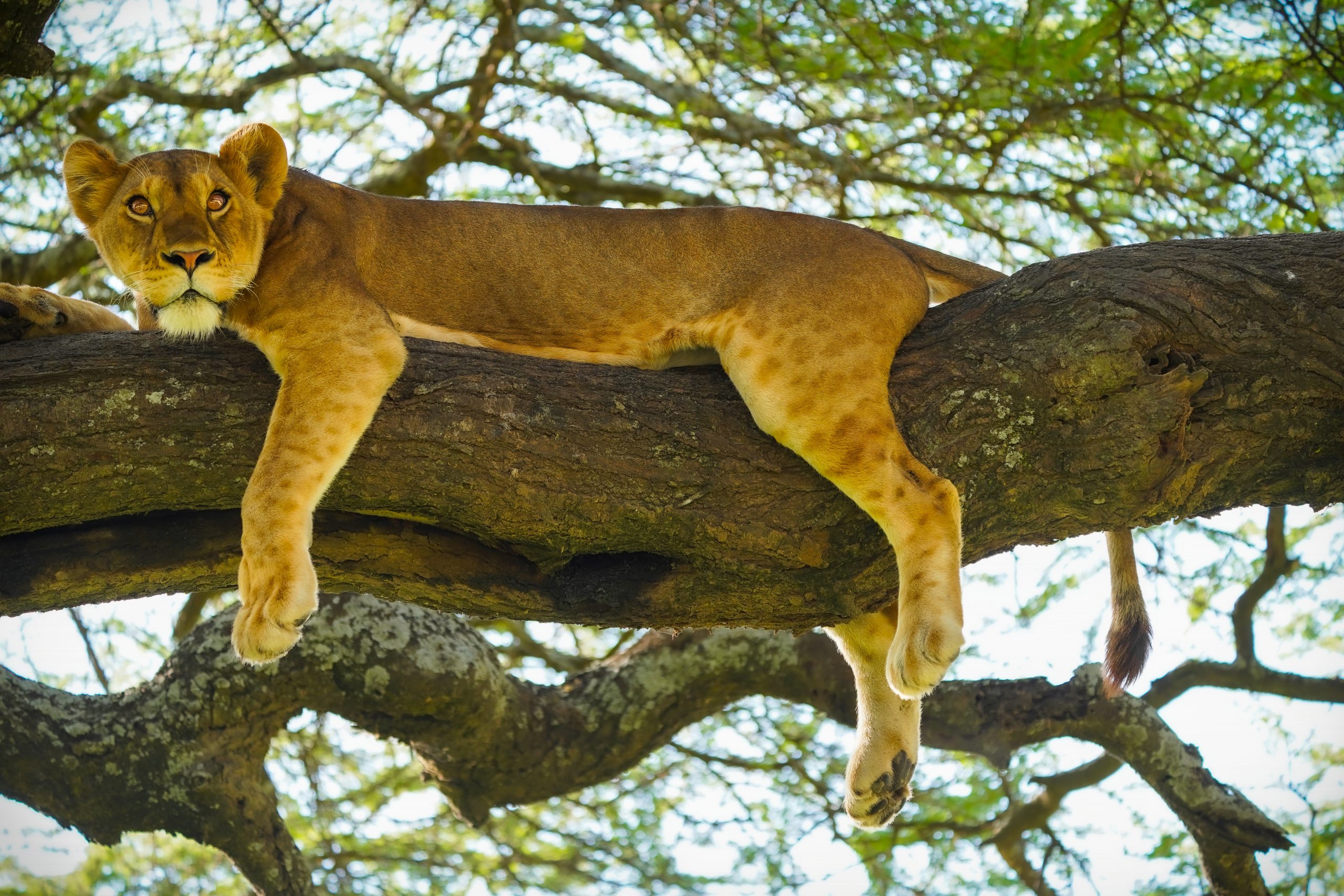
Africa has 20,000 lions left. Tanzania has half of them.
The question is not whether you will see one. It is whether you will understand what you are looking at when you do.
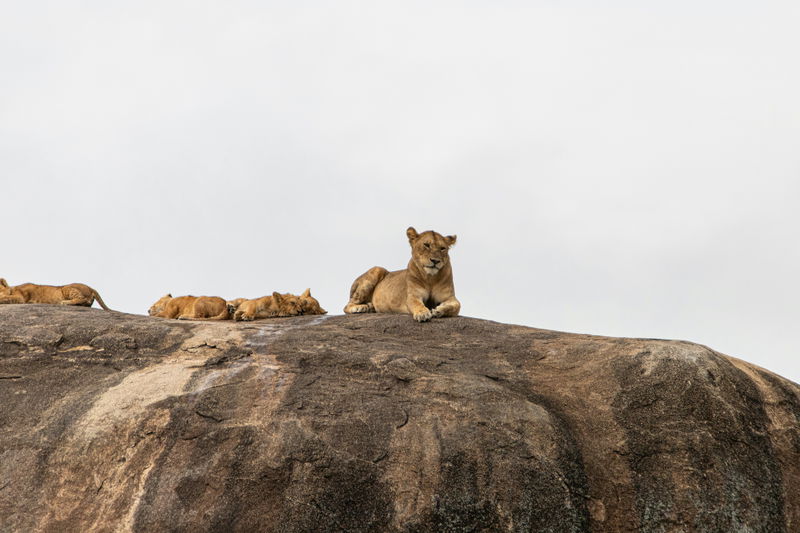
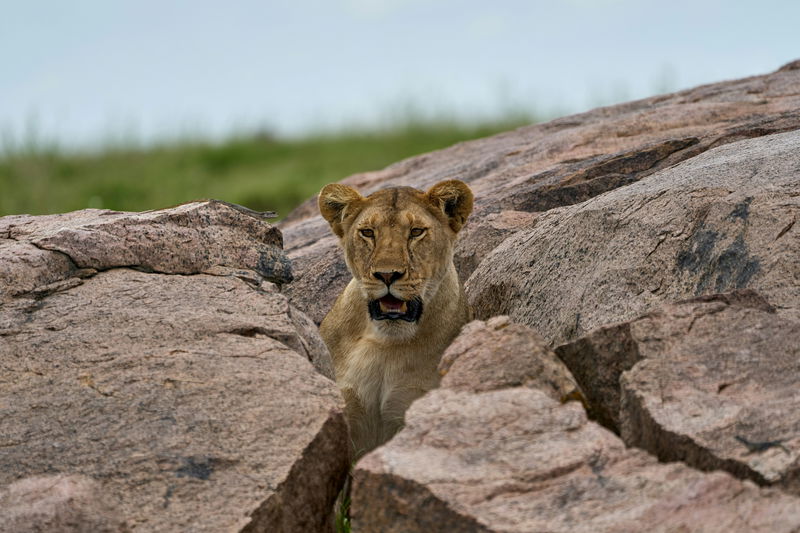
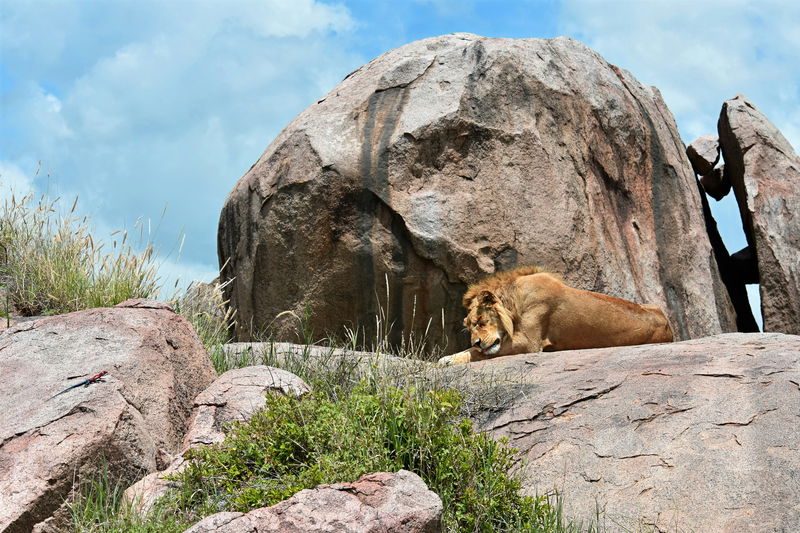
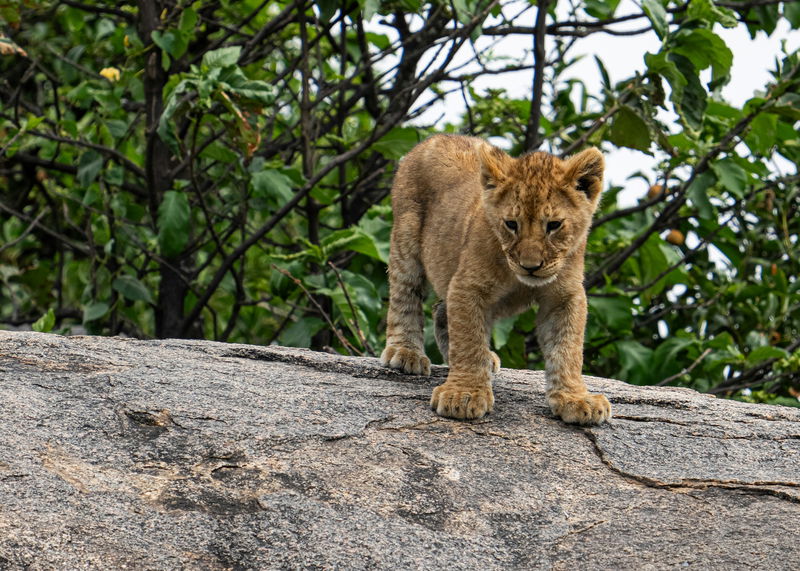
Tanzania is not one safari. It is a set of completely different landscapes, each producing a different kind of lion. In the Serengeti, prides live off the Migration and rest on granite kopjes that have been used for generations.
In Ngorongoro, lions exist at the highest density on earth, locked inside a crater that has made them genetically unique and quietly fragile. In Ruaha, three prides, the Glade, the Njaa, and the Baobab, have developed hunting behaviors that researchers are still trying to explain. In Nyerere, lions move between water channels and hunt along muddy riverbanks in ways the northern plains never produce.
Every park tells you something different about what a lion is. This guide tells you how to read it all.
Lions in Tanzania: Understanding Manes, Prides, and Where to Find Them
By Wolfgang Valerian · Kijani Tours, Moshi · Updated 2026
You do not find lions. Lions find you.
The question is whether you were in the right place to begin with.
Most travelers arrive in Tanzania with one animal at the top of the list. It is almost always the lion. But the questions I hear at the start of a safari are more practical than romantic. Where do we actually see them? Are sightings guaranteed? And what are we really seeing when we finally find a pride resting in the grass?
Those are fair questions, and the honest answers are more interesting than the postcard versions.
I have spent years guiding across both the northern and southern circuits, from the granite kopjes of the Serengeti to the dry riverbeds of Ruaha. This guide presents the lion story I tell my guests: where to go, when to travel, what you will see, and what it actually means.
Lake Manyara and Ndutu are both known for lions that rest in trees during the heat of the day — an unusual sight on a Tanzanian safari.
A note before we start. Lions are wild animals. No one can promise you a sighting, a hunt, or a black-maned male roaring on a rock at golden hours. What our guides can do is put you in the right place at the right time of the year and read the signs when we get there. Everything below is based on field experience and current research, not a brochure. When the science is debated, or the numbers vary across sources, I have noted it.
Other Kijani Tours articles you may find useful:
• Serengeti Calving Season: 500,000 Wildebeest Births in Three Weeks
• Why Elephants Bunch Together: Tarangire Herd Behavior
• 11-Day Tanzania Big Cat Safari: Serengeti, Ngorongoro and Ruaha
In this guide, you will learn about
• How many lions live in Tanzania?
• Where are the best places to see lions in Tanzania?
• Why do male lions have manes?
• Do the females really do all the hunting?
• What is a lion pride, and how is it structured?
• What happened to the Serengeti's famed lions?
• Are Tanzania's lions endangered?
• When is the best time to see lions in Tanzania?
• What camera gear do I need for lion photography?
• How should I plan a lion safari?
• A guide's honest reflection
• Frequently asked questions
• Plan your lion safari with Kijani Tours
How many lions live in Tanzania?
Tanzania holds the largest wild lion population on Earth. That is the one number worth remembering. Beyond that, figures vary by source. Official counts within protected areas put the population at around 14,500. Tanzanian government estimates have gone higher, to 17,000 or more. Either way, that is somewhere in the region of 40 to 50 percent of all the lions left in the wild, a larger share than any other country by a wide margin.
The broader picture is sobering. Africa has lost roughly half of its lions over the past 25 years, and the species is now listed as Vulnerable. The main driver is not trophy hunting; it is conflict with people as livestock and farmland encroach on lion range. So why does Tanzania still have so many? Because it protects the space they need. Nearly 40 percent of the country is set aside for protected areas, in ecosystems large enough for prides to live, hunt, and move as they have for millennia. If you want the best odds of seeing lions in Africa, you are in the right country.
Where are the best places to see lions in Tanzania?
“Going on safari” covers a lot of ground. Four regions tell most of the lion story, and each offers a different kind of encounter. Here is how I help guests choose.
Serengeti National Park, the drama capital
Best for: First-time visitors, photographers, and those who want to see large numbers of cats. The scene: endless short-grass plains. The Great Migration keeps the prides well-fed and unusually active, and the granite kopjes give lions natural lookouts over the herds.
My guide tip: Head for the Moru Kopjes. These are the real-life "pride rocks," and among the best places in the Serengeti to find cubs.
Ngorongoro Crater — guaranteed, but fragile
Ngorongoro Crater guaranteed, but fragile.
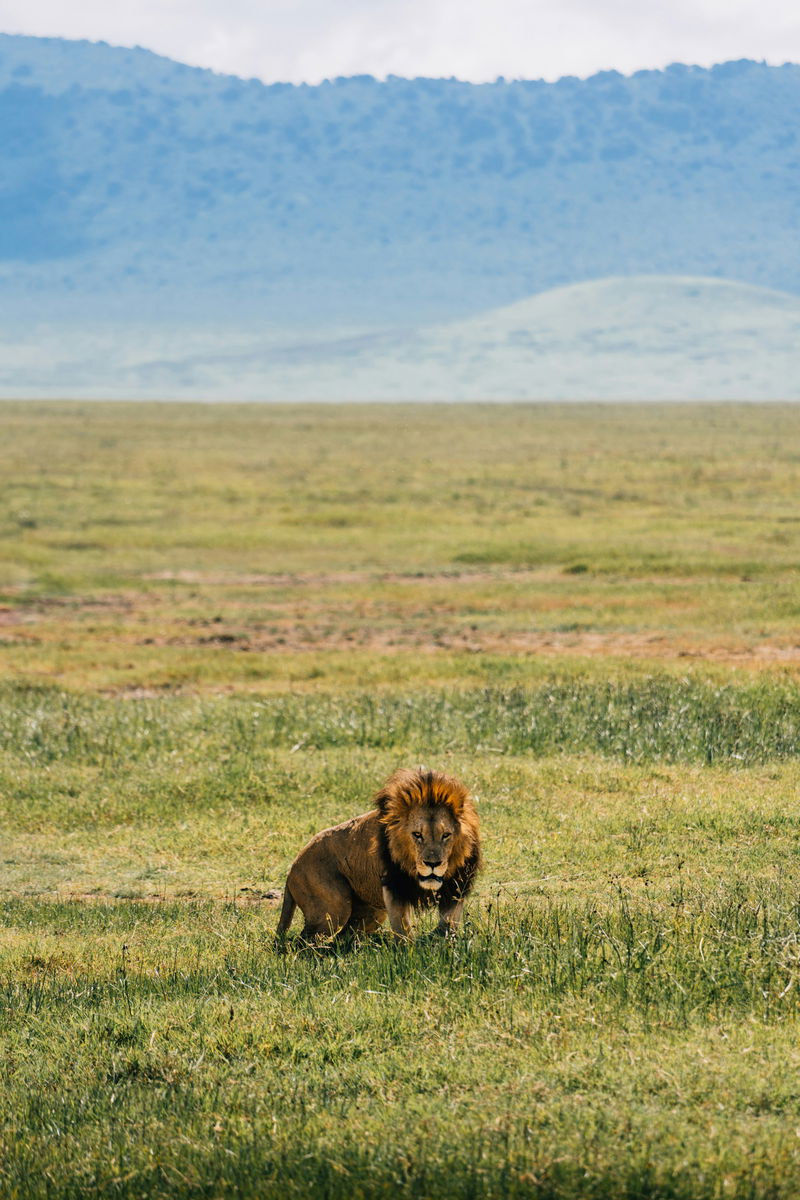
Best for: guaranteed sightings, close-ups, and travellers short on time. The scene: a collapsed volcanic caldera holding around 25,000 animals. The lions here live at the highest density found anywhere on earth. Reality check: the Crater lions are genetically isolated. The steep walls mean very few new males enter, so the population is inbred and vulnerable. It is a spectacular sighting, but a fragile one and worth understanding rather than romanticising.
Ruaha, the frontier. Best for: repeat visitors, purists, and anyone who dislikes crowds.
The scene: baobab-studded country, dry riverbeds, and red earth. Ruaha holds an estimated 10 percent of the world's lions, in large prides that take on bigger prey, including buffalo, giraffe, and, in the worst of the dry season, even sub-adult elephants, a behavior recorded almost nowhere else. My guide's tip: this is raw Africa. You can drive for a day or more without seeing another vehicle.
The Three Prides of Ruaha
Most people who visit Tanzania have never heard of these lions. That is part of what makes Ruaha unique. Ruaha's three best-documented prides are the Glade Pride, the Njaa Pride, and the Baobab Pride. Each pride hunts differently, controls distinct territory, and behaves in ways most safari guides have never seen elsewhere in Africa.
The Glade Pride
The Glade is an oasis, a place in the dry plains of Ruaha where there is always water. Two old lionesses and their cubs hold this territory. Do not be misled by the small size of this pride. The Glade Pride has learned to bring down adult giraffes, a kill that requires not just strength but a level of coordination most lion prides never develop.
What makes them stranger still: when elephants arrive at the Glade during the dry season and dig into the sand with their trunks to reach clean water beneath the surface, the Glade Pride copies them. For generations, this pride has learned from elephants. You will not read that in a standard safari brochure.
The Njaa Pride
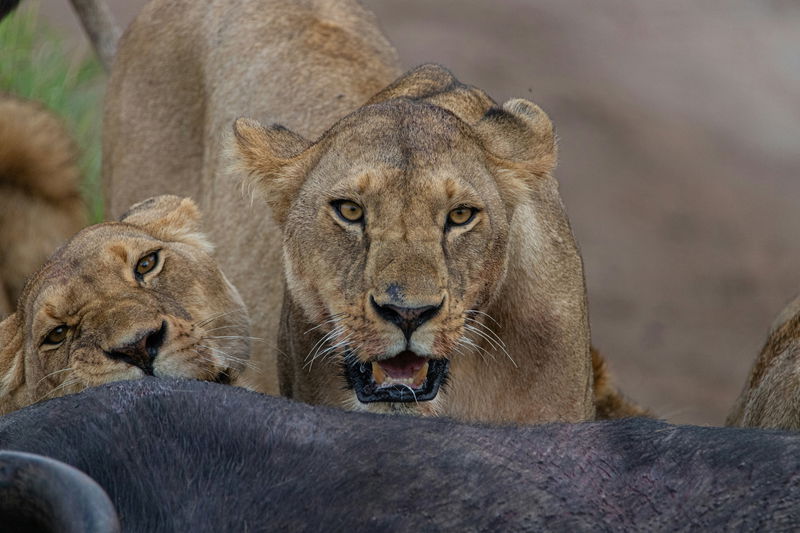
Njaa means hunger in Swahili. The name tells you everything. The Njaa are lean, ruthless, and relentless drifters. They do not hold fixed territory. Instead, they follow the buffalo herds, treating the herd itself as their territory. They have become masters of the buffalo kill, one of the most dangerous hunts in Africa. Buffalo are not passive prey. They fight back and remember. The Njaa have built their entire identity around taking them anyway.
The Baobab Pride
Beyond the Glade, a forest of ancient baobab trees spreads across the landscape. This is the territory of the Baobab Pride, the largest in all of Ruaha. While the Glade Pride is small but precise and the Njaa are nomadic specialists, the Baobab Pride rules through sheer numbers. Their size allows them to take prey that other prides cannot. When the Baobab Pride and the Njaa cross into each other's territory, the result is open conflict, territorial battles that have been filmed but are still not fully understood.
Why are Ruaha lions different from every other lion population?
The answer lies in the landscape itself. There are no wildebeest in Ruaha, and zebra numbers are low. A pride cannot sustain itself on small antelope. Over generations, Ruaha's lions have been forced to specialize in large prey: giraffe, buffalo, and, in some cases, elephants. Ruaha prides average about twelve members, and their size, combined with the absence of easier prey, has produced lions that are technically more accomplished hunters than almost anywhere else on the continent. Ruaha is estimated to hold over 10% of Africa's remaining lion population. That figure alone should end the debate about whether this park belongs on your itinerary.
Nyerere National Park, the water world. Best for: boat safaris and walking safaris.
The scene: Nyerere National Park ( the northern section of the Selous Game Reserve) is built around the Rufiji River and its oxbow lakes. Here you can watch lions interact with water moving between channels and hunting along the muddy banks, which you rarely see on the northern plains.
Why do male lions have a mane?
For a long time, the assumption Darwin included was that the mane is armor, protecting the neck in a fight. But watch enough lion fights, as guides do, and the theory falls apart. Lions rarely go for the neck. They attack the hindquarters and spine to bring a rival down. Research in the Serengeti by Peyton West and Craig Packer solved the puzzle.
The mane is not armor. It is a signal and an expensive one. Dark hair absorbs more heat. On the equator, a male carrying a thick black mane is running hotter than the lionesses around him. He overheats. He pants while they rest. In other words, a big dark mane is a handicap the lion is choosing to carry, which is exactly the point: it advertises that he is strong, well-fed, and healthy enough to thrive despite the cost.
What to look for
The mane is a readable record of a lion's condition, and you can often compare two brothers in the same coalition:
The darker, fuller mane signals higher testosterone and better nutrition. It is linked to a stronger immune system and, in studies, to lionesses' clear preference for a mate.
A thin, sun-bleached mane can signal injury, illness, or a hard season. Neither male is "better looking." The mane tells you a survival story if you know how to read it. Do the females really do all the hunting? The campfire version says the lionesses do the work while the males sleep. The truth is a division of labor, not laziness. That mane is a liability on a hunt. It is visible in long grass and traps heat, which makes a male a poor ambush predator. So, the pride specializes.
Do the females really do all the hunting?
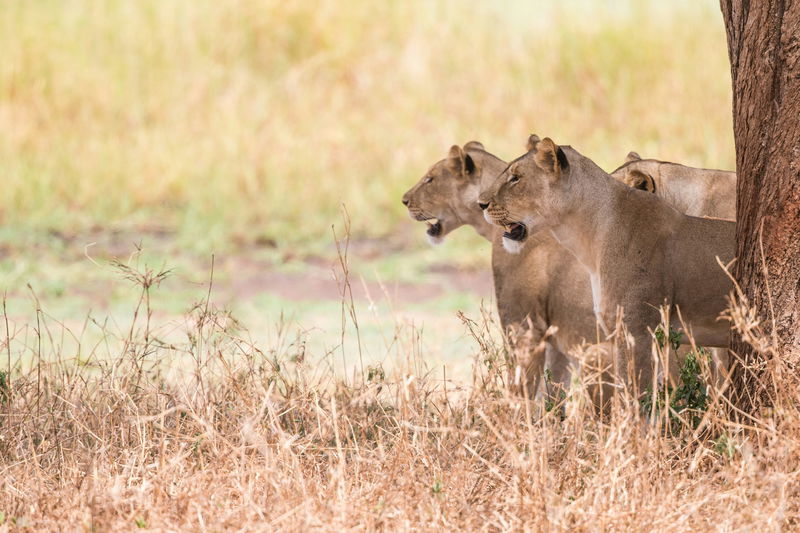
The lionesses are the stalkers, patient, silent, precise.
The males are the muscle, conserving energy to defend territory and cubs against rival coalitions, where explosive strength actually matters. GPS-collar studies have mapped how a pride hunts, and it is closer to a military operation than a scramble:
· The wings: younger, faster lionesses fan out wide and stay hidden in the grass around the prey.
· The center: older, experienced lionesses show themselves and simply make their presence felt.
· The trap: the prey panics and bolts away from the visible lions straight into the waiting wings.
From the vehicle: A full hunt is rare and takes patience and luck. The moment before it is far more common if you know the sign. Watch for "the stare": the instant several lionesses freeze together, ears forward, bodies sinking low. No sound passes between them, but the plan has just been made.
What is a lion pride, and how is it structured?
A pride is a female dynasty. The lionesses are mothers, daughters, sisters, and cousins, and they hold the territory across generations. The males are temporary. They arrive, hold the pride for a few years, and are eventually pushed out by younger, stronger rivals. The pride endures because of the females.
Synchronized births and the crèche
When new males take over a pride, they often kill the existing cubs to bring the lionesses back into season. It is brutal and one of the harshest realities on the savannah.
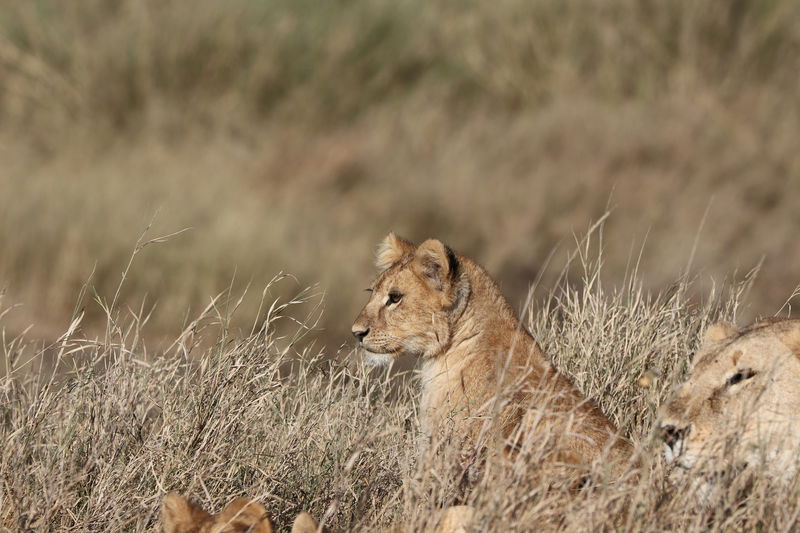
The lionesses answer with strategy. They tend to come into season together and give birth around the same time, raising their cubs side by side in a shared nursery called a crèche. Mothers nurse each other's cubs, and while some hunt, others stand guard against hyenas and leopards. Amid constant threats, that sisterhood becomes a living shield.
The “ghost years” of young males
Male cubs do not get to stay. Around age three, as their manes begin to grow, they are driven out. For the next two to three years, they are homeless, hungry, and stressed, drifting along the dangerous edges between territories. Only the strongest and most cohesive coalitions of brothers survive. The statistic that stays with me: only about one in eight male cubs born in the Serengeti survives to become a pride male. When you watch a magnificent adult male on a rock, you are looking at a lottery winner.
What happened to the Serengeti's famous lions?
If you have watched a wildlife documentary in the last decade, you have likely seen a Tanzanian lion. Some of these dynasties are known by name, and their stories are part of how we guide.
In the eastern Serengeti's Namiri Plains, an area closed to tourists for two decades to let cheetahs recover, researchers recorded unusually large "super prides." A typical pride has 6 to 12 members; these broke the mold. The Wauwaji coalition, six males whose name means "the killers" in Swahili, teamed up with the lionesses to take down buffalo and eland before moving on around 2018. The Kibumbu super pride once numbered close to 30 lions before it fractured.
The most famous of all was Bob Junior, son of the legendary "Bob Marley" and known as the King of the Serengeti. He held the central Seronera area for the better part of seven years, a long reign in lion terms, and was unusually relaxed around vehicles, which is why so many travelers remember him. In 2023, he was challenged and killed by a coalition of younger males, exactly how lion power always changes hands.
Why this matters on safari. When we drive through the central Serengeti or Namiri Plains, we are moving through the territories of these lineages. Kijani guide does not just point out a lion; we can often tell you which dynasty he belongs to and where his scars came from. That context is the difference between seeing an animal and understanding one.
Are Tanzania's lions endangered?
Lions are classified as Vulnerable, and their population is under significant pressure. But the threat is often misunderstood.
The biggest killer is not hunting. It is conflict. As people and livestock move closer to lion territory, a lion that takes a cow may be poisoned or speared in retaliation. Solve that, and you solve most of the problem.
The Lion Guardians
This is where the most effective work is being done. Programs like KopeLion in the Ngorongoro landscape and the Ruaha Carnivore Project employ local Maasai and Barabaig men, some of them former lion hunters, as Lion Guardians, known as Ilchokuti. In practice, that means:
· Tracking individual lions’ day-to-day.
· Warning herders by phone when a pride is near so cattle can be moved in time.
· Helping reinforce livestock enclosures ("living walls") so lions and cows are kept apart at night.
Where your safari fits in
Lions are expensive to keep alive. They need vast tracts of land that could otherwise be farmed, so that land has to earn its keep. This is the honest, specific version of "responsible travel," with no vague green badges required:
• Your park fees pay the rangers and fund anti-poaching efforts.
• Your lodge stay employs people from local communities, giving lions value to their neighbors.
• Together, that makes a live lion worth more than a dead one — the only argument that has ever reliably protected a predator.
When is the best time to see lions in Tanzania?
There is no bad time, but there are two standout windows.
January to March — calving season (Ndutu)
In the southern Serengeti and Ndutu, hundreds of thousands of wildebeest calves are born within weeks. That flood of vulnerable prey draws predators in, and lion sightings are frequent. It is the savannah at its most dramatic. (More detail in our Serengeti calving season guide.)
June to October — the dry season
For most guests, this is the ideal window. With little rain, wildlife concentrates around rivers and springs, grass thins out, improving visibility, and the Great Migration moves north through the Serengeti, with lions in pursuit. July and August are peak months, so book early. Mornings in Ngorongoro can be genuinely cold, so pack a warm layer for early drives.
What camera gear do I need for lion photography?
You do not need a professional kit, but a few things make a real difference:
Lens: you need to reach. A 100 400mm is the practical minimum; a 600mm is ideal for eye-level close-ups.
Angle: ask your guide to position the vehicle low and side-on. Shooting at the lion's eye level beats shooting down at it every time.
Light: the golden hour, roughly 6:30 to 7:30 a.m., is non-negotiable. The light is soft, and the cats are active. By mid-morning, heat haze quietly ruins sharp photos.
How should I plan a lion safari?
The biggest mistake I see is the checklist mentality of rushing to tick off the Big Five in two days. Lion behavior is subtle and unfolds slowly, so speed works against you.
My advice is simple: spend at least three nights in one area and give a full morning to a single pride. Watch them wake. Watch the cubs pester the adults. Watch the greeting ceremonies. You will learn more in four hours of stillness than in four days of rushing between parks.
A guide's honest reflection
Not every game drive delivers, and I would rather tell you now than have you be disappointed later.
Some of the most memorable sightings I have shared with guests occurred on quiet, unpromising mornings. Some "guaranteed" Crater days were flat. That is wildlife, and it is part of the experience's honesty.
What stays with people afterward is rarely the kill. It is the cubs tumbling in the grass, the greeting ceremonies, and the roar that rolls across the plains at dawn and settles in your chest. Travel slowly, keep your expectations honest, and Tanzania rarely lets you down.
Frequently asked questions
Which country has the most lions?
Tanzania holds the largest wild lion population on Earth, accounting for roughly 40 to 50 percent of all lions left in the wild.
Where is the best place to see lions in Tanzania?
The Serengeti for numbers and action, Ngorongoro Crater for guaranteed close-up sightings, and Ruaha for large prides and fewer crowds.
What are the famous lion prides in Ruaha National Park?
Ruaha's three most documented prides are the Glade Pride, the Njaa Pride, and the Baobab Pride. Each controls a different territory, hunts differently, and behaves in ways you will not see in any other park in Tanzania.
What makes the Glade Pride unusual?
The Glade Pride is small, just two old lionesses and their cubs, but they have learned to bring down an adult giraffe, which requires a level of coordination most prides never develop. What makes them stranger still: when elephants arrive during the dry season and dig into the sand with their trunks to reach clean water beneath the surface, the Glade Pride copies them. For generations, this pride has observed and learned from elephants.
Who are the Njaa Pride?
Njaa means hunger in Swahili. The Njaa are lean, ruthless, and nomadic drifters. They do not hold a fixed territory. Instead, they follow the buffalo herds, treating the herds themselves as their domain. They are experts at the buffalo kill, one of Africa's most dangerous hunts. Buffalo are not passive prey. They fight back. The Njaa do it anyway.
What is the Baobab Pride?
Beyond the Glade, a forest of ancient baobab trees marks the territory of the Baobab Pride, the largest pride in all of Ruaha. Their size allows them to take prey that smaller prides cannot. When the Baobab Pride crosses into Njaa territory, open conflict erupts in brutal territorial battles between lionesses, with no adult males to intervene.
Why do Ruaha lions hunt such large prey?
The landscape forces this. There are no wildebeest in Ruaha, and zebra numbers are low. A pride cannot sustain itself on small antelope alone. Over generations, Ruaha's lions have been forced to specialize in large prey: giraffe, buffalo, and, in some cases, elephants. Ruaha prides average about twelve members, and their size, combined with the scarcity of easier prey, has produced lions that are among the most technically accomplished hunters on the continent.
Do Ruaha lions really hunt elephants?
Yes. What sets Ruaha's lions apart from almost every other lion population in Africa is that some prides have learned to hunt elephants, an unusual prey choice rarely documented elsewhere. It is uncommon and not guaranteed on any single game drive. But it happens here, and almost nowhere else.
How many lions are in Ruaha National Park?
Ruaha holds approximately ten percent of the world's remaining lion population, a figure that makes it one of the most important lion conservation areas on earth and one that most first-time safari travelers have never heard of.
When is the best time to see lions in Ruaha?
The dry season, from July to October, is the best time for lion sightings. As water sources shrink, wildlife concentrates along the Great Ruaha River, and predators position themselves accordingly. By September and October, large herds of herbivores gather at the river, predators target the weak and injured, and the likelihood of witnessing a hunt is high.
Is Ruaha crowded?
No. Unlike Tanzania's more famous northern parks, Ruaha's vast size and low visitor numbers mean you can spend hours in the bush without seeing another vehicle. That changes the quality of every sighting. You are not watching lions with ten other vehicles. You are watching them.
Are lion sightings guaranteed on safari?
No. Lions are wild, so nothing is guaranteed. But sightings are very likely in the right parks during the dry season, especially in the Serengeti and Ngorongoro.
Why do male lions have dark manes?
A darker mane signals higher testosterone and good condition. It also traps heat, so carrying one is a costly, honest signal of a strong, healthy male. Lionesses prefer it.
Do female lions do all the hunting?
Mostly, but not entirely. Lionesses do most of the stalking because males are more visible and overheat easily, while males specialize in defending the territory and cubs.
Final Thoughts
I have sat with guests at the end of a game drive when nothing happened, no kill, no chase, no black-maned male posed on a rock, and watched them realize that the four hours still mattered. A lioness teaching her cubs to stalk a reed buck that got away. Three brothers greeting each other after a night apart, heads pressed together, eyes half-closed. A pride resting in the dry riverbed at Ruaha, the only sound the wind moving through the baobabs.
The kill is the moment everyone hopes for. It is also the shortest part of a lion's life.
What fills the rest is family. Territory held for decades. Knowledge is passed from old lionesses to cubs who will still be hunting long after their mothers are gone. The Glade Pride learned to read elephants. The Njaa learned to take buffalo that weigh ten times their weight. The Serengeti's lineages hold the ranges their great-grandmothers established. None of that appears on a highlight reel.
Tanzania still has these lions because it made a decision decades ago to protect the space they need. Your presence here is part of that decision to continue holding. The fees you pay, the lodge you sleep in, and the guide beside you who knows which pride this is and where those scars came from all help keep a live lion worth more than a dead one.
Come with patience. Come with enough nights in one place to let something unfold rather than rushing to tick a box. And when you sit in the dark at the end of a long day, hear a roar roll across the plains, and feel it settle in your chest, you will understand why people who have been here once always find their way back.
Go. Find. Explore.
Plan your lion safari with Kijani Tours
Kijani Tours is a Tanzanian-owned company based in Moshi. We build cat lovers' safaris around lion behavior and season rather than a fixed checklist, so you spend your time where the cats actually are.
Tell us your travel dates, interests, and preferred travel style, and we will design an itinerary that goes beyond the highlights and into the heart of the experience. Speak to the Kijani Tours team.
Share This Post
Latest News
Tanzania Travel Guide | Safaris, Kilimanjaro, Beaches, Culture and Responsible Travel
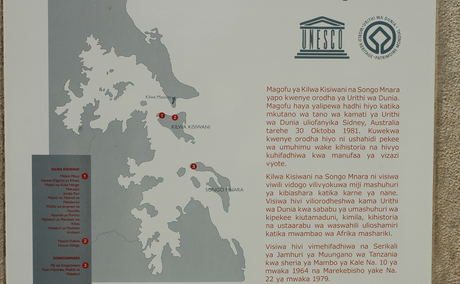
Tanzania UNESCO World Heritage Sites: A Local Expert Guide
Wed July 29, 2026
Read This Article
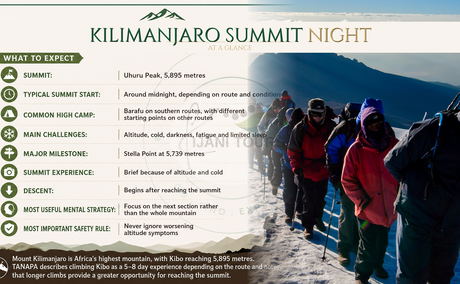
Kilimanjaro Summit Night: How to Prepare Mentally and What to Expect
Sun August 30, 2026
Read This Article
Kilimanjaro Summit Night: The Final Hours Before Uhuru Peak At midnight, the mountain disappears. Your headlamp becomes your horizon. Kilimanjaro summit night is the final and most demanding stage of the journey to Uhuru Peak at 5,895 metres. Starting around midnight, climbers face several hours of darkness, cold, fatigue, limited sleep and reduced oxygen availability. The challenge is physical, but it is also deeply mental. The key to managing summit night is...
Is Tanzania Safe for Kids on Safari?: A Parent's Guide to Family Safari in Tanzania, 2026–2029
Sat August 29, 2026
Read This Article
Planning a Tanzania safari with children? This practical family safari guide helps parents understand when to go, which parks and experiences suit different ages, how to prepare for health and safety, and what to expect from accommodations, game drives, and wildlife encounters. It also explains how Kijani Tours can tailor a private safari to your family's needs, from the Serengeti and Ngorongoro to cultural experiences and Tanzania's coast, from Pangani to Mafia...
Share This Post