

Kilimanjaro Summit Night: The Final Hours Before Uhuru Peak At midnight, the mountain disappears. Your headlamp becomes your horizon. Kilimanjaro summit night is the final and most demanding stage of the journey to Uhuru Peak at 5,895 metres. Starting around midnight, climbers face several hours of darkness, cold, fatigue, limited sleep and reduced oxygen availability. The challenge is physical, but it is also deeply mental. The key to managing summit night is...
Two towns, two mountains, one choice that shapes your tripMoshi or Arusha? Choosing Your Base in Northern Tanzania
Posted by Wolfgang on Wed November 18, 2026 in Moshi and Arusha Travel Guide.
Almost every traveler to northern Tanzania passes through Moshi or Arusha. Most treat them as places to sleep before something bigger. That is a mistake. Moshi sits at the foot of Mount Kilimanjaro, among Chagga homegardens, coffee, and water channels that neighbors have shared for generations. Arusha lies beneath Mount Meru and is the gateway to Tarangire, Ngorongoro, and the Serengeti, with walking safaris just outside the city. Written from our base in Moshi, this guide compares the two towns side by side: what each is known for, the day trips, nightlife, how far the parks really are, and how many nights to plan. The short answer is to choose Moshi for the mountain, Arusha for the safari, and both if you can.
Moshi and Arusha are the two towns almost every visitor to northern Tanzania passes through. Moshi sits at the southern foot of Mount Kilimanjaro, in Kilimanjaro Region. Arusha lies about 80 kilometers to the west, beneath Mount Meru, and is the capital of Arusha Region. On a map, they look close enough that the choice hardly matters.
In practice, it shapes your whole trip. Here is the short version. Stay in Moshi if your trip centers on Kilimanjaro, Chagga farming culture, and coffee. Stay in Arusha if a Northern Circuit safari to Tarangire, Ngorongoro, and the Serengeti is the main event. If you have time for both, use both. Each town gives you a different half of the region.
We should be upfront: Kijani Tours is a Tanzanian-owned company based in Moshi, so we know this side best. We have tried to be fair to both towns. This guide explains what each is like, what you can do nearby, how far the parks and mountains really are, and how many nights to plan for.
Moshi or Arusha: the short answer
If Kilimanjaro is the reason you are coming, stay in Moshi. The town sits at the foot of the mountain, which, at 5,895 meters, is the highest in Africa, in the Kilimanjaro Region. It is the natural base for a climb, a day hike in the rainforest, or a slow morning walking through coffee farms with the Chagga families who have worked these slopes for generations. Head east, and you reach the Pare Mountains, home to the Pare people. For wildlife, Mkomazi National Park, the Enduimet Wildlife Management Area, and Kilimanjaro's own forest are all within a day's reach. Moshi is smaller and slower than Arusha, and farming still sets its pace. Most travelers spend two or three nights here around a climb.
If a safari is the main event, Arusha makes more sense. The city lies beneath Mount Meru (4,562 meters) in the Arusha Region and is the starting point for most trips to Tarangire, the Ngorongoro Conservation Area, and the Serengeti. Arusha National Park is nearby and is one of the few places in Tanzania where you can walk among giraffes and buffalo with an armed ranger. The Waarusha and Meru peoples live on the slopes of Mount Meru, and Maasai families graze their herds on the plains beyond. Arusha is bigger and busier, with more flights and services, and it's the region's main hub for tourism and conferences. One or two nights before a safari are usually enough.
And if you have the time, you don't have to choose. Many travelers spend a few nights in Moshi and then drive west to Arusha. That way, you see both mountains and the different communities that live on them.
Two mountains, several people, one connected region
On a clear morning in Moshi, the snow on Kibo, Kilimanjaro’s highest cone, often shows for an hour or two before the cloud closes in. Drive up the lower slopes, and the town gives way to banana groves, coffee bushes under tall shade trees and the sound of water running in narrow channels. This is Chagga country. Chagga families have farmed these slopes for generations in homegardens called kihamba and dug furrows to bring water down from the mountain’s rivers and springs.
Look east from Moshi and the Pare Mountains rise from the plain. The Pare were known across the region for their iron. Many of the hoes that worked Chagga soil and the spears carried on the plains came from Pare forges. Maasai herders moved cattle across the lowlands between both mountains. Markets tied everyone together: livestock and hides came up from the plains, and bananas and grain came down from the slopes.
Drive west for about an hour and a half to reach Arusha, below Mount Meru. Here the Meru people, Bantu-speaking farmers, grow coffee and bananas in gardens that will look familiar after Kilimanjaro. Alongside them live the Waarusha, who speak Maa like the Maasai and share many of their customs but settled on the mountain and took up farming. Out on the plains, Maasai families still move with their herds.
That is why we encourage people to slow down here. Moshi and Arusha are more than places to sleep before a climb or a game drive. Spend a few days between them and the region starts to make sense as a set of neighbours connected by water, iron, cattle and coffee. Every park and village afterwards means more.
How far apart are Moshi and Arusha?
Moshi and Arusha are roughly 80 kilometers apart by road, usually about a 1.5 to 2-hour drive depending on traffic. Kilimanjaro International Airport (JRO) sits between the two towns, so either one is an easy transfer after landing. The drive itself is worth paying attention to. Leaving Moshi, the dense green farmland of Kilimanjaro’s lower slopes gradually gives way to drier, more open country, before the land rises again towards the coffee and forest of Mount Meru.
If you fly in and go straight to a hotel, you miss that change. Seeing it from the road is one of the simplest ways to understand how differently the two mountains have shaped the land around them. It also means you do not have to pick one town for the whole trip. Many travellers spend two or three nights in Moshi around a climb, then drive to Arusha before a safari.
What Moshi is known for
Moshi is best known as the main base for climbing Mount Kilimanjaro. That is true, but it is only the start. The farmland on the slopes above town is one of East Africa’s most remarkable human-made landscapes, and it is worth more of your time than the night before an early start.
Mount Kilimanjaro
Mount Kilimanjaro is Africa’s highest mountain at 5,895 metres, and Kilimanjaro National Park is a UNESCO World Heritage Site. From Moshi, the mountain is more than a view. Rain and meltwater feed the farms below, and its slopes climb through distinct zones, from cultivated land and montane rainforest to heath, alpine desert, and the summit. Most climbing routes start from gates within an hour or two of Moshi.
The kihamba: the Chagga homestead garden
A kihamba (plural vihamba) is the traditional Chagga homestead garden on Kilimanjaro’s lower slopes. It is a small family plot farmed in layers. Tall trees provide shade, timber, fodder, fruit, and medicine. Several banana varieties form the next layer. Coffee bushes grow beneath them, and vegetables grow closest to the ground and the house. Livestock are often kept on the plot, and their manure goes
When you visit Chagga farming communities on the slopes of Mount Kilimanjaro, you encounter a farming system that has sustained families for generations while protecting remarkable plant diversity. Its importance extends beyond the local community.
More than 500 plant species have been recorded here, including around 400 wild and uncultivated species that farmers deliberately preserve within their farms rather than clear them. Walking through these farms gives visitors a closer look at how traditional Chagga knowledge, food production, and biodiversity conservation coexist. Walk slowly through a working kihamba and the phrase “coffee farm” starts to feel too narrow. Nothing grows on its own. Each layer supports another, which is hard to capture in a photograph and easy to understand on foot.
Traditional Irrigational Canal: water channels that follow the mountain
Traditional Irrigational Canals (Mfongo) are the traditional irrigation channels built by Chagga communities on Kilimanjaro. They carry water by gravity from mountain rivers and springs down through farms and homesteads. Keeping them working has always depended on neighbors cooperating: agreeing on turns, clearing silt, and settling disputes.
Once you know this, the slopes look different. Instead of simply admiring a green hillside, you start asking where the water comes from, who looks after it, and what that says about how people here have shared a resource for generations.
Arabica Coffee: More Than a Cup, a Chagga Heritage
Arabica coffee has shaped the economy and social history of the Kilimanjaro highlands for more than a century. Catholic missionaries introduced coffee in the late nineteenth century in Kilema; it gradually became a key source of income for Chagga households, shaping farming practices, family livelihoods, and regional trade. Unlike large-scale plantation systems, smallholder farmers have traditionally cultivated much of the coffee within their vihamba (the Chagga homestead gardens). These diverse agricultural spaces combine coffee and fruit trees, bananas, vegetables, and other useful medicinal plants, reflecting generations of accumulated agricultural knowledge.
For the Chagga people, coffee is more than a cash crop. It is part of a farming heritage that connects generations, supports household economies, and reflects the relationship between environment, culture, and community. Coffee experiences and village walks offer an opportunity to explore this heritage firsthand. Visitors can learn where coffee grows in the homestead gardens, how they harvest ripe cherries, pulp, ferment, wash, dry, and roast them, and how coffee production supports family livelihoods. The experience goes beyond the final cup. It offers an opportunity to meet local farming families, learn about their agricultural traditions, hear personal stories, and appreciate how coffee has shaped life on the slopes of Mount Kilimanjaro.
Mount Kilimanjaro day hike
A day hike lets you explore the mountain at a slower pace, from the lush montane rainforest to the open landscapes of its western slopes. Walk beneath towering trees, listen to forest birds, follow mountain streams, and look out for black-and-white colobus monkeys moving through the canopy. Depending on your preferred experience, you can explore the rainforest on the mountain’s eastern side (Lemosho route) or discover the distinctive landscapes of the Shira Plateau in the west (Marangu route).
Day hikes are ideal for travelers who want to experience Kilimanjaro without committing to a multi-day summit climb. They also offer a shared experience for non-climbing companions traveling with friends or family undertaking a longer trek. If you are considering a full climb, a day hike can introduce you to mountain walking, but it doesn’t replace the physical preparation needed for a summit attempt. Kilimanjaro National Park entry fees apply to day visitors. Check the current park charges when planning your visit.
Mount Kilimanjaro Seasons: When to Climb and Explore
Choosing when to climb Kilimanjaro also shapes what you experience around the mountain. Weather conditions affect trail quality, summit visibility, the surrounding forests, and the rhythm of daily life in the foothills. The main climbing seasons run from January to early March and from June to October. These months generally offer more favorable trekking conditions, with better chances of clearer skies and drier trails. They are also the busiest periods, so securing your preferred route, an experienced mountain crew, and accommodation in Moshi requires advance planning. For popular dates, particularly July through September, book several months in advance.
April and May bring the long rains, while November generally brings the shorter rains. These quieter months reveal a greener side of Kilimanjaro. Farmland becomes lush, vegetation flourishes, and the mountain's forests take on a different character. However, rainfall can muddy trails, worsen walking conditions, and reduce the reliability of summit views. Some routes and accommodations may also have seasonal limitations. Your time in Moshi can add considerable value to the climbing experience. Arriving at least one or two days before your trek allows you to rest, complete preparations, and meet your mountain team.
It is also an opportunity to explore Chagga heritage, visit local farming communities, learn about the traditional kihamba agroforestry system, and experience the relationship between the mountain and the people who call its slopes home. Consider spending an extra day in Moshi after your climb. Instead of rushing to your next destination, you can rest, reflect on the trek, and explore more of the region's cultural and natural heritage. Ultimately, the best time depends on your priorities: more predictable trekking conditions, fewer climbers, greener landscapes, or additional opportunities to connect with local communities. Each season offers a different perspective on Kilimanjaro.
Day trips from Moshi
The road less traveled begins where most northern Tanzania safari circuits turn the other way. Not every worthwhile journey from Moshi leads to the famous safari parks. Head east and south, and you will discover another side of northern Tanzania: quieter landscapes, rural communities, distinctive cultural traditions, and places that rarely appear on conventional itineraries. All are within a day's drive of Moshi yet offer a very different perspective on the region.
The Pare Mountains and their ironworking history
The Pare Mountains rise east of Moshi and are part of the ancient Eastern Arc Mountain chain, separate from Kilimanjaro. They are home to the Pare people. North Pare includes Ugweno, where the Gweno language is spoken, and Usangi, where Chasu is spoken. The Pare are a distinct people with their own history, not a branch of the Chagga. Getting these details right matters to people here. Archaeological and historical research shows that Pare was an important center of iron production in the region, with good ore, clay, and charcoal close at hand. Different clans handled smelting, smithing, and charcoal-making. In Ugweno, historians record the Shana, whose name means blacksmith, as early inhabitants and rulers, and connect the name Ugweno to a Shana ruler named Mghonu. The Shana were later overthrown by the Suya, who built a centralized Ugweno state that lasted into the nineteenth century. Pare iron did not stay in the Pare hills. Chagga farmers and Maasai herders relied on it, trading livestock, bananas, and other goods in return. Families also moved across the plain over generations, which is why many people in Ugweno trace their ancestry to Chagga, Taita, and South Pare communities.
Sacred forests and plant knowledge
Many Pare villages maintain small sacred forests where elders hold ceremonies and honor ancestors. Custom, rather than government reserve status, protects these groves, and research suggests some contain important plant diversity. Local healers have long used bark, roots, and leaves from these forests and the surrounding hills for medicine. Visitors should visit sacred sites only with a local guide and the community’s permission. Some places are not open to outsiders, and outsiders should respect that.
Lake Jipe
Lake Jipe is a shallow lake on the Kenya-Tanzania border, just east of the North Pare Mountains in Mwanga District. According to the Tanzania Tourist Board, it covers about 28 square kilometers and averages less than 3 meters deep. Its main inflow, the Lumi River, comes from Kilimanjaro, while the Muvulani River flows in from the Pare Mountains. Tsavo West National Park in Kenya borders the lake to the south. Fishing villages line the Tanzanian shore. The lake is home to the Jipe tilapia, a fish found only in Lake Jipe and parts of the Pangani River system, and listed as Critically Endangered by the IUCN. The lake is also shrinking as reeds spread and sediment builds up. Spending time with a fisher here is a clear lesson in how livelihoods and conservation depend on each other. Birdwatching and canoeing are also possible.
Nyumba ya Mungu reservoir
Nyumba ya Mungu, Swahili for "House of God," is a reservoir on the Maasai Steppe about 50 kilometers south of Moshi. It forms where the Ruvu River, flowing out of Lake Jipe, meets the Kikuletwa River, which collects water from Mount Meru and Kilimanjaro. Together, they form the Pangani River. People built the dam in the late 1960s for hydropower. Fishing soon became as important as power. Fishing settlements now line much of the shore, and herons, egrets, and storks often gather when boats come in. BirdLife International lists the reservoir as an Important Bird Area. Standing here, you can see how water from Kilimanjaro, the Pare Mountains, and Mount Meru ends up in one place.
Mkomazi National Park
Mkomazi National Park lies southeast of Moshi, along the Kenyan border, about two to three hours by car. It became a national park in 2008 and borders Kenya's Tsavo West National Park, forming part of the same dry savannah ecosystem. Mkomazi has a fenced black rhino sanctuary and an African wild dog breeding and reintroduction program. It is also one of the better places in Tanzania to see dry-country species such as gerenuk, fringe-eared oryx, and lesser kudu. Because it rarely appears on standard Northern Circuit itineraries, the tracks are quiet. It suits travelers who have already seen the busier parks, as well as anyone in Moshi who wants a wildlife day without driving west through Arusha.
Enduimet Wildlife Management Area
Enduimet Wildlife Management Area lies on the plains west and northwest of Kilimanjaro, near the Kenyan border. A Wildlife Management Area (WMA) is land that villages set aside for wildlife under Tanzanian law and manage through a community-based organization, with a share of tourism income returned to member villages. Enduimet sits on an important elephant route between Amboseli in Kenya and the Kilimanjaro area. It is a good fit for walking safaris and for travelers who want to see how community conservation works in practice. Ask your operator how fees are paid and who receives them, so you know your visit supports the villages that host you.
What Arusha is known for.
If Moshi is your introduction to Kilimanjaro, Arusha is your introduction to the Northern Circuit. The city is the starting point for most safaris to Tarangire, Ngorongoro, and the Serengeti, and it is a busy commercial and diplomatic center. The headquarters of the East African Community is here, and the 1967 Arusha Declaration, which set out Tanzania's policy of socialism and self-reliance, takes its name from the city. For a first afternoon, the central market offers a good sense of everyday life. The Arusha Declaration Museum covers that political history, and the Cultural Heritage Centre on the Serengeti Road has a large collection of East African art and crafts. Lake Duluti, a small crater lake near Tengeru on the Moshi Road, offers forest walks and canoeing.
Most visitors arrive with one image of "the Maasai": young men in red shuka cloth, mid-jump, against a sunset. It is a real tradition, but it is only a small part of a much bigger picture. Around Arusha, Maasai life today includes cattle markets, mobile phones, school fees, land negotiations, and a careful balance between custom and change as the city grows. It also helps to know the neighbors. The Waarusha (Arusha Maasai) speak Maa and share much with the Maasai, but they settled on the slopes of Mount Meru in the nineteenth century and combined farming with livestock. The Meru people, also called Rwa, are Bantu-speaking farmers who have worked the same mountain for generations. Three communities, two language families, one mountain. A visit that offers only a photo opportunity is not a cultural visit. Look for experiences owned or led by the community, where you are welcomed as a guest, can ask questions, and know where your money goes.
Chemka Hot Springs: A Natural Swimming Escape
Tucked among fig trees and lush vegetation between Moshi and Arusha, Chemka Hot Springs offers a refreshing change of pace from the dusty roads and busy travel routes of northern Tanzania. Despite its name, the water is pleasantly warm rather than hot, with remarkable clarity and a natural turquoise color. Fed by underground springs, the water flows through a series of pools surrounded by tree roots and shaded branches. Spend time swimming, floating in the clear water, or simply enjoying the peaceful surroundings. Local communities have helped make the area accessible to visitors, creating an opportunity to support small businesses while experiencing a different side of the Kilimanjaro region. It is an ideal stop for travelers looking to slow down, enjoy nature, and spend a few hours away from the usual safari circuit.
Mount Meru
Mount Meru is a 4,562-meter volcano and Tanzania's second-highest mountain. It lies within Arusha National Park. A climb usually takes three or four days and includes an armed ranger. Many people use it to acclimatize before climbing Kilimanjaro. Like Kilimanjaro, its lower slopes support farming communities, and its forests feed the rivers below, but it is a distinct cultural landscape with its own history.
Arusha National Park: walking with a ranger
In most Tanzanian National Parks, you stay in your vehicle. Arusha National Park is an exception. With an armed park ranger, you can walk through forests and open grasslands where giraffe, buffalo, warthog, and black-and-white colobus monkeys live, with Mount Meru behind you. The park also includes the Momella Lakes, which often attract flamingos, and Ngurdoto Crater. The park gate is usually less than an hour's drive from central Arusha. That makes it an easy half-day or full-day trip before or after a longer safari, and a good first taste of a walking safari.
How close are the safari parks, really?
Arusha is closer to the Northern Circuit than Moshi, but the parks are not next door. By road from Arusha, Tarangire is about two hours away, the Ngorongoro Conservation Area about three to four hours, and the central Serengeti a full day. Light aircraft from Arusha Airport significantly shorten longer journeys. The most common planning mistake is expecting to land and start a safari the same day. Many international flights arrive at Kilimanjaro International Airport in the evening, so your first full day is often day two. Build in a night in Arusha or Moshi to rest, and the rest of the trip runs more smoothly.
Moshi or Arusha for a safari?
If your heart is set on the classic Northern Circuit, Arusha is the easier place to start. The road west to Tarangire, the Ngorongoro Crater, and the Serengeti begins at the city's edge. Small planes depart Arusha Airport each morning for the parks farther out. Stay here, and you can be watching elephants among Tarangire's baobabs by lunchtime, not still sitting in a transfer. Moshi tells a different story. It suits a trip where Kilimanjaro comes first and the safari follows. Spend a morning in a Chagga home garden, where coffee grows under banana trees, and water runs down the slope through old hand-dug channels. Then head out for a day with the wildlife in quiet Mkomazi, with its rhino sanctuary and dry-country antelope. Or try Enduimet, where elephants cross the plains between Kilimanjaro and Amboseli and local villages share in the income from your visit. You will see fewer vehicles, hear more birdsong, and get a real sense of the people who share this land with the animals. So it's less about which town gets you to a game drive fastest. Ask yourself what you’d like to see, taste, and understand before the game drives begin. Choose Arusha for the quickest start, Moshi for a richer story, or both if you would like the best of each.
Moshi or Arusha for culture?
Most visitors meet culture in northern Tanzania the same way: a welcome dance, a few photos, and back to the vehicle. It is pleasant, and it is forgotten by dinner. Often the community sees little of the money, too. The real thing is slower and fairer. It is walking a farm with the family who works it, sharing a meal they have chosen to cook for you, asking why something is done the way it is, and then listening properly to the answer. Moshi is the place for that if you are curious about how people live with the mountain. On Kilimanjaro’s slopes, Chagga families grow coffee beneath bananas and tall shade trees. They still share water through channels their grandparents dug. With a local host, you might pick coffee cherries, roast them over an open fire, or be offered mbege, the Chagga brew made from bananas and millet. Take it as hospitality when it is offered, not as part of a package. If you would like to take coffee home, buy it straight from the farmer. East of Moshi, the Pare Mountains were once known across the region for their iron, and village elders still care for sacred forests. Some of these places are not open to visitors, so go only where the community invites you.
Arusha tells a different story. On the slopes of Mount Meru, the Waarusha and Meru live side by side, while Maasai families herd cattle on the plains below. They are three communities with their own languages and histories, sharing one mountain. Avoid treating them as one "tribe" to tick off. In town, the central market shows you everyday life, and the Arusha Declaration Museum explains how a young nation set out to build its own future. Wherever you go, a few simple habits make all the difference. Start by knowing where your money goes. Ask your operator whether visits are led by the community and how hosts are paid. A fair fee paid directly is worth more than a tip at the end. Keep your group small, too. It lets you actually talk with your hosts and puts less strain on a family's day. When you arrive, greet people before you ask anything, and use "Shikamoo" for elders. A greeting opens doors that a camera never will. Ask before every photograph, accept a no gracefully, and never photograph children without a parent's permission. Above all, remember that what you're seeing is someone's everyday life, not a show put on for you. Leave it as you found it, or a little better.
How many nights should you spend in Moshi and Arusha?
If you are unsure, here is the plan we recommend most often. Give Moshi two or three nights around your Kilimanjaro climb or cultural stay. That is enough time for a kihamba walk, a coffee visit, and one unhurried afternoon with nothing planned. Then spend one night in Arusha before your Northern Circuit safari, with an afternoon to explore the city or a morning walking in Arusha National Park. If you can spare an extra day, head east of Moshi to the Pare Mountains, Lake Jipe, or Mkomazi. If you are climbing, remember that legs and lungs need time to recover after the mountain, so plan a rest day before anything active. It isn’t the fastest way to see northern Tanzania. But in our experience, travelers who leave a free afternoon in either town are the ones who end up in a real conversation with someone local, rather than being guided straight past them.
Practical tips for both towns
The drier months, roughly late June to October and January to February, suit both climbing and safari. The long rains usually arrive from March to May, and the short rains around November and December. Most travelers fly into Kilimanjaro International Airport (JRO), which sits between the two towns, while Arusha Airport handles domestic and safari flights. Both town centers are easy to explore on foot, but after dark, use transport arranged by your operator or a taxi you trust. Moshi has a good range of guesthouses and mid-range hotels near the climbing gates. Arusha offers more choice, including lodges on the coffee estates outside the city. Pack layers for cool mornings, a rain jacket, sturdy shoes for farm and forest walks, sun protection, and a refillable water bottle. Greet people before asking anything, use “Shikamoo” for elders, dress modestly in villages, and always ask before taking a photograph. And travel in a way that leaves something behind: buy from local producers, pay community fees directly where you can, and ask your operator how its crews are paid and treated.
Frequently asked questions
1. Is it better to stay in Moshi or Arusha?
It depends on your trip. Moshi is better for Kilimanjaro climbs, day hikes, coffee, and Chagga culture. Arusha is better for Northern Circuit safaris to Tarangire, Ngorongoro, and the Serengeti, as well as for Mount Meru. Many travelers use both: Moshi before or after a climb, and Arusha before a safari.
2. How far is Moshi from Arusha?
Moshi and Arusha are about 80 kilometers apart, roughly 1.5 to 2 hours by road. Kilimanjaro International Airport lies between them, so both are easily accessible by transfer after landing.
3. Should I stay in Moshi before climbing Kilimanjaro?
Yes, for most routes. Moshi is the closest town to the main Kilimanjaro gates, so you have a shorter drive on climb day. Plan for at least one night before the climb and one after.
4. What is Moshi known for?
Moshi is widely regarded as the main base for climbing Mount Kilimanjaro. It is also surrounded by Chagga homegardens (kihamba), traditional irrigation channels (mfongo), and smallholder coffee farms on the mountain's lower slopes.
5. What can you do in Arusha before a safari?
You can visit the central market, the Arusha Declaration Museum, and the Cultural Heritage Centre; walk or canoe on Lake Duluti; or spend a half day in Arusha National Park, where walking safaris with an armed ranger are permitted.
6. Can I do a Kilimanjaro day hike without climbing to the summit?
Yes. A day hike from Moshi, usually starting at Marangu Gate toward Mandara Hut or on the Shira Plateau, takes you into Kilimanjaro's rainforest without the time or altitude required for a full climb. Kilimanjaro National Park fees still apply.
7. Are the Chagga and the Meru the same people?
No. Both are Bantu-speaking farming peoples who cultivate bananas and coffee on volcanic slopes, but they are distinct communities with their own languages, histories, and customs. The Chagga live on Kilimanjaro, and the Meru live on Mount Meru near Arusha.
8. Is Mkomazi National Park worth visiting from Moshi?
Yes, if you want a quieter wildlife day. Mkomazi is roughly two to three hours from Moshi, borders Kenya's Tsavo West, and features a black rhino sanctuary, an African wild dog program, and dry-country antelope such as gerenuk and fringe-eared oryx.
Moshi, Arusha, or both
Choose Moshi if your trip centers on Kilimanjaro, and you want to understand the farms, water, and coffee that shape life on the mountain. Choose Arusha if the Northern Circuit is your priority and you want to see Mount Meru and the city's history. Choose both if you can. Together, they offer a far fuller picture of northern Tanzania than either one alone. The best base is rarely the one with the shortest transfer or the most hotels. It is the one that gives you time to understand where you are. Go, find what is here, and leave it a little better than you found it. That is what GO FIND REGENERATE means to us. Planning a Kilimanjaro climb, a safari, or both? Tell us how many days you have and what matters to you, and we will suggest a route through Moshi, Arusha, and the places in between.
Not sure where your journey should begin?
Tell us how many days you have and what matters most to you, whether that's standing on Kilimanjaro's summit, watching the Serengeti come alive, or sharing coffee with a Chagga family on the mountain's slopes. We're based in Moshi and work alongside the communities around us, so we'll give you honest advice on where to stay, how to pace your trip, and how your visit can benefit the people and places you encounter.
Tanzania Travel Guide | Safaris, Kilimanjaro, Beaches, Culture and Responsible Travel
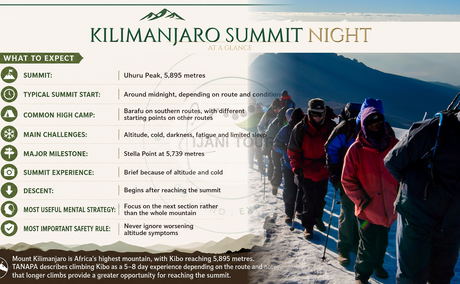
Kilimanjaro Summit Night: How to Prepare Mentally and What to Expect
Sun August 30, 2026
Read This Article
Is Tanzania Safe for Kids on Safari?: A Parent's Guide to Family Safari in Tanzania, 2026–2029
Sat August 29, 2026
Read This Article
Planning a Tanzania safari with children? This practical family safari guide helps parents understand when to go, which parks and experiences suit different ages, how to prepare for health and safety, and what to expect from accommodations, game drives, and wildlife encounters. It also explains how Kijani Tours can tailor a private safari to your family's needs, from the Serengeti and Ngorongoro to cultural experiences and Tanzania's coast, from Pangani to Mafia...
Climbing Kilimanjaro as a Woman: What No One Tells You Before You Go
Thu August 27, 2026
Read This Article
Climbing Kilimanjaro as a woman is absolutely possible, but there are practical things to prepare for before you arrive. This guide covers the realities many women want to know about, including hygiene at mountain camps, managing your period, physical preparation, altitude sickness, and what to expect on summit night. You will also learn which questions to ask Kijani Tours' team regarding privacy, female guides, hygiene and waste management, health monitoring, and emergency...
Share This Post