

Kilimanjaro Summit Night: The Final Hours Before Uhuru Peak At midnight, the mountain disappears. Your headlamp becomes your horizon. Kilimanjaro summit night is the final and most demanding stage of the journey to Uhuru Peak at 5,895 metres. Starting around midnight, climbers face several hours of darkness, cold, fatigue, limited sleep and reduced oxygen availability. The challenge is physical, but it is also deeply mental. The key to managing summit night is...
Responsible Kilimanjaro Trekking: Protecting Africa’s Highest Mountain
Posted by Wolfgang on Sat February 21, 2026 in Kilimanjaro trekking.
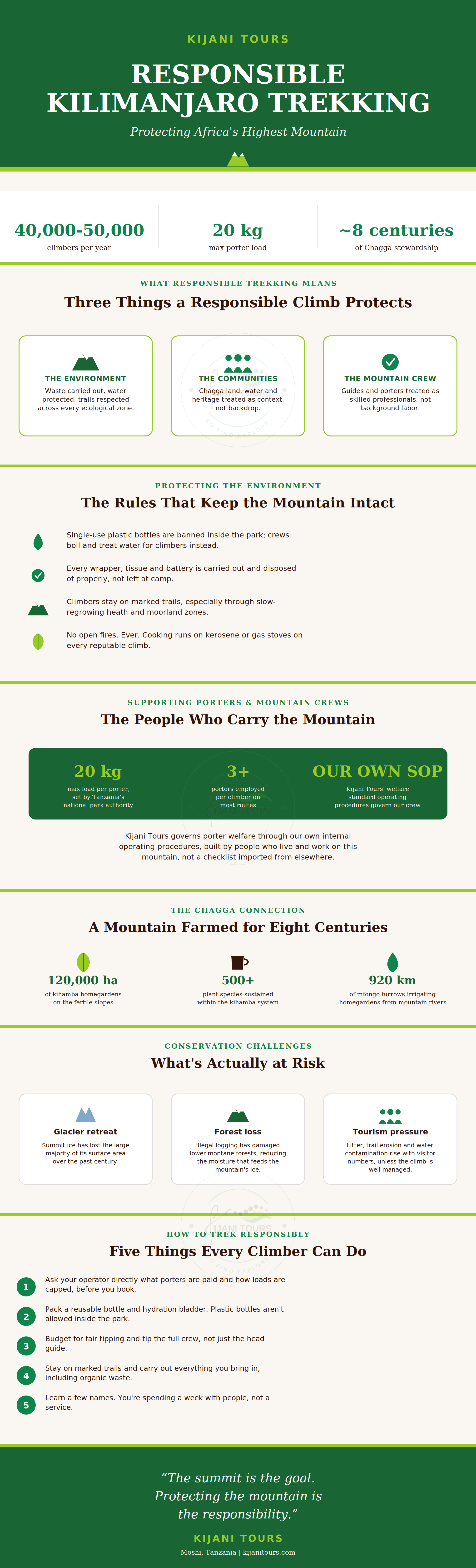
Climbing Kilimanjaro is only half the story. Behind every summit is a mountain ecosystem under real pressure, a crew of porters and guides whose treatment defines what "responsible" actually means, and Chagga communities who have farmed these slopes for centuries. This guide, written from Kijani Tours' own base on Kilimanjaro's southern slopes, lays out what protecting the mountain actually requires, from porter welfare to waste management to the traditional knowledge still keeping this ecosystem alive.
More Than a Summit: A Guide to Responsible Kilimanjaro Trekking
For many travelers, climbing Mount Kilimanjaro is a dream: standing on Uhuru Peak at 5,895 meters, watching the sunrise break over Africa, and completing one of the world's most iconic mountain journeys.
But Kilimanjaro is more than a summit.
It is a living mountain shaped by ancient volcanic forces, fragile high-altitude ecosystems, a changing climate, and communities whose lives have been tied to its slopes for generations. Roughly 40,000 to 50,000 people climb it every year, and every one of them leaves something behind, whether that is a footprint on a trail, a wage paid to a porter, or a bag of rubbish carried down to a village bin. Responsible trekking is the difference between a mountain that can absorb that traffic for another century and one that cannot.
This guide is written from the southern slopes, where Kijani Tours is based, and where the mountain is not an abstraction but the backdrop to daily life. It sets out what responsible Kilimanjaro trekking actually requires: how the park’s environment is managed, how porters are meant to be treated, what the Chagga communities who have farmed these slopes for centuries still do to keep the mountain’s water and soil alive, and what is genuinely at risk if none of this is taken seriously.
The summit is the goal. Protecting the mountain is the responsibility.
What Responsible Kilimanjaro Trekking Means
Responsible Kilimanjaro trekking means treating the climb as one part of a larger system, not a personal achievement extracted from it. That system rests on three things: the mountain environment itself, the communities who call its slopes home, and the mountain crews who make every climb physically possible.
Protecting the mountain environment. Kilimanjaro moves through several distinct ecological zones on the way to its summit, from cultivated foothills and rainforest to heath, moorland, alpine desert, and glacier-covered peak. Each zone carries its own biodiversity and its own fragility, and responsible trekking means protecting vegetation and habitat, reducing waste, conserving water, and staying on established trails through all of them.
Supporting local communities. Kilimanjaro is not just a destination. It is part of the home and heritage of the Chagga communities living on its southern and eastern slopes, who developed farming and water-management systems reflecting generations of understanding of this exact mountain. Responsible tourism ensures those communities benefit from the visitors who pass through, rather than simply hosting them.
Respecting mountain crews. Every expedition depends on a team of guides, assistant guides, porters, and cooks whose knowledge of routes, weather, and altitude makes the climb possible at all. A responsible operator treats that team as part of the experience, not simply as logistics working behind the scenes.
A trek can honor all three of these or none of them, regardless of what the operator’s brochure claims. That is why this guide focuses on the practices themselves, not the sentiment behind them.
Protecting Kilimanjaro’s Natural Environment
Kilimanjaro National Park sits above roughly 1,800 to 2,700 meters, and the ecosystems inside it evolved without the volume of foot and vehicle traffic they now receive. Tourism creates problems related to litter and waste management, erosion of paths, and trampling of vegetation, with visitor numbers in the tens of thousands annually.
Waste management on Kilimanjaro works on a strict carry-out system. Nothing is buried, burned, or left on the mountain. National Park regulations restrict discarding refuse or litter to designated areas and prohibit throwing burning objects. In practice, that means every wrapper, tissue, and battery your crew generates gets bagged and carried down, sorted, and disposed of properly in Moshi or Marangu, not at the campsite. Ethical operators run this as policy, not as an afterthought when a climber asks about it. The principle is simple: the mountain we enjoy today should remain protected for those who climb it tomorrow.
Single-use plastic is banned inside the park. Plastic bottles are not permitted inside the park, and climbers are expected to use reusable containers such as Nalgene-style bottles instead. Guides and porters typically boil or treat water drawn from mountain streams and refill climbers’ bottles at camp and during major stops, rather than supplying disposable bottled water. This is worth understanding before you pack: bringing a case of bottled water for the climb is not just wasteful, it will likely be turned away at the gate. A durable 1-liter bottle plus a hydration bladder is the standard, practical setup.
Water conservation matters both on the mountain and below it. The rivers that supply camp water on Kilimanjaro are the same rivers that Chagga farming communities on the lower slopes have relied on for irrigation for centuries (more on that system below). The mountain’s forests regulate the water systems that support those communities, so protecting the forest is inseparable from protecting the people downstream of it. Operators that avoid contaminating streams with soap or waste, and don’t over-draw from a single source during peak season, are protecting a resource that Kilimanjaro’s Mountain crews and lowland farmers both depend on year-round.
Leave No Trace on Kilimanjaro looks like this in practice:
• Pack out everything you pack in, including biodegradable items like fruit peel and tea bags, which decompose too slowly at altitude to be left behind.
• Stay on marked trails, especially through the heath and moorland zones, where vegetation regrowth is slow, and trampling creates permanent scarring.
• Never light open fires. Cooking on Kilimanjaro is done on kerosene or gas stoves, and there is no acceptable reason for a campfire on the mountain.
• Use the camp’s designated toilet facilities rather than the surrounding bush, and support crews that carry portable toilet tents for hygiene and reduced ground contamination.
• Hand rubbish to your crew rather than leaving it at camp “for someone else,” including items porters can’t easily carry down themselves, like used batteries.
The mountain is not only a place to visit. It is an environment to protect, and that depends on both the operator enforcing these practices and the climber cooperating with them.
Mountain Team Welfare: Beyond Compliance, A Commitment to Our People
At Kijani Tours, we recognize that our guides, porters, cooks, and mountain crews operate in one of the most demanding working environments in Tanzania. While workplace safety regulations provide an important foundation, responsible mountain tourism requires going further.
Our company welfare procedures are designed around the real conditions of Kilimanjaro trekking. We focus on protecting the wellbeing, safety, and dignity of the people who make every expedition possible.
Our mountain team welfare approach includes:
· Providing appropriate equipment and preparation for changing mountain conditions
· Supporting safe working practices throughout every expedition
· Ensuring proper nutrition, rest, and recovery during climbs
· Monitoring health and wellbeing during high-altitude operations
· Maintaining clear communication between travelers and mountain teams
· Respecting the professional knowledge and experience of local guides and porters
· Creating a working environment where every team member is valued
For Kijani Tours, responsible trekking is not only about protecting the mountain environment. It is also about protecting the people who walk its trails every day. A successful summit is a shared achievement, built by the commitment of travelers and the dedication of the Tanzanian mountain teams who guide them.
The Chagga Connection to Kilimanjaro
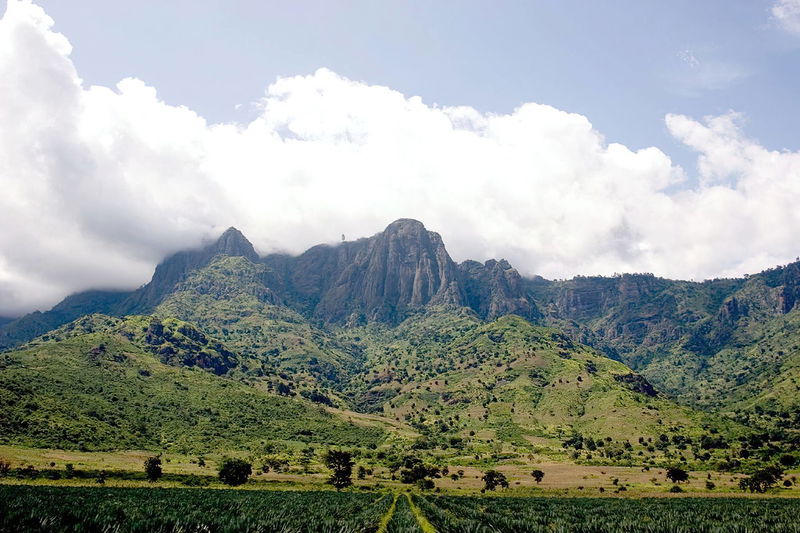
Long before Kilimanjaro was a bucket-list summit, it was, and still is, farmed. The Chagga people have cultivated the mountain’s southern and eastern slopes for roughly eight centuries, and their relationship to Kilimanjaro is one of active stewardship rather than passive proximity. Understanding it changes how a responsible trekker sees the mountain: it is not only a physical landscape but also a cultural landscape shaped by generations of local knowledge.
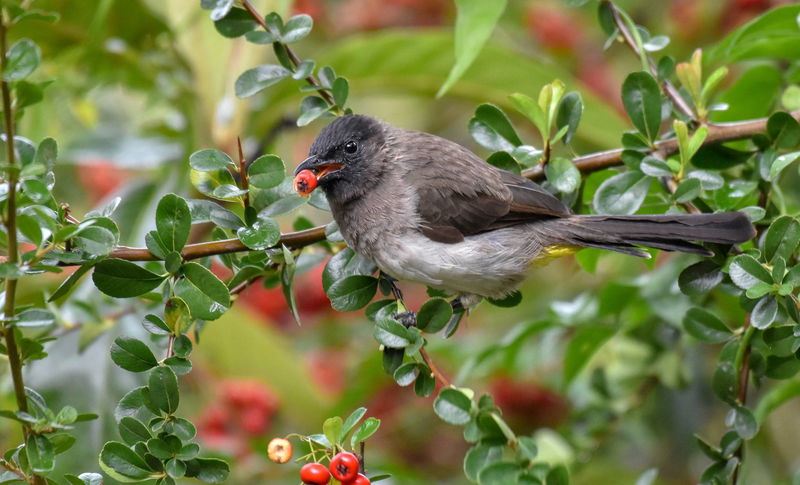
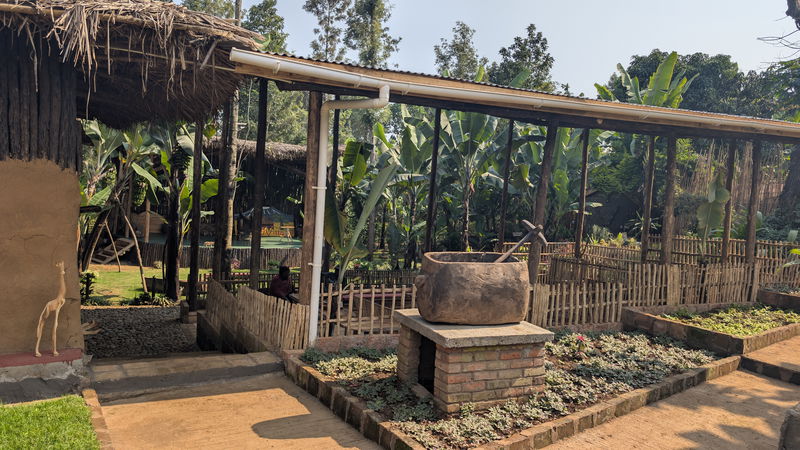
The Chagga homestead garden system (Kihamba) that covers the fertile slopes below the park boundary. This traditional land-use system, thought to have originated around the 12th century, intercrops banana fields with beans, potatoes, vegetables, and widely spaced shade trees. Occupying roughly 120,000 hectares at altitudes of 1,000 to 1,800 meters, it supports one of the highest rural population densities in Africa and provides livelihoods for an estimated one million people. It is not a monoculture. The vegetation structure is multilayered, similar to a tropical montane forest, with trees, shrubs, lianas, epiphytes, and herbs sustaining around 520 vascular plant species, more than 400 of them non-cultivated. A single kihamba plot typically combines banana cultivation, coffee, fruit trees, livestock, and forest plants in one integrated system, not separated fields.
Coffee reshaped, but did not replace, this system. From the 19th century onward, coffee production as a cash crop introduced pesticide use, heavier water demand, and pressure toward monoculture that sat uneasily with the kihamba’s traditional agro-ecological balance. Coffee remains central to the local economy today, but the older multilayered structure- bananas, timber, and shade-grown coffee together- still defines the more traditional homegardens on the mountain’s slopes, and it is part of why the region’s coffee has the character it does.
The traditional irrigation canal (mfongo) system is the engineering that makes all of this possible. Irrigation through the mfongo system accounts for roughly 80 percent of regional water consumption and underpins the entire agroforestry model, with a furrow network extending across approximately 920 kilometers of channels. The canals draw from the perennial rivers flowing out of Kilimanjaro’s montane forest, and runoff is captured in ditches to manage irrigation across the home gardens below. These furrows were historically governed by local chiefdoms, which appointed elders to oversee fair water distribution among households, a governance structure that still shapes how water is shared in parts of the region today.
This is traditional mountain stewardship, and it has a measurable ecological result. Despite the Chagga population growing roughly tenfold, from around 100,000 to close to a million, the historical record on the mountain shows agroforestry expansion rather than deforestation since the early 1960s. The Chagga homestead garden (kihamba) system is recognized internationally as a Globally Important Agricultural Heritage System by the UN Food and Agriculture Organization, in part because of the biodiversity it sustains alongside food production.
For a trekker, this matters practically as well as culturally. Most climbing routes pass through or near Kihamba land on the approach to the park gate, and many of the porters and guides on your crew come from Chagga farming families whose water and land are directly connected to the mountain you are about to climb. A responsible operator treats this connection as core context for the trek, not a side note for a cultural day-trip.
(For a fuller account of Chagga history and traditions beyond agroforestry, see our Chagga Culture Guide).
Kilimanjaro Conservation Challenges
Kilimanjaro’s conservation status is often summarized, not quite accurately, as fine. The more precise picture from the site’s official monitoring is more specific and more useful for understanding what a trekker’s choices actually affect.
Glacier retreat is the most visible and most misunderstood challenge. Kilimanjaro’s glaciers are among the most visible signs of climate change on the African continent, and the shrinking ice fields at the summit have drawn global scientific attention. Kilimanjaro’s summit ice has lost the large majority of its surface area over the past century, and current projections point toward continued loss over the coming decades if warming trends hold. The mechanism is more layered than “the ice is melting,” involving reduced snowfall, increased sublimation, and changes in cloud cover, and it is connected to what happens on the lower slopes, not just at the summit.
(We cover the causes, the timeline, and the science of Kilimanjaro’s retreating ice in detail in our [Kilimanjaro Glaciers Guide].)
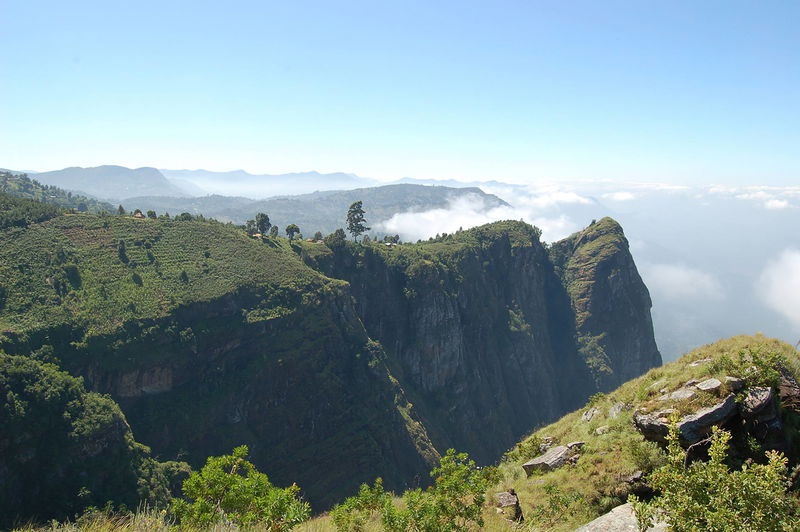
Forest ecosystem protection is arguably the more urgent issue, because it is more directly reversible. Illegal logging has destroyed most of the lower montane forests inside the park’s boundary, including habitat for Africa’s tallest tree species and at least one critically endangered tree species. The moist Ocotea forests that once covered much of the southern slopes have undergone serious destruction from illegal logging of camphor trees, and deforestation of the lower slopes is thought to be partially responsible for glacier retreat itself, by reducing the moisture flow that feeds the mountain’s icy summit. Human-caused fires, often linked to honey collection, poaching, or farming activity, remain a severe threat in the heath and subalpine zones. These forests do more than support biodiversity; they regulate water, protect soil, and sustain local livelihoods, which is why protecting them requires cooperation between communities, conservation groups, travelers, and responsible tourism operators together, not park rangers alone.
Tourism pressure is real, but it is a manageable variable, not an inevitable cost. Increasing tourism creates associated problems with litter, water pollution, and soil erosion, and non-native plant species have been observed introduced along the tourist climbing routes. Research has linked trail erosion directly to hiking pressure, along with water contamination at lower elevations. The park authority’s response has been zoned management. Over 80 percent of the park is classified as wilderness with strict limits on infrastructure, and digital monitoring tools such as GPS tracking and drone mapping are being introduced to manage visitor numbers and detect deforestation.
Community involvement is the variable most directly shaped by how tourism is run, and it cuts both ways. Tourism creates pressure on the mountain, but when well managed, it also funds conservation and supports local livelihoods; poorly managed tourism is the actual risk, not tourism itself. That single distinction is the entire argument for choosing an operator carefully. The same visitor numbers can either strain the mountain’s forests and water or help pay for their protection, depending on where the money and the waste actually go.
How Travelers Can Trek Kilimanjaro Responsibly
Every climber has a role in protecting the mountain, and most of that role is decided before you ever reach the gate.
Before the climb:
• Kijani Tours treats responsible trekking as policy, not marketing. At Kijani Tours, working with experienced local guides, investing in the mountain communities we operate in, and following environmental practices on every single climb isn’t a line we reserve for the website. It’s how we run the business. Look for that same standard wherever you book.
• Ask directly how porters are treated, not just what the trip costs. A responsible operator should be able to tell you exactly what a porter is paid, how loads are weighed and capped, and what welfare standards govern their own crew, without hesitation. Ours are set by our own internal operating procedures.
• Pack for a plastic-free mountain. Bring a durable reusable bottle (1 liter minimum) and a hydration bladder rather than planning to buy or bring disposable bottled water, and avoid unnecessary packaging in general.
• Ask what happens to your waste. A responsible operator should be able to describe its carry-out and disposal process without hesitation.
• Budget for fair tipping, and treat it as a mandatory cost of the trip, not an optional bonus. Tipping is a structural part of porter and guide income on Kilimanjaro, not a gratuity in the Western sense.
• Learn about the mountain before you arrive. Knowing that you’re walking through several distinct climate zones, from rainforest to alpine desert, changes how you treat each one.
(Our [Mount Kilimanjaro Complete Guide] covers the zones, routes, and logistics in full.)
During the climb:
• Follow your guides’ instructions, and respect local customs on and off the trail.
• Carry out everything you carry in, without exception, including organic waste.
• Stay on the marked trail, particularly through heath and moorland sections where regrowth is slow.
• Use only your crew’s treated water sources, and avoid contaminating streams directly.
• Never build a fire; rely on the stoves your crew brings.
• Treat your porters and guides as skilled professionals: learn a few names, ask about their families and villages, and thank them properly, in words and in the tip, at the end.
• If you witness a load being overweighted or a porter under-equipped for the cold, say something to your guide or operator. Client feedback is one of the mechanisms that keeps standards enforced.
Responsible trekking is not about making the journey less adventurous. It is about making the experience more meaningful. Understanding the mountain’s ecology, its people, and its pressures tends to make reaching Uhuru Peak feel like less of a personal trophy and more like the end of a genuinely earned, genuinely shared journey.
Why Responsible Kilimanjaro Trekking Matters
Mount Kilimanjaro belongs to everyone who experiences it, but protecting it is a shared responsibility. A responsible climb connects travelers with the mountain in a deeper way, recognizing the ecosystems, the communities, and the people who make the journey possible, not just the peak at the end of it.
Kijani Tours operates from Moshi, on Kilimanjaro’s southern slopes, inside the same communities and landscape this guide describes. Responsible trekking, for us, is not a marketing position. It is the only way we know how to run a climb on a mountain we live beside.
The summit is the goal. Protecting the mountain is the responsibility.
Frequently Asked Questions About Responsible Kilimanjaro Trekking
1. What makes a Kilimanjaro climb responsible?
A responsible Kilimanjaro climb protects the mountain’s ecosystem, treats porters and guides as skilled professionals rather than background labor, and channels tourism revenue toward the communities whose land and water the route passes through. Reaching Uhuru Peak is the goal; how that summit is reached, who is paid fairly to get you there, and what state the mountain is left in is the actual measure of a responsible climb.
2. How can travelers reduce their environmental impact on Kilimanjaro?
Bring a reusable water bottle instead of single-use plastic, pack out everything you bring in, including biodegradable waste, stay on marked trails through slow-regrowing heath and moorland zones, never light open fires, and choose an operator that treats waste carry-out and Leave No Trace practices as standard procedure rather than an afterthought.
3. What is Leave No Trace, and how does it apply specifically to Kilimanjaro?
Leave No Trace is a set of outdoor ethics built around minimizing human impact: carry out all waste, stay on trails, avoid fires, and leave natural and cultural features undisturbed. On Kilimanjaro, this translates into concrete practices like packing out organic waste at altitude, never lighting open fires, and using only designated toilet facilities.
4. Can I bring plastic water bottles on Kilimanjaro?
Single-use plastic bottles are not permitted inside the national park. Bring a durable reusable bottle and, ideally, a hydration bladder; your crew will supply treated water drawn from mountain sources at camp and during stops.
5. What actually happens to human waste on Kilimanjaro?
Camps use designated toilet facilities, and responsible operators increasingly bring portable toilet tents to reduce reliance on aging public facilities at popular campsites. Waste is not left to accumulate in the open; it is managed through the park’s sanitation infrastructure and the operator’s own facilities.
6. Is climbing Kilimanjaro bad for the mountain’s ecosystem?
Climbing itself is not inherently harmful; poorly managed climbing is. The national park’s own monitoring points to litter, trail erosion, and water contamination as tourism-linked pressures, all of which are directly reduced by operators and climbers who follow Leave No Trace practices.
7. Are there concerns about how many people climb Kilimanjaro each year?
Visitor numbers in the tens of thousands annually do create measurable pressure on trails, water sources, and vegetation, according to the park’s own conservation monitoring. The park authority manages this through zoning and route permit limits rather than an outright visitor cap, which places more weight on how each operator manages its group’s impact.
8. Can tourism help protect Mount Kilimanjaro?
Yes, when it’s managed well. Tourism revenue funds park management and conservation work, and it pays the wages of the guides, porters, and cooks whose livelihoods depend on the mountain staying protected. The same visitor numbers that strain trails and water sources under a poorly run operator can instead help pay for their protection under a well-run one; the difference is entirely in how the climb is organized. (Kijani Tours’ own conservation commitments are outlined in [Why Kilimanjaro Conservation Matters, and How to Climb Responsibly].)
9. Why are porters important on Kilimanjaro?
Porters carry the mountain, literally. On a typical expedition, they haul tents, food, fuel, and equipment up and down the route every day, arriving at each camp ahead of the climbers to have it ready. Their knowledge of Kilimanjaro’s weather, terrain, and altitude symptoms, built over years on this specific mountain, is just as essential to a safe summit as their physical labor.
10. What does a typical day look like for a Kilimanjaro porter?
Porters generally break camp after climbers set off, then move quickly past the group carrying tents, food, and equipment so camp is largely set up again by the time climbers arrive. It’s a physically demanding routine repeated daily across five to nine days, depending on the route.
11. How many porters accompany a typical Kilimanjaro climbing group?
Responsible operators generally employ at least three porters for every climber on most routes, on top of guides, assistant guides, and cooks, so loads can be distributed safely rather than concentrated on too few people.
12. What is the maximum weight a Kilimanjaro porter should carry?
The maximum is 20 kilograms per porter, a limit set by Tanzania’s national park authority because loads above that significantly increase injury risk at altitude and on steep terrain.
13. Why do porters walk faster than climbers on the trail?
Porters need to reach the next campsite well ahead of the group to set up tents, prepare food, and have hot water ready. Their pace is a function of the job, not a race with the clients they’re supporting.
14. How do I know if a Kilimanjaro operator treats its porters fairly?
Ask directly about wages, load limits, meals, and equipment, and expect a specific answer. Fair operators can tell you their porter-to-climber ratio, confirm they enforce the 20-kilogram load limit set by Tanzania’s national park authority, and describe what gear porters are issued. An operator that treats this as standard business practice, governed by its own internal procedures within Tanzania’s OSHA framework, rather than an afterthought raised only when a climber asks, is the clearest sign of genuine care.
15. Why do some Kilimanjaro packages cost far less than others on the same route?
Price differences on identical routes usually come from somewhere specific, and porter wages are one of the most common places operators cut costs. A price well below the market range on a given route is worth questioning directly, not assuming is simply good value.
16. How much should I tip porters and guides, and why does it matter so much?
Tipping is a structural part of crew income on Kilimanjaro, not a discretionary extra, and operators typically provide a recommended tipping guide before the climb. Following it, and tipping the full crew rather than only the head guide, is one of the most direct ways a climber supports fair porter income.
17. What should travelers do to directly support porter welfare during a climb?
Ask specific questions before booking, tip the full crew fairly at the end of the trek, treat guides and porters as professionals rather than background staff, and speak up if you notice a crew member under-equipped or overloaded. Small, direct actions like these do more for porter welfare than any badge on a website.
18. What welfare standards does Kijani Tours follow for its porters and mountain crew?
Kijani Tours governs porter and crew welfare through our own internal operating procedures, in line with Tanzania’s Occupational Safety and Health Authority (OSHA) standards, covering fair wages, enforced load limits, proper cold-weather equipment, and adequate meals for guides, porters, and cooks. [Contact us] for the specifics of our crew ratios and welfare practices before booking.
19. How does climbing Kilimanjaro support local communities?
Many of the guides, porters, and cooks on Kilimanjaro come from Chagga families on the mountain’s lower slopes, so wages paid on the mountain flow directly into those communities, alongside the guesthouses, shops, and businesses around Moshi that trekking tourism supports. How much broader benefit reaches the community beyond individual wages depends heavily on the specific operator’s practices and community partnerships.
20. What is the connection between the Chagga people and Kilimanjaro?
The Chagga people have cultivated Kilimanjaro’s southern and eastern slopes for roughly eight centuries through the kihamba homestead garden system and the mfongo furrow network that irrigates it, a traditional land use approach that has expanded rather than destroyed the mountain’s forest cover even as the population living on it grew roughly tenfold. (See our [Chagga Culture Guide] for the full history.)
21. Is it disrespectful to photograph porters or local communities on the mountain?
Treat it the way you would want to be treated: ask first, and respect a no. Many porters and guides are happy to be photographed, especially once a rapport has built over a few days on the trail, but assuming consent, particularly with community members outside the climbing crew, is not appropriate.
The legacy angle
Kilimanjaro has been climbed for over a century, and it will be climbed for a century more, but only if it survives the climbing. The glaciers are already disappearing. The forests are already under pressure. The only variable still within a traveler's control is how the next 50,000 climbers a year choose to move through this place, and whether the mountain a future trekker reaches is the same one you did. That choice starts before the trailhead, with who you book with, what you carry, and how you treat the people carrying it for you.
Share This Post
Latest News
Tanzania Travel Guide | Safaris, Kilimanjaro, Beaches, Culture and Responsible Travel
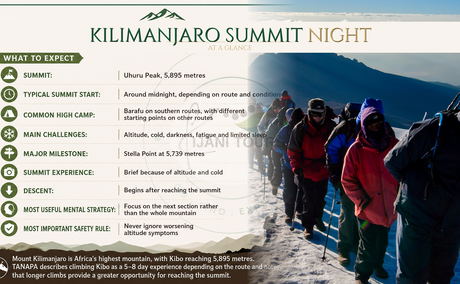
Kilimanjaro Summit Night: How to Prepare Mentally and What to Expect
Sun August 30, 2026
Read This Article
Is Tanzania Safe for Kids on Safari?: A Parent's Guide to Family Safari in Tanzania, 2026–2029
Sat August 29, 2026
Read This Article
Planning a Tanzania safari with children? This practical family safari guide helps parents understand when to go, which parks and experiences suit different ages, how to prepare for health and safety, and what to expect from accommodations, game drives, and wildlife encounters. It also explains how Kijani Tours can tailor a private safari to your family's needs, from the Serengeti and Ngorongoro to cultural experiences and Tanzania's coast, from Pangani to Mafia...
Climbing Kilimanjaro as a Woman: What No One Tells You Before You Go
Thu August 27, 2026
Read This Article
Climbing Kilimanjaro as a woman is absolutely possible, but there are practical things to prepare for before you arrive. This guide covers the realities many women want to know about, including hygiene at mountain camps, managing your period, physical preparation, altitude sickness, and what to expect on summit night. You will also learn which questions to ask Kijani Tours' team regarding privacy, female guides, hygiene and waste management, health monitoring, and emergency...
Share This Post