

Kilimanjaro Summit Night: The Final Hours Before Uhuru Peak At midnight, the mountain disappears. Your headlamp becomes your horizon. Kilimanjaro summit night is the final and most demanding stage of the journey to Uhuru Peak at 5,895 metres. Starting around midnight, climbers face several hours of darkness, cold, fatigue, limited sleep and reduced oxygen availability. The challenge is physical, but it is also deeply mental. The key to managing summit night is...
Chagga People of Kilimanjaro: Culture, History and Village Life
Posted by Wolfgang on Fri January 9, 2026 in Chagga Culture and Heritage Tourism.
The Chagga people of Kilimanjaro have spent centuries demonstrating that farming, faith, and governance need not compete with conservation; they can reinforce it. This guide explores the four-tiered Kihamba garden system, the Isale plant that still settles land disputes without a single court date, the Mfongo canals that have moved water fairly across the mountain for generations, and the missionary-era coffee trade that grew into Africa's first African-run cooperative. Kijani Tours explores the people, land, and living history behind Tanzania's most storied mountain community.
1. The Genesis: Of Dwarfs and Ancient Shadows
To understand the Chagga, it helps to start with those who came before. Long before the Bantu migrations brought the ancestors of today's Chagga clans to these slopes, oral tradition holds that the mountain belonged to the Wakonyingo.
Oral traditions describe the Wakonyingo as a legendary race of "mountain dwarfs," regarded in these stories as the original guardians of the high-altitude caves and hidden ravines, said to have the power to deal with those who approached the land with ill intent. According to this tradition, the Wakonyingo were eventually absorbed into the growing Chagga clans, yet their presence is still felt in local storytelling today. When a Kijani guide takes you past a deep volcanic gorge, they aren't just showing you geography; they are sharing a piece of ancestral folklore tied to that place.
2. The Architecture of the Kihamba
If you want to see a masterclass in applied ecology, look at a Kihamba rather than a skyscraper. The Kihamba is the traditional Chagga homestead garden, a form of agroforestry that has remained productive for generations without synthetic chemical input, built around a four-tiered system.
The four layers of the Chagga homestead garden
- The high canopy: tall timber trees (such as Albizia) break the force of tropical storms and create a cooler, shaded microclimate for everything growing beneath them.
- The mid-layer: under the shade of the giants, banana varieties and high-altitude Arabica coffee thrive side by side.
- The understory: shrubs, medicinal plants, and root crops such as yams fill the gaps between the larger plants.
- The forest floor: zero-grazing livestock, cows and goats kept in stalls rather than pasture, provide the manure that fuels the whole system.
The result is a closed-loop system: livestock eat banana peelings and tree fodder, and their waste returns nutrients to the volcanic soil. It is a model that shows how intensive food production and environmental protection can reinforce each other rather than compete.
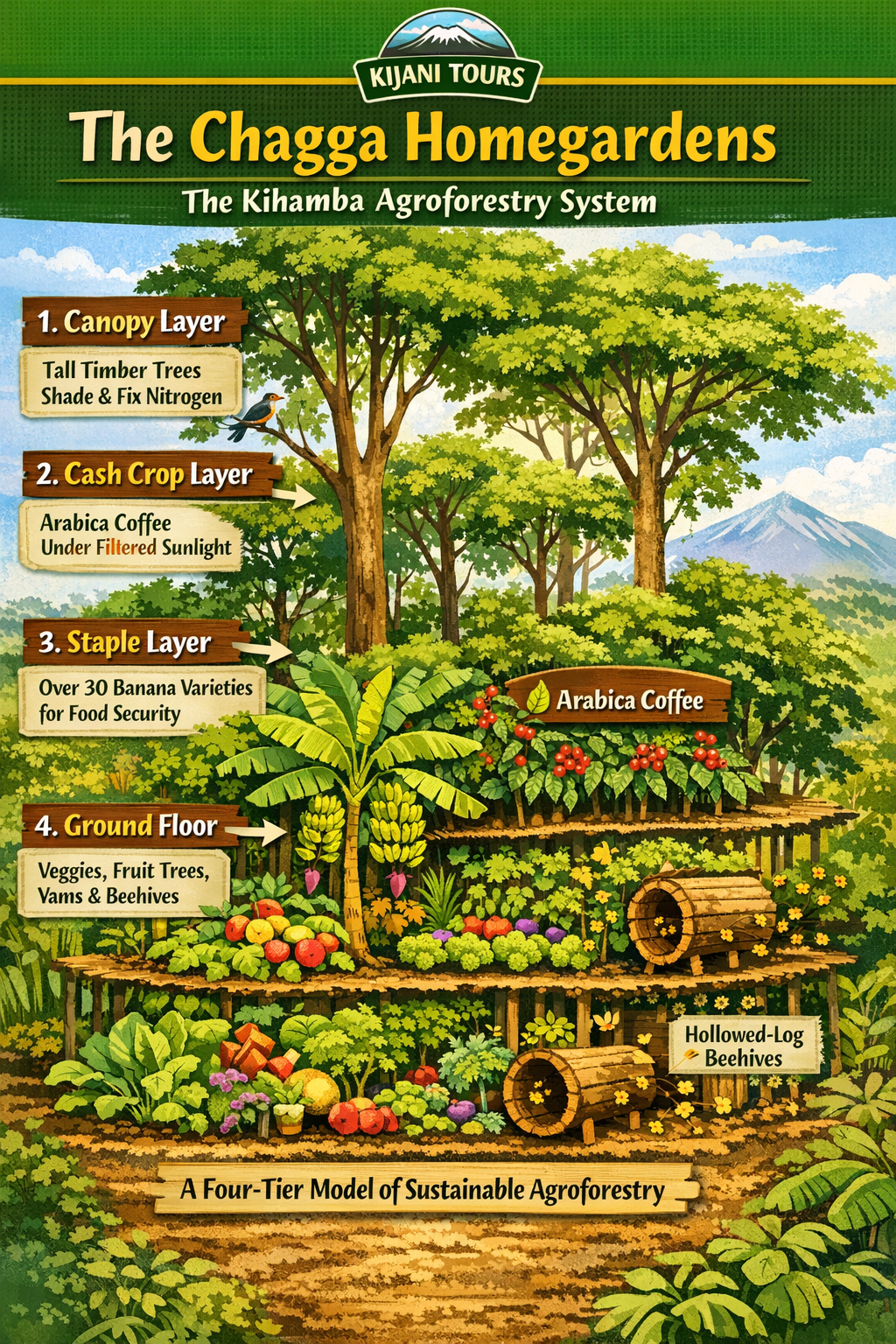
The four-tiered Kihamba system: canopy, banana/coffee mid-layer, understory, and livestock floor.
3. Isale: The Botanical Boundary of Peace
On the slopes of Kilimanjaro, one plant bears the weight of history: Isale (Dracaena afromontana). To the Chagga, Isale is not merely a plant; it serves as a boundary marker, a peace offering, and a memorial.
- The boundary: it marks the borders of the Kihamba, a living fence that neighbours respect traditionally.
- The peace offering: in moments of serious dispute, a folded Isale leaf can be offered as a gesture of reconciliation, a gesture that tradition says should not be refused.
- The anchor: Marks the Kyungu, the spot where the first ancestor of a clan is said to have settled.
To understand Isale is to understand how the Chagga have maintained social harmony on a densely populated mountain for generations.
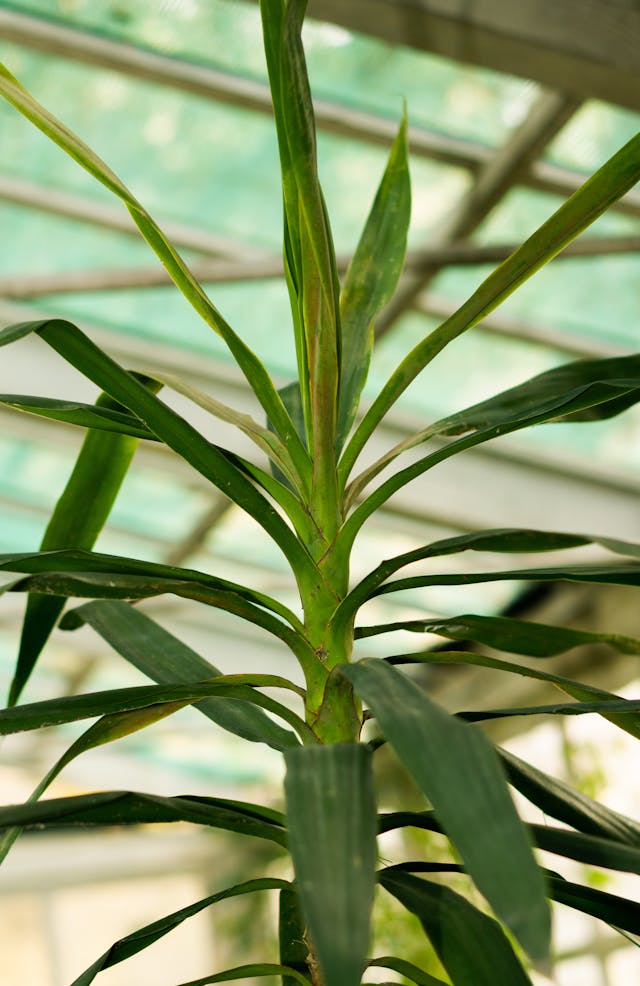
Photo © Kijani Tours
4. Kyungu and Kifunyi: Where Ancestry Is Kept
Land on Kilimanjaro is treated less as a commodity and more as a living record. Within the Kihamba, two sites are particularly important: the Kyungu and the Kifunyi.
The Kyungu: The Spiritual Command Centre
The Kyungu is the site where a clan's founding ancestor is said to have first settled, marked by an ancient tree and an Isale plant. According to tradition, when a family faces hardship, whether drought, illness, or internal conflict, they gather at the Kyungu for a ceremony called Mitambiko, sharing food and mbege (banana beer) to seek clarity and resolution.
The Kifunyi: The Sanctuary of the Departed
If the Kyungu holds the living history of a clan, the Kifunyi is the resting place of those who have passed. Historically, this was the site of secondary burial, a private grove honouring ancestors beneath the forest canopy, and a reminder that the land, which continues to feed the living, is also the resting place of those who came before.
A.) Folklore and Spirituality
Chagga spirituality blends indigenous beliefs with Christianity and Islam. Central to traditional cosmology is Ruwa, associated with the sun and sky. Sacred groves known as Msala, together with rituals dedicated to ancestral spirits, reflect a deep, longstanding respect for nature that predates and now coexists with the region's introduced faiths.
B.) The Living Traditions of the Chagga
i.) The Intestine Readers: Ancient Foresight
In the Chagga heartland, the slaughter of a goat, sheep, or cow is never merely for meat; it is a sacred inquiry. For centuries, elders, the keepers of mountain wisdom, have practised the art of Divination through Entrails. After a ritual slaughter, the elders gather in the quiet of the Kihamba. They carefully examine the patterns, colours, and textures of the animal’s intestines. To the untrained eye, it is just nature; to the elder, it is a map.
They "read" these signs to predict seasonal shifts, understand the cause of a family’s misfortune, or seek approval from the ancestors for a new venture. It is a moment where the physical and spiritual worlds intersect, proving that nature holds all the answers if you know how to look.
ii.) The Oil of Grace: The Sheep’s Fat Ritual
On the third day after a burial, a profound ritual of "softening" takes place. The family slaughters a sheep, but the most critical part isn't the feast; it’s the fat (body oil). This oil is gently applied to the grieving family members. In Chagga thought, death is "dry" and "harsh."
The application of the sheep’s fat is a symbolic act of anointing and protection. It is believed to soothe the spiritual friction caused by loss, "cooling" the hearts of the bereaved and signalling to the ancestors that the family is under the clan's care. It is an act of deep, tactile empathy.
iii) The Shaving Ceremony: A Physical Reset
The third day can also bring a shaving ceremony, where family members shave their heads as a visual and physical marker of transition.
a) The symbolism: hair is associated with a recent period of illness or mourning; removing it marks a break from that period.
b) The new growth: as hair grows back, it signifies the continuation of the family line and a return to ordinary life.
iv) Collecting Firewood and Fodder: The Signal of Return
The final step in this sequence of mourning rituals is a communal gathering of firewood and fodder. This is not merely a chore; it's a ritual of re-entry: by performing daily Kihamba (homestead) tasks together, the family and clan mark the formal end of the mourning period, allowing members to return to ordinary life knowing the household is once again on its feet.
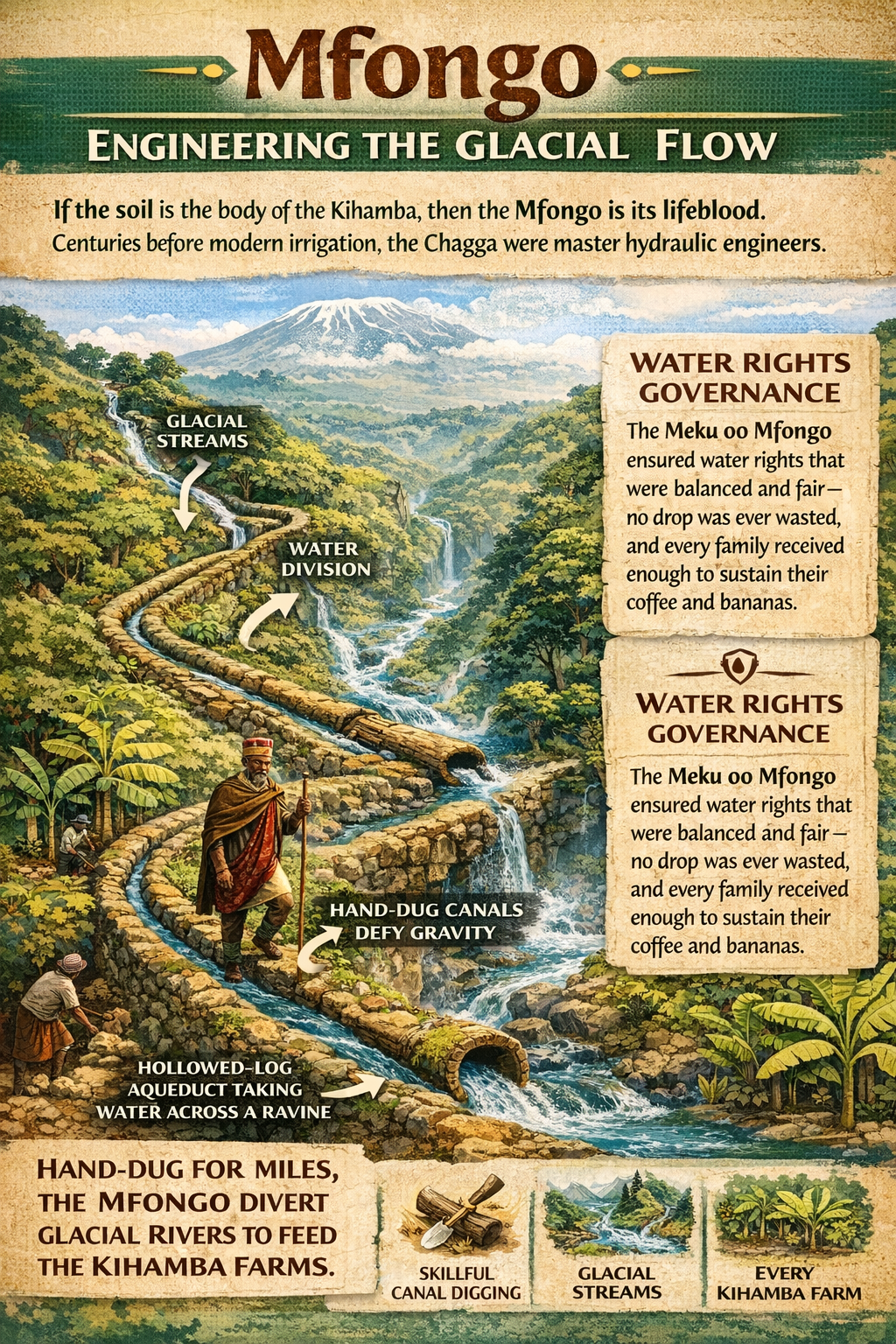
5. Chagga irrigation canal (Mfongo)
The Mfongo irrigation canals are far more than a feat of hydraulic engineering; they are a living masterclass in community and social governance. Central to this system was the Meku oo Mfongo, the "Guardian of the Water," a respected figure who acted as the mountain’s hydraulic diplomat. The Chagga didn’t just build these channels to move water; they built them to move together, and it was the Meku oo Mfongo who ensured that this life-giving resource reached every homestead with absolute fairness.
The Resilience of the Mfongo Today
Even in 2026, as modern legal procedures and formal water permits become the standard in Tanzania, the Mfongo system endures. Its survival is a testament to its deep integration into the Chagga social fabric. While the government now manages water through formal "Water User Associations" and the Water Resources Management Act of 2009, which requires local water users to participate in sustainable management by obtaining water use permits, adhering to regulations for extraction and discharge (especially for groundwater), preventing pollution, resolving conflicts through Catchment Committees, and contributing data for planning, ensuring equitable access and conservation for present and future needs.
The traditional role of the Meku oo Mfongo often coexists with these new laws. In many villages, the community still looks to their traditional guardians to resolve the daily, local complexities of distribution that a distant legal document cannot always capture. This dual system provides a unique layer of social resilience, keeping the water flowing even when modern infrastructure faces challenges.
Climate Change and the Future of the Water
The future of the Mfongo, however, faces a significant shadow: climate change. As the glaciers of Mount Kilimanjaro recede and rainfall patterns become increasingly erratic, the glacial streams that feed these canals are under threat.
The Challenge: Reduced flow during dry seasons and increased "flash floods" during the rains test the hand-dug structural integrity of the canals.
The Adaptation: To protect this heritage, organisations like Kijani Tours and local conservation groups are advocating for a return to the "Guardian" philosophy, combining ancient wisdom with modern Climate-Smart Agriculture. This includes lining key sections of the canals to prevent seepage and integrating them with rainwater harvesting to ensure the kihamba gardens remain lush even as the mountain's "ice cap" disappears.
The Mfongo represents a profound lesson in collective action. It challenges us to reflect: How can we manage our shared global resources with the same integrity and discipline as these ancestral Guardians of the Water? To walk alongside these gravity-defying canals today is to witness a heritage where technical ingenuity, legal evolution, and social harmony flow as one.
Our guide to Kilimanjaro's disappearing glaciers looks at this shift in more detail.
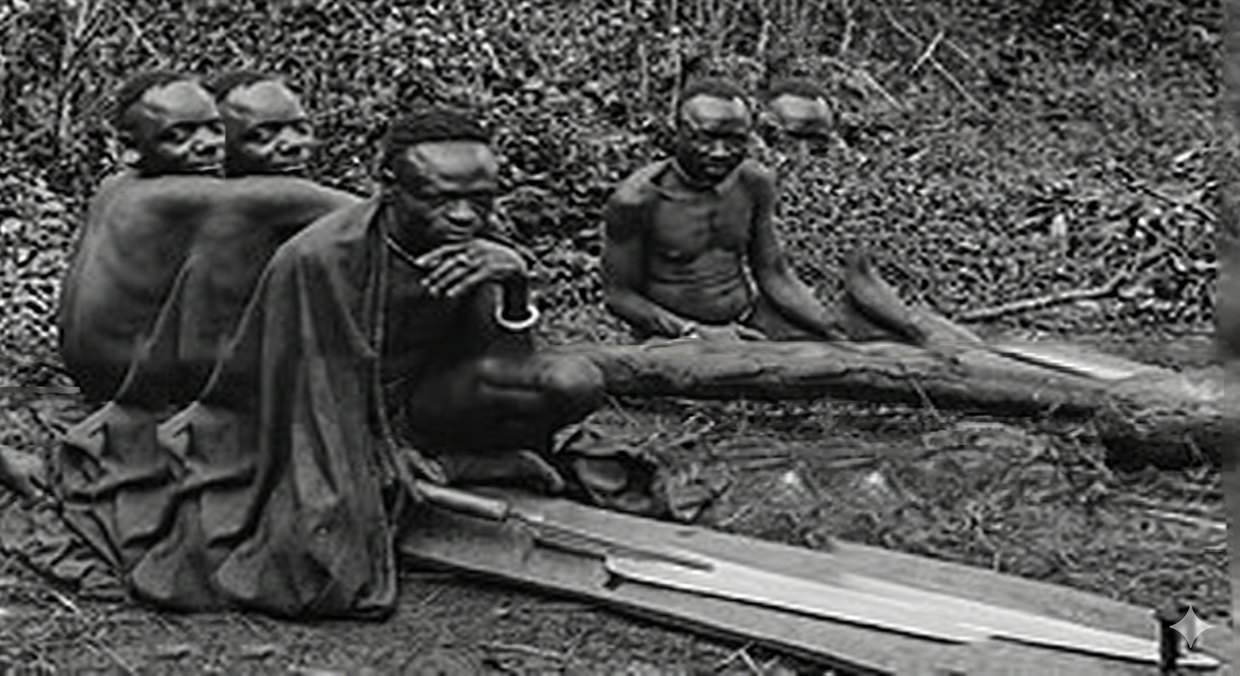
5. Blacksmith in the Chagga community
In the shadow of majestic Mount Kilimanjaro, early Chagga society revered the blacksmith as a master artisan and guardian of survival. Using ingenious techniques, fanning roaring charcoal fires with goatskin bellows, hammering glowing iron on ironstone anvils, and gripping it with long pincers, they forged tough hand hoes for banana groves, razor-sharp spears, swords, and arrowheads for warriors, plus ceremonial items.
Long before modern trade routes reached the slopes of Mount Kilimanjaro, the Chagga people relied on an essential partnership with their neighbours, the Pare. The Pare and Taita tribes were well-known for their iron smelting, supplying the Chagga with raw and semi-processed iron instead of finished tools. From this material, Chagga blacksmiths took charge. This iron was then forged by Chagga blacksmiths into tools and weapons, supporting their agricultural and military needs. This relationship allowed the Chagga to maintain control over craftsmanship while benefiting from the Pare’s expertise in metallurgy.
In the 19th century, as competition and rivalries among Chagga chiefdoms grew stronger, the demand for iron increased sharply. Weapons needed to be tougher, and farming tools had to be more effective. Iron sourced from the Pare became a crucial resource that fueled both political power and agricultural productivity.
This exchange reveals an important truth: the Chagga's strength came not from importing ready-made goods but from transforming iron obtained from the Pare into tools for survival, resilience, and authority on the slopes of Kilimanjaro.
Today, this thrilling legacy endures, drawing adventurous travellers on cultural tours near villages like the Nkini clan in the Mae chiefdom (Siha district), which was particularly respected for its metalworking traditions, Mamba, and Marangu, to watch local blacksmiths at work, sparks flying as they forge tools and spearheads, echoing their ancestors' daring spirit.
6. Rites of Passage: From Maseka to Mangati
Deeply rooted in the volcanic soil of Kilimanjaro, the social structure of the Chagga people was historically governed by Rikas, or generation groups, which ensured that every individual played a vital role in the community’s harmony. The journey from childhood to adulthood was far from a simple milestone; it was a rigorous, sacred process of instruction designed to forge the next generation of leaders and stewards. Young men underwent Ngasi (Male Initiation), where they resided deep within the mountain forests to master the secrets of manhood, the art of hunting, and the strategic weight of tribal defence.
Simultaneously, young women participated in Shija (Female Initiation), a months-long immersion within the shelter of the ancestral banana groves, where they were instructed in sacred rituals, the responsibilities of motherhood, and the intricate social fabric of the clan. While the formal ceremonies of the Ngasi and Shija largely transitioned during the colonial era, the core spirit of these rites remains a cornerstone of cultural tourism in Moshi and the wider Kilimanjaro region today. The values they instilled unwavering respect for elders, deep communal responsibility, and a fierce protection of the land continue to define the modern Chagga identity, proving that even as traditions evolve, the "umbilical cord" to their ancestral heritage remains unbroken and continues to guide the path of the Chagga communities.
7. The Sacred Sip: Mbege and the Heart of Chagga Hospitality
To step into a Chagga home on the slopes of Kilimanjaro is often to be greeted with Mbege, a traditional beer brewed from fermented bananas and finger millet. Far more than a beverage, Mbege functions as a social bond: shared at weddings to unite two families, offered at funerals to honour those who have passed, and poured during gatherings meant to resolve disputes. Accepting a gourd of Mbege is a small act of participation in a much older tradition of hospitality.
8. Medicinal plants in the Chagga people
The Green Cathedral: Walking Through Kilimanjaro’s Ancient Pharmacy
Beyond the spicy, sharp scent of the Ikiingiyi (Ginger Bush), the slopes of Mount Kilimanjaro hold a deeper secret. To the untrained eye, the tangled greenery of a Chagga Kihamba garden or the mist-veiled mountain forest is "nature." But to the Chagga, it is a living, breathing cathedral of healing—a "Green Pharmacy" where every leaf carries a name and every root holds a story.
For generations, the Chagga have been quiet masters of the mountain’s biodiversity. Their wisdom isn’t stored in dusty archives, but in the hands of elders and the soil of their ancestral gardens.
Here are the silent healers that have stood guard over the community’s health for centuries:
The Msesewe: The Bitter Anchor (Rauvolfia caffra)
Commonly known as the Quinine Tree, the Msesewe is perhaps the most spiritually significant tree on the mountain. If you’ve ever tasted Mbege (traditional banana beer), you’ve met the Msesewe—it is the bitter bark of this tree that stabilises the brew. The Healing: Beyond the gourd, a decoction of its bark has been used for centuries as a potent remedy for malaria and pneumonia.
The Spirit: You will often find the Msesewe leaning over a Mfongo canal. It is the mountain’s hydraulic diplomat, acting as both a structural and spiritual anchor for the water that feeds the homesteads.
The Mseni: Breath of the Mountain (Olea europaea ssp. cuspidata)
The African Wild Olive is a symbol of sheer endurance. While its wood is legendary for its strength, its true gift lies in its ability to help the community breathe.
The Wisdom: In the thin, crisp air of the high altitudes, the Chagga use infusions of its leaves and bark to soothe respiratory struggles and balance high blood pressure. It is a gentle, enduring remedy, mirroring the resilience of the tree itself.
The Mkonde-konde: The Ancient Giant (Prunus africana)
The Red Stinkwood is a global celebrity in modern medicine today, but the Chagga recognised its power long before Western journals documented it.
The Remedy: This tree is a protected treasure. Traditionally, its bark is pounded and boiled to treat internal inflammation and urinary health. Its presence on the mountain is a testament to an advanced botanical science that has thrived here for centuries, independent of the outside world.
Mvunja-kongwa: The Bone-Setter (Synadenium glaucescens)
Often found standing guard near the entrance of a homestead, this succulent-like tree is a physical and spiritual protector.
The Ritual: Its name translates to "the breaker of the yoke," a powerful nod to its ability to break the hold of injury. The milky latex and roots are carefully prepared by elders to treat deep wounds and set broken bones. It is the "emergency room" of the forest, a bridge between physical repair and ancestral grace.
The Vumbasi: The Scent of Home (Ocimum gratissimum)
If you want to know the scent of a Chagga childhood, you look to the understory of the garden. Vumbasi, or Wild Basil, is the ever-present "first aid" plant found in every Kihamba.
The Use: Its aromatic leaves are a comforting remedy for everything from a restless stomach to a heavy chest cold. Whether inhaled as a fragrant steam or crushed for a quick infusion, Vumbasi is the humble, ever-present healer that is always within arm’s reach.
The Healing Cord: Preserving Faint Echoes
To walk through the mountain mists with a Kijani Tours guide is to realise that the forest is not a commodity; it is a conversation. However, as rainfall patterns shift and the "Iron Snake" of urbanisation reaches higher, this ancient pharmacopoeia faces a quiet threat.
Walking through these gardens with a Kijani Tours guide isn't just an observation of tradition; it's a way to help keep the knowledge behind it alive for future generations, alongside the shifting pressures of changing rainfall and expanding urbanisation.
9. Political Evolution of the Chagga
The path from independent chiefdoms to one of Africa's most successful cooperative movements is a story of adaptation. For generations, the Chagga were organised into numerous autonomous chiefdoms, each led by a Mangi (chief) who held authority over land distribution, management of the Mfongo canals, and clan justice.
The age of the Mangis
In the 19th century, leaders such as Sina of Kibosho and Marealle of Marangu built their chiefdoms into significant regional powers, using the Ngasi age-set system to train young men in defence and communal labour.
Mangi Meli: resistance against colonial forces
When German colonial forces pushed into East Africa in the late 1800s, they met firm resistance from Mangi Meli of Moshi, born in 1866 and installed as ruler in 1891.
In 1892, his forces won a battle against the Germans at Moshi, forcing a temporary retreat.
He was eventually captured and executed in 1900 near Old Moshi; his descendants have continued efforts to locate and repatriate his remains. In a final act of colonial cruelty, his head was severed and sent to Germany. Even today, his spirit looms large as his descendants continue the search for his remains to bring their king home for a dignified burial.
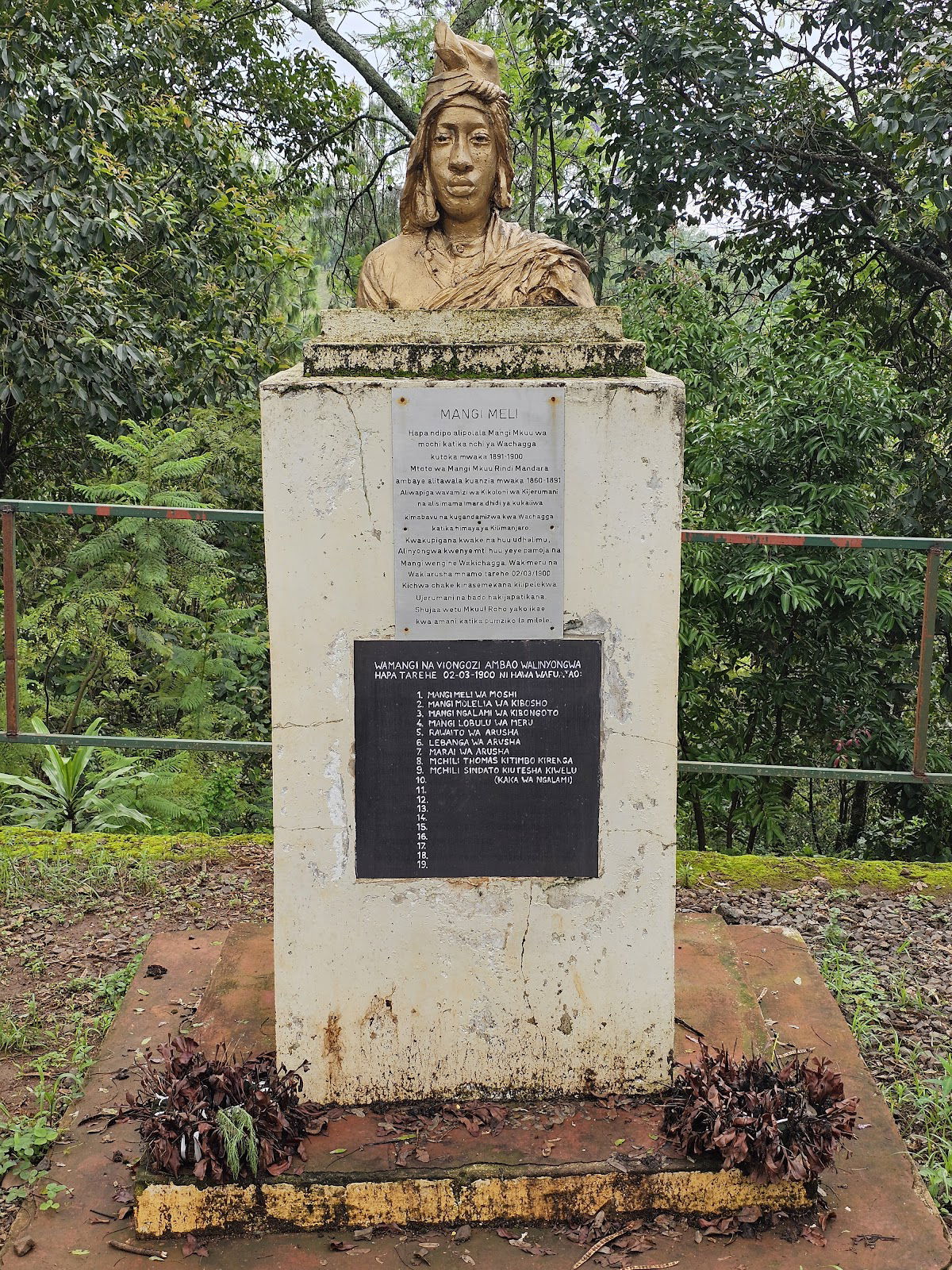
Mangi Meli of Moshi
Introduction of Christianity In Kilimanjaro
Exploring the lush foothills of Mount Kilimanjaro with Kijani Tours reveals a living history that stretches far beyond the summit. This spiritual journey began in 1848 with missionary Johannes Rebmann’s first sighting of the snow-capped peak, sparking a transformative era where the "Cross and Flag" moved onto the mountain's fertile slopes. The Catholic Spiritans, arriving in 1868, left an incredible architectural legacy, most notably the 1893 Kibosho Church, a massive, Bavarian-style stone masterpiece that became a vital centre for early healthcare and civic life. Meanwhile, the Lutheran Leipzig Mission profoundly shaped the region's intellect by championing education and literacy in the mother tongue, translating faith into the local Kichagga language in hubs like Marangu and Machame. These dual influences helped the Chagga people navigate the colonial era, establishing the communities around Moshi as some of the most educated in Tanzania.
Beyond the historic steeples, this era introduced the "black gold" of Arabica coffee, a missionary garden experiment that blossomed into a global industry and redefined the Chagga economy. On a Kijani Tours cultural excursion, you will stroll through ancestral "Kihamba" gardens where these coffee traditions continue to thrive alongside the ancient reverence for the high god, Ruwa. This unique blend of devout Lutheran and Catholic practices, seamlessly woven into ancestral respect, creates a spiritual tapestry unlike any other. By going behind the scenes with our expert guides, you don’t just see the peaks; you connect with the resilient spirit, legendary heritage, and vibrant culture of the people who call the slopes of Kilimanjaro home.
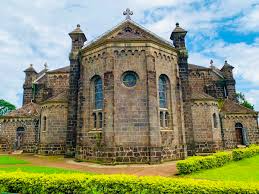
Kibosho Catholic Church, completed in 1893.
How Missionary Schools Shaped Kilimanjaro’s Legacy of Learning
When you think of Kilimanjaro, the first image that comes to mind is probably the snow-capped peak rising above the plains of Tanzania. But beyond its breathtaking scenery, the region also carries a fascinating story about education—one that began in the late 19th century with the arrival of missionaries.
The Lutheran Beginnings
In 1893, the Leipzig Lutheran Mission arrived in Machame, picking up where the Church Missionary Society had left off before being shut down by German colonial authorities. By October of that year, they had planted their first mission station, and just a year later, in 1894, a formal school opened its doors. This was the spark that lit a chain reaction: more schools followed in places like Mamba (1902), Kidia, and Old Moshi.
The Catholic Expansion
Around the same time, Catholic missionaries—the Holy Ghost Fathers (Spiritans)—were making their way inland from the coast. Led by Bishop Jean Marie de Courmont and Father Alexander Le Roy, they reached Kilimanjaro in 1890 and established one of their most influential missions at Kilema. Unlike many schools of the era, their approach went beyond religious and academic lessons. They taught practical skills too, especially in agriculture. In fact, they were the ones who introduced Arabica coffee to the region—a crop that would go on to become a cornerstone of Kilimanjaro’s economy and identity.
A Region Transformed
By the early 20th century, the educational footprint of these missions was undeniable. The Spiritans built an extensive network of schools, and by 1934, they were running more than 200 primary schools with over 14,000 students enrolled. These efforts didn’t just provide literacy and religious instruction—they reshaped the social fabric of Kilimanjaro, turning it into one of the most educated regions in Tanganyika.
The Legacy Today
The seeds planted by those early missionaries continue to bear fruit. Kilimanjaro’s reputation for valuing education is deeply rooted in this history, and the introduction of coffee farming remains one of the most enduring legacies of its vocational training. What started as small mission stations more than a century ago has grown into a culture of learning and innovation that still defines the region today.
The Coffee Connection: From Mission Gardens to a Global Stage
Kilimanjaro's coffee story dates back to the 1890s, when Spiritan missionaries at Kilema Mission planted Arabica seeds from Reunion Island, taking advantage of the mountain's volcanic soil and cool, high-altitude climate. Seedlings and cultivation techniques were shared with local Chagga farmers, beginning a long agricultural and economic partnership.
The Usambara Railway and the coffee boom
The Usambara Railway, locally known as the "Iron Snake," transformed the mountain's access to global markets. Before its construction, transporting goods to the coast required a gruelling multi-week trek on foot. Built under German colonial rule from 1893, the roughly 350-kilometre railway linked Kilimanjaro's slopes to the port of Tanga, and the first locomotive reached Moshi in 1912. This gave Kihamba-grown Arabica coffee a direct route to European markets and cemented Moshi's role as a regional commercial centre. A German-era administrative building from this period still stands in Moshi today.
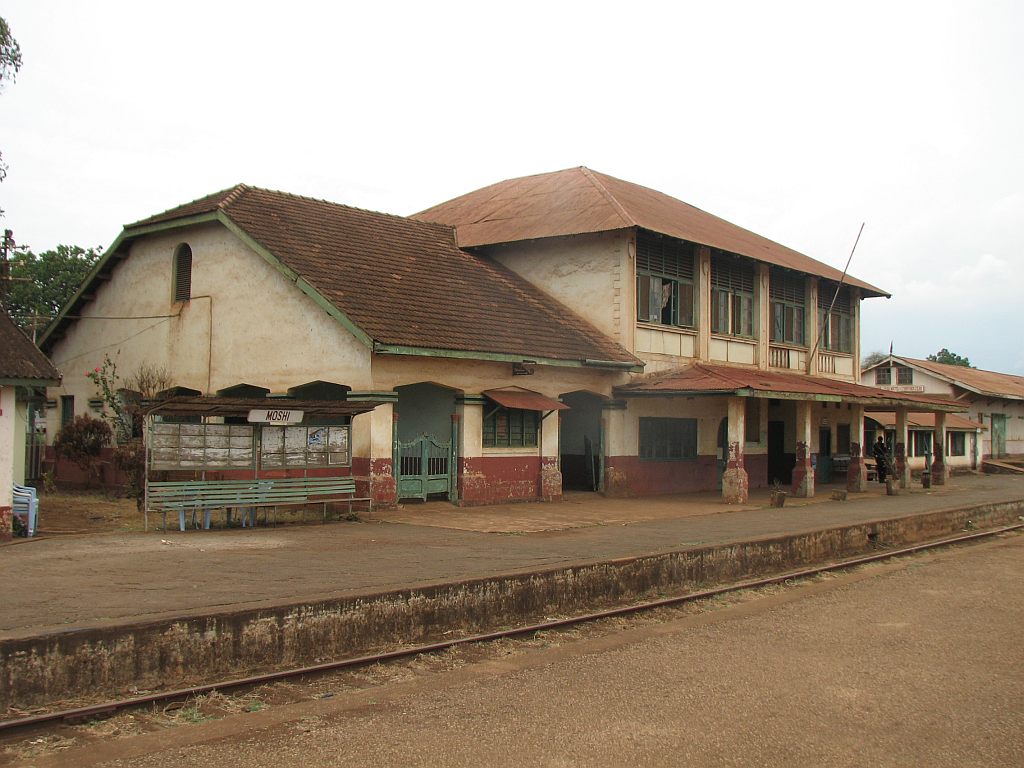
Moshi's historic railway station, terminus of the Usambara Railway.
The Industrial Birth of Modern Moshi
The "German Era" of Neu-Moschi (New Moshi) brought far more than a change in architecture; it forged a permanent, direct heartbeat between the fertile slopes of Kilimanjaro and the global stage. Before the railway arrived, the mountain’s bounty was isolated by geography. But with the hiss of the first locomotive, the premium Arabica beans meticulously nurtured in traditional Chagga Kihamba home gardens suddenly gained a "fast-track" line to the demanding markets of Europe.
This newfound access triggered a wave of transformation that still defines the region’s identity today. A tangible, enduring reminder of this era is the German administrative building, which once served as the nerve centre for this burgeoning trade. Remarkably, this sturdy structure still stands in Moshi today, serving as a living landmark of the town's industrial birth.
As Moshi shed its skin as a quiet military outpost, it rapidly evolved into a bustling administrative and trade centre. Walking past these historic walls today, you can still feel the momentum of those early coffee shipments the very foundation of the vibrant, modern trade culture that greets travellers in Moshi today. It remains a point of great communal pride, cementing a history where high-altitude coffee and international connection first met.
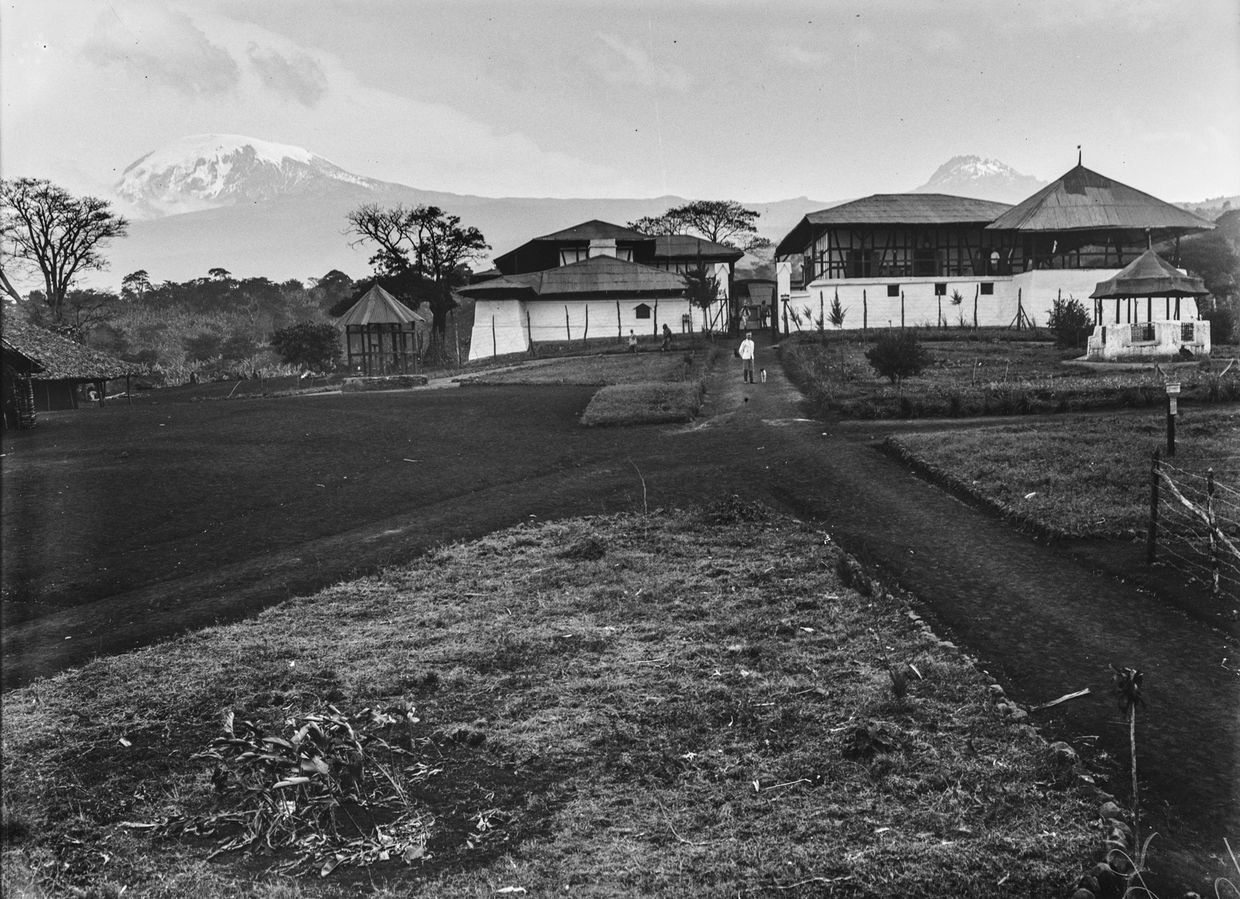
The German administrative building in Moshi, dating to the 1890s.
A Shifting Social Fabric: The demand for labour and the allure of a growing trade economy drew people from across the region. These new migration patterns reshaped the social dynamics of the mountain, creating a rich cultural melting pot and diverse industrial landscape.
The Foundation of Economic Independence: This era of direct trade did more than move beans; it instilled a spirit of organisation. This collective strength eventually laid the groundwork for the Kilimanjaro Native Cooperative Union (KNCU)—Africa’s first African-run coffee cooperative.
By turning local harvests into a world-renowned commodity, the railway and the mission seeds ensured that Moshi would be more than a dot on a map. It became a global hub for high-altitude coffee, preserving a rich agricultural heritage that remains the pride of the Chagga people.
The Rise of the Cooperatives
After the dust of World War I settled, and the era of military resistance faded, a new kind of revolution began to stir on the slopes of Mount Kilimanjaro. It was a revolution not of spears, but of strategy and collective strength. Have you ever wondered how the Chagga people became some of the most economically resilient communities in Africa? The answer lies in a pivotal shift that occurred in the 1930s.
Driven by visionaries like Joseph Merinyo and Charles Dundas, a movement was born that would change the mountain’s history forever: the Kilimanjaro Native Cooperative Union (KNCU). This wasn’t just an organisation; it was a defiant declaration of independence. As Africa’s very first African-run coffee cooperative, the KNCU achieved something revolutionary—it reclaimed the power from colonial middlemen and placed it directly back into the weathered, capable hands of the Kihamba farmers.
By organising themselves, these coffee growers ensured that the rewards of their volcanic soil stayed within their own communities. This legacy of the "cooperative spirit" is the secret behind the modern-day prosperity you see in Moshi today. It is a story of how the Chagga transitioned from defending their land to mastering the global markets, proving that true resilience grows from the roots up.
The Coffee Connection: From Garden to Global Market
In the 1890s, German Spiritan missionaries introduced Arabica coffee to the Moshi region by planting seeds from Reunion Island at the Kilema Mission. They leveraged Kilimanjaro’s fertile volcanic soil and high altitude to establish the crop, eventually sharing seedlings and farming techniques with the local Chagga community.
This transition from mission gardens to local farms laid the foundation for Moshi’s status as a premier global coffee hub. For the Chagga people, this railway was transformative. Before the tracks arrived, transporting goods meant long, arduous journeys on foot. With the arrival of the "Iron Snake," the high-altitude coffee grown in the Kihamba home gardens suddenly had a "fast track" to international buyers in Europe. This access changed everything:
a) Urbanisation: Moshi evolved rapidly from a military outpost into a bustling commercial hub for trade and administration.
b) Social Shifts: The demand for labour and trade drew people from across the region, creating new migration patterns that reshaped the social fabric of the mountain.
c) Economic Foundation: This era of direct trade laid the groundwork for what would eventually become Africa’s first African-run coffee cooperative, the KNCU.
A Legacy You Can Still Visit
Today, the railway station remains a stark reminder of how the Chagga adapted to foreign infrastructure to fuel their prosperity. When you walk through Moshi with Kijani Tours, the old railway station and surviving colonial buildings serve as tangible links to this pivotal era, a time when the mountain’s agricultural wealth first stepped onto the global stage.
Modern-day Democracy
When Tanzania gained independence in 1961, the chiefdom system was formally abolished. Figures such as Thomas Marealle and Solomon Eliufoo helped transition the Chagga from clan governance to national politics.
11. What You Take Home after visiting Chagga villages
a) A Blueprint for Sustainable Living
In a world obsessed with "new" technology, the Chagga Homestead (kihamba) is a humbling reminder that the most effective solutions are often ancient. You take away the realisation that high-production farming doesn't require chemicals or destruction. By observing the four-tiered agroforestry system, you see a "Zero-Waste" harmony in which every fallen leaf and every livestock animal play a role in a perfect, closed-loop cycle. You learn that we don't have to conquer nature to thrive; we simply have to listen to it.
b) The Power of Sacred Boundaries
The Isale plant teaches us a profound lesson about conflict and peace. In our fast-paced modern lives, we often forget the art of reconciliation. Visitors leave with deep respect for the "Isale Philosophy"—the idea that a single gesture of peace can stop a war and that boundaries are not merely fences but sacred commitments to our neighbours. You learn that social harmony is as important as ecological health.
c) The Strength of the "Umbilical Cord."
Visiting the Kyungu and Kifunyi prompts a moment of self-reflection: Where are my roots? In the West, we often view land as a commodity, something to be bought and sold. The Chagga teach us that land is a "living history." You take away a renewed desire to connect with your own ancestry and a realisation that we are merely temporary guardians of the soil for those who will come after us.
Kilimanjaro’s Whisper: A Call to Reflect
As you sit in the quiet of the homestead, sipping on a cup of freshly roasted coffee or a gourd of mbege, the mountain seems to ask a silent question:
"Are you a consumer of the earth, or a steward of it?"
The Chagga don't just live on Kilimanjaro; they live with it. They have mastered the art of "Vertical Living," where growth is measured not only by height but by the depth of one's roots. You leave the Chagga Homestead (kihamba) feeling refreshed not only by the mountain air but by the clarity of a culture that knows exactly who it is. You realise that "progress" doesn't always mean moving forward—sometimes it means returning to the wisdom of the trees.
Frequently Asked Questions About Chagga Culture
1. Who are the Chagga people of Tanzania?
The Chagga (also spelt Chaga) are one of Tanzania's largest ethnic communities, traditionally settled on the southern and eastern slopes of Mount Kilimanjaro. Their history and way of life are closely tied to the mountain environment, where generations have developed farming systems, social structures, and traditions adapted to highland conditions. The Chagga are known as skilled agriculturalists, particularly for bananas, coffee, yams, and beans, cultivated through the Kihamba home garden system that combines food production, livestock keeping, and forest conservation. Chagga culture is also rich in oral tradition, including proverbs, ceremonies, and clan histories, and today many Chagga combine traditional knowledge with modern livelihoods while maintaining a strong connection to Kilimanjaro.
2. Where do the Chagga people live?
The Chagga live on the southern and eastern foothills of Mount Kilimanjaro, in Tanzania's Kilimanjaro Region. Communities are found around Moshi, Marangu, Machame, Kibosho, Rombo, and Siha. The volcanic soil, reliable water from mountain forests, and favourable highland climate have made the area one of Tanzania's most productive agricultural regions. Historically, Chagga communities were organised into distinct chiefdoms, each with its own leaders, customs, and dialect, including Marangu (coffee farming and heritage), Machame (agricultural tradition), Kibosho (cultural and historical influence), and Rombo (on the northeastern slopes).
3. What is a Chagga Kihamba garden?
A Kihamba (plural: Vihamba) is a traditional Chagga home garden and multilayered farming system that combines food production, biodiversity, and land management on a small plot. It typically has four levels: an upper layer of tall trees for shade, timber, and firewood; a middle layer of bananas that create a humid growing environment; a lower layer of coffee grown in that shade; and a ground layer of vegetables, beans, and medicinal plants. Livestock are part of the system too, with manure improving soil fertility and crop residue feeding the animals in a circular cycle. The Kihamba is widely studied as a model of indigenous agroforestry.
4. What cultural experiences can visitors have near Mount Kilimanjaro?
Visitors can walk through Kihamba gardens, join coffee farm experiences, visit villages, taste traditional food, and hear stories from local elders and guides. Common experiences include Kihamba garden walks explaining traditional farming methods, coffee walks covering cultivation through roasting, village visits to meet community members and see daily life, tastings of banana-based and other traditional dishes, and storytelling sessions covering Chagga history and values. For travellers climbing Kilimanjaro, adding a cultural experience before or after the trek builds a deeper understanding of the communities living around the mountain.
5. Why is Chagga culture important for sustainable tourism?
Chagga cultural tourism supports both environmental conservation and local livelihoods, which is central to the principles of sustainable tourism. It helps preserve indigenous farming knowledge and oral traditions by giving them economic value, channels income directly to local guides and farming families through community-led experiences, and demonstrates land management practices, such as the Kihamba system, that support biodiversity and soil health. It also creates a more direct connection between travellers and the people whose knowledge shaped the landscape, and gives younger generations a reason to continue valuing their own cultural traditions.
6. How Travellers Can Experience Chagga Culture Near Kilimanjaro?
Experiences include coffee farm visits, Kihamba garden walks, traditional meals, village visits, storytelling with local guides, and walks to nearby waterfalls. Coffee farm visits take travellers through family-owned farms from harvest to roasting. Kihamba walks explain the multilayered garden system in person. Village visits show how traditional and modern life coexist around Kilimanjaro. Local guides and community storytellers add historical and cultural context that a self-guided visit can't. Choosing community-based, locally led experiences also ensures that the income from a visit supports the people preserving these traditions.
Conclusion: Beyond the Summit, Into the Heart of Kilimanjaro
A journey to Mount Kilimanjaro is often defined by the challenge of reaching Uhuru Peak, but the mountain's deeper story lies among the communities who have lived on its slopes for generations. In the Chagga heartland, culture isn't preserved as a relic of the past; it endures as a living tradition shaped by the land, the seasons, and the relationships between people and nature.
It can be found in the careful cultivation of a Kihamba garden, shared over a serving of Mbege, passed down through elders’ stories, and reflected in water management practices that have sustained mountain communities for centuries. Walking through these landscapes with Kijani Tours reveals a different way of seeing Kilimanjaro: not only a summit to reach, but a place shaped by generations of adaptation, innovation, and respect.
When travellers leave the villages around Kilimanjaro, they take home more than photographs. They carry conversations, shared meals, and the outlook of a community that has learned to live in balance with its surroundings, one in which the land is not only a resource to use but a heritage to protect for generations still to come.
Share This Post
Latest News
Tanzania Travel Guide | Safaris, Kilimanjaro, Beaches, Culture and Responsible Travel
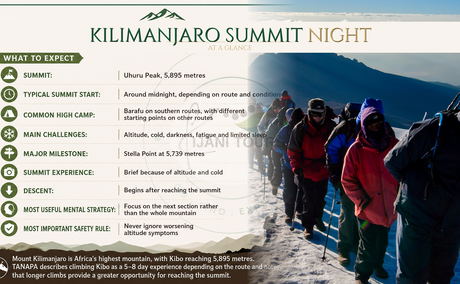
Kilimanjaro Summit Night: How to Prepare Mentally and What to Expect
Sun August 30, 2026
Read This Article
Is Tanzania Safe for Kids on Safari?: A Parent's Guide to Family Safari in Tanzania, 2026–2029
Sat August 29, 2026
Read This Article
Planning a Tanzania safari with children? This practical family safari guide helps parents understand when to go, which parks and experiences suit different ages, how to prepare for health and safety, and what to expect from accommodations, game drives, and wildlife encounters. It also explains how Kijani Tours can tailor a private safari to your family's needs, from the Serengeti and Ngorongoro to cultural experiences and Tanzania's coast, from Pangani to Mafia...
Climbing Kilimanjaro as a Woman: What No One Tells You Before You Go
Thu August 27, 2026
Read This Article
Climbing Kilimanjaro as a woman is absolutely possible, but there are practical things to prepare for before you arrive. This guide covers the realities many women want to know about, including hygiene at mountain camps, managing your period, physical preparation, altitude sickness, and what to expect on summit night. You will also learn which questions to ask Kijani Tours' team regarding privacy, female guides, hygiene and waste management, health monitoring, and emergency...
Share This Post