


Every morning during Tarangire's dry season, something happens at the Tarangire River that most safari guests mistake for instinct. A matriarch pauses. The herd closes in. Four calves slip into a ring of adult females so tight you cannot see them from the vehicle. It is over in seconds. It is one of the most well-documented protective strategies in the animal kingdom, passed down across generations through a social structure that researchers...
The Wildebeest Calf Creche: Inside the Serengeti's Extraordinary Calving Season
Posted by wolfgang on Fri August 21, 2026 in Wildlife and Migration.
Every February, thousands of wildebeest calves appear across the southern Serengeti in what travelers call a calf creche. This guide explains the ecology behind the event, from synchronized births and predator satiation to how a newborn calf stands within minutes and finds its mother among thousands
Primary keyword: wildebeest calf creche
Secondary keywords: Serengeti calving season, wildebeest calving Tanzania, Southern Serengeti safari, Great Migration calves
The calf runs before you have time to ask how old it is. Its legs are still unsteady, but its mother is already moving. Around them, hundreds of other newborn wildebeest calves are spreading across the short grass of the southern Serengeti. From your safari vehicle, the scene can look like an enormous natural nursery, a wildebeest calf creche that safari travelers commonly call it.
But much more is happening here than a spectacular gathering of newborn animals. The Serengeti calving season is the visible result of synchronized reproduction, seasonal rainfall, fresh grass, predator-prey dynamics, maternal recognition, and newborn wildebeest's remarkable ability to become mobile within minutes of birth. Understanding the science changes the safari experience. Instead of simply seeing thousands of calves, you begin to understand why they are here, why so many are born at approximately the same time, why predators follow them, and how these newborn animals represent the next generation of the Great Migration.
What Is a Wildebeest Calf Creche?
A wildebeest calf creche is an informal safari term for the large concentrations of newborn calves seen across the southern Serengeti during the annual calving season. The concentration arises because large numbers of wildebeest give birth within a relatively short period while the migratory herd is spread across productive grasslands. However, the term “creche” can be misleading if taken as proof of an organized communal childcare system.
There is strong evidence for synchronized births, large calf aggregations, rapid calf development, and individual mother-calf recognition. There is much less evidence for a formal system in which unrelated adult females deliberately take turns babysitting calves. The most accurate interpretation is that synchronized reproduction and enormous herd concentrations naturally create the appearance of a giant nursery.
When your vehicle enters the southern Serengeti during calving season, take a moment before reaching for your camera. Look more closely, and the large aggregation becomes a collection of individual stories: one mother nursing her calf, another calf struggling to keep up, several young animals lying in the grass, and farther away, a predator watching the herd. The science offers a better way to see it all.
Why Are So Many Wildebeest Calves Born at the Same Time?
Wildebeest reproduction is highly synchronized. A large proportion of females give birth within a short window, producing an enormous pulse of newborn calves across the southern Serengeti. Seasonal rainfall is a key driver of this process; it stimulates the growth of fresh grass, creating productive feeding conditions for large herbivores and providing critical nutritional resources for females during pregnancy and lactation.
Research has also identified a biological mechanism that helps explain the extraordinary degree of reproductive synchrony. A 2018 study in Scientific Reports by Calabrese, Moss Clay, Estes, Thompson, and Monfort provided experimental evidence that male wildebeest rutting vocalizations can influence reproductive synchrony in females. Females exposed to these vocalizations showed substantially greater synchrony in expected mating timing than those in the control group. This means the calving season is not simply a case of rain arriving and every wildebeest giving birth simultaneously.
Seasonal food availability, social behavior, and reproductive biology interact to create the remarkable concentration of births. When you visit the southern Serengeti during calving season, you arrive at a specific ecological event, and the green grass beneath your safari vehicle is part of the reason the wildebeest are there.
Why Does Synchronized Birth Help Wildebeest Survive?
At first glance, giving birth to thousands of calves at once seems dangerous. Newborn wildebeest are vulnerable to predators, including lions, spotted hyenas, and cheetahs. But predators have physical limits. They cannot kill and consume every calf born during the calving peak, and this is where the ecological concept of predator satiation becomes important.
Predator satiation occurs when prey become exceptionally abundant for a limited period, and predators cannot consume enough individuals to significantly reduce the overall population. For wildebeest, synchronized reproduction provides a population-level survival advantage. The strategy is not to make every individual calf impossible for predators to catch. Instead, a large number of calves are born in a short period, increasing the likelihood that enough will survive to adulthood.
A lion lying beside a wildebeest herd during calving season represents something much larger than a simple wildlife encounter. The predator has arrived because the landscape is temporarily filled with vulnerable prey, and the herd has concentrated precisely because there is safety in that abundance.
There is a related concept worth understanding: predator confusion. While predator satiation refers to the overwhelming abundance of prey and predators' physical inability to consume enough individuals, predator confusion refers to the difficulty predators experience when faced with many similar prey moving together. Both mechanisms can confer survival advantages to synchronized reproduction, but they describe different processes. For wildebeest, synchronized births alter the predator-prey relationship on both counts.
How Quickly Can a Wildebeest Calf Stand?
Newborn wildebeest are highly precocial, meaning they are relatively well developed at birth and become mobile very quickly. Field observations have documented newborn calves standing within minutes of birth. This rapid development is essential for a migratory herbivore. Wildebeest do not rely on a prolonged hiding strategy in which the newborn remains concealed for days while its mother feeds elsewhere. The herd moves. The mother moves. The calf must keep up.
During a calving-season safari, a guide may find a calf born only a short time earlier. Instead of staying still, the calf may repeatedly try to stand, its legs shaking, falling, then trying again until it rises and begins to follow its mother. This can be one of the most memorable moments of the season, as a scientific concept like precocial development becomes something you witness firsthand. You are watching an adaptation that allows a newborn animal to remain connected to one of the largest mammal migrations on Earth.
How Does a Wildebeest Mother Recognize Her Calf?
The southern Serengeti can host enormous numbers of wildebeest during the calving season, with hundreds of calves moving in a single group. Yet a mother must identify her own offspring among them. Mother-calf recognition develops through early imprinting and sensory cues, including scent, enabling her to distinguish her calf from the many other young animals around her. The herd may be enormous, but the mother-calf relationship remains individual.
When you encounter a large concentration of calves, resist the urge to focus on the entire herd. Choose one mother and calf and watch their interaction. You may see the calf approach its mother after moving through other animals, or the pair briefly separate and then reunite. These small interactions can be more revealing than simply counting calves. They show how individual recognition operates within one of Africa's largest mammal aggregations and remind you that the creche, whatever you call it, is made up of individual animals, each with its own story.
Where and When to See the Wildebeest Calving Season?
The primary calving landscape is the southern Serengeti, particularly the Ndutu region. Areas around Lake Ndutu, Lake Masek, Naabi Hill, and the Gol Kopjes are closely associated with the calving period. The Ndutu area is especially significant because it lies near the boundary between Serengeti National Park and the Ngorongoro Conservation Area.
The productive short-grass plains here provide important feeding conditions for large concentrations of pregnant and lactating females. The main calving period generally runs from late January through March, with February typically the peak month.
However, the exact timing varies year to year based on rainfall, vegetation, and herd movements. Wildebeest locations shift as the animals respond to rainfall and grass availability rather than a fixed schedule, and we cannot guarantee the exact location of a wild herd on any given day. Our knowledgeable guide can interpret current field conditions and put you where the animals are most likely to be. That is where local expertise becomes genuinely valuable.
Research by Sinclair, Mduma, and Arcese, along with long-term population studies by Mduma, Sinclair, and Hilborn, has examined the relationship among food availability, population dynamics, and Serengeti wildebeest ecology, collectively establishing the scientific foundation for understanding why the southern Serengeti attracts the herd at this time of year.
Calving Season or Mara River Crossings: Which Is the Better Safari Option?
Neither experience is universally better. The Mara River crossings are famous for dramatic mass movement and intense predator-prey interactions. The calving season focuses more strongly on reproduction, newborn animals, mother-calf relationships, and the ecological start of the next generation of the migration. The river crossing is a dramatic chapter. The calving season is where the story of every individual calf begins.
If your priority is the dramatic migration, the northern Serengeti and Mara River period may suit you. If your priority is newborn animals, behavioral observation, ecological interpretation, and the quieter intensity of predator-prey dynamics on the open plains, the southern Serengeti calving season is the better choice. Both experiences occur within the same Great Migration cycle. What you choose depends on what you want to understand.
How to Watch Wildebeest Calves Responsibly?
Newborn animals are especially vulnerable to disturbance. Vehicles should not deliberately separate mothers from their calves. Drivers should avoid unnecessary pursuit, and predator sightings should not become crowded scenes with multiple vehicles surrounding an animal. The closest position is not necessarily the best. Sometimes moving farther away provides a better view of the entire interaction. Waiting can allow the animals to relax and return to natural behavior.
Responsible safari tourism is not about maximizing proximity. It is about maximizing understanding while minimizing unnecessary disturbance, a principle especially important during calving season. A newborn calf is not a prop. A predator is not a performance. The best wildlife photograph often results from understanding what the animal is likely to do next, rather than simply driving closer.
The Great Migration Begins Here
The Great Migration is often captured in the image of thousands of wildebeest crossing a river. But the story begins much earlier. It begins with seasonal rainfall, grass, reproduction, and newborn calves taking their first uncertain steps across the southern Serengeti plains. The calves you watch in February will grow stronger. The herd will move. Those young animals will face predators, shifting food availability, and the challenges of migration. Eventually, some of them will join the enormous seasonal movement that travelers later encounter in the northern Serengeti and around the Mara River.
The famous migration scenes do not begin with a river. They begin with life. They begin with rain. They begin with a mother. And they begin with a calf strong enough to follow her.
Frequently Asked Questions
What is a wildebeest calf creche?
A wildebeest calf creche is an informal term for the large concentration of newborn wildebeest calves observed in the southern Serengeti during the annual calving season. This concentration results from synchronized births, large herd sizes, and the seasonal availability of productive short-grass plains. The term does not imply that wildebeest maintain a formal communal childcare system. Science supports synchronized births and large calf aggregations, not a structured babysitting arrangement.
When is the wildebeest calving season in Tanzania?
The main calving period generally runs from late January through March, with February typically the most intense. Exact timing varies with rainfall and vegetation conditions. February is a strong month to consider, but wildlife sightings cannot be guaranteed.
Where do wildebeest calve in Tanzania?
The primary calving landscape is the southern Serengeti and the Ndutu region, including areas around Lake Ndutu, Lake Masek, Naabi Hill, and the Gol Kopjes. Exact herd locations shift with rainfall and grass conditions.
Why do wildebeest give birth at the same time?
Wildebeest exhibit highly synchronized reproduction, influenced by seasonal food availability and, according to a 2018 Scientific Reports study, by male rutting vocalizations that help align reproductive timing across the herd. Synchronized births confer a population-level survival advantage through predator satiation, because predators cannot consume all the calves born during a concentrated birth pulse.
How quickly does a wildebeest calf stand?
Wildebeest calves are highly precocial and can stand within minutes of birth. This rapid development is essential because the herd moves, and the calf must follow its mother almost immediately.
Is February a good time to see newborn wildebeest?
Yes. February is generally one of the strongest months for travelers interested in newborn wildebeest, predator activity, and the green-season landscape of the southern Serengeti. Plan for seasonal probabilities, not a guaranteed wildlife event; the Serengeti is a living ecosystem, not a scheduled attraction.
Is the calving season better than the Mara River crossings?
Neither is universally better. The Mara River crossings offer dramatic mass movement. The calving season offers opportunities for observing newborn animals and the ecological start of the next generation. The right choice depends on what you want to experience.
The Great Migration Begins Here
The calf you watch take its first steps on the southern Serengeti plains is not simply a wildlife sighting. It marks the beginning of the next generation of the Great Migration. If that is the kind of safari experience you are looking for, one where you leave with a deeper understanding of what you saw- Kijani Tours was built for exactly that.
Tanzania Travel Guide | Safaris, Kilimanjaro, Beaches, Culture and Responsible Travel
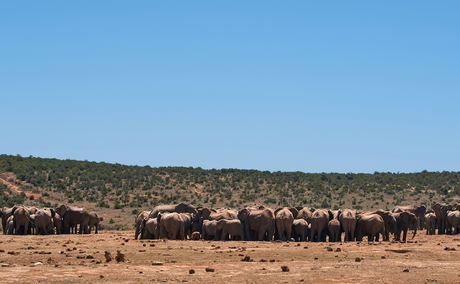
Why Elephants Bunch Together: Tarangire Herd Behavior
Sat August 8, 2026
Read This Article
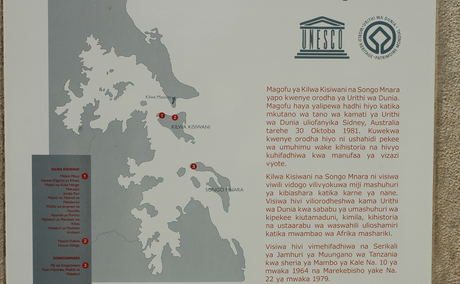
Tanzania UNESCO World Heritage Sites: A Local Expert Guide
Wed July 29, 2026
Read This Article
About This Tanzania UNESCO World Heritage Guide This guide to Tanzania’s UNESCO World Heritage Sites has been created by Wolfgang Valerian, based in Tanzania. Wolfgang works directly with travellers exploring Mount Kilimanjaro, Tanzania’s national parks, Zanzibar’s cultural heritage sites, and community-based experiences throughout the country. Through years of designing and operating responsible journeys, Wolfgang combines UNESCO information with practical field knowledge, local interpretation, and an understanding of how travellers can experience Tanzania’s...
Tanzania Safari Packing Guide: What to Wear and Bring by Season, Park, and Style (2026)
Thu July 23, 2026
Read This Article
A Tanzania safari runs on a strict set of practical constraints: a 15kg soft-duffel limit on light aircraft, a temperature swing of more than 20 degrees between a cold Ngorongoro dawn and a hot Tarangire afternoon, and a short list of things, camouflage prints and certain colours among them, that work against you rather than for you. Get those right and packing is simple. Kijani Tours runs game drives and walking safaris...
Share This Post