

Kilimanjaro Summit Night: The Final Hours Before Uhuru Peak At midnight, the mountain disappears. Your headlamp becomes your horizon. Kilimanjaro summit night is the final and most demanding stage of the journey to Uhuru Peak at 5,895 metres. Starting around midnight, climbers face several hours of darkness, cold, fatigue, limited sleep and reduced oxygen availability. The challenge is physical, but it is also deeply mental. The key to managing summit night is...
Travel Deeper: How Cultural Respect Creates Truly Sustainable Tourism
Posted by Wolfgang on Sun October 5, 2025 in Travel with curiosity, leave with connection.
Travel Deeper: How Cultural Respect Creates Truly Sustainable Tourism
1) True sustainability goes beyond eco‑habits—it begins with a respectful mindset toward local cultures.
2) Cultural respect strengthens the three pillars of tourism: environmental protection, economic resilience, and socio‑cultural preservation.
3) Empowering communities as guardians, artisans, and storytellers ensures conservation and dignified livelihoods.
4) Travel becomes legacy‑building when it shifts from extraction to authentic human connection.
You are a conscious traveler. You pack a reusable water bottle, avoid single-use plastics, and look for real experiences. You understand that sustainable travel means protecting the beautiful places you visit. But what if we told you that the most effective tool for sustainability is not in your backpack? It’s in your mindset.
At Kijani Tours, we think true sustainability is about culture. The respect, curiosity, and humility you show in your interactions with local communities enrich your trip. They create a positive cycle that protects the environment, supports economies, and preserves heritage. This is not just travel; it is a thoughtful, legacy-building connection.
Let us go beyond the superficial checklist and look at how cultural respect is essential for the future of travel. The Kijani Philosophy:
Weaving the Three Threads
Most definitions of sustainable tourism rest on three pillars:
1) Environmental - Protect the natural world.
2) Economic - Money stays and benefits the local community.
3) Socio-Cultural - Respect and preserve natural and cultural heritage.
For too long, the socio-cultural pillar has been the weakest. At Kijani, we see it as the essential thread that connects the other two. You cannot protect an environment that a community doesn’t benefit from. You also cannot build a thriving local economy if culture is turned into something for a quick photo opportunity.
Here is how cultural respect actively fuels all aspects of sustainability:
1. The Environmental Link: Guardians of the Land
Indigenous and local communities have been the guardians of their ecosystems for millennia. Their knowledge is irreplaceable.
a) Cultural Respect Means: Honoring sacred natural sites. Listening to guides who share ancestral stories about the land and its wildlife. Valuing their wisdom on sustainable practices.
b) The Sustainable Outcome: When communities are respected as experts and partners—not just as service staff—they are empowered to continue their role as protectors. Community-led conservation in Tanzania thrives through initiatives like Wildlife Management Areas, village forest reserves, community tourism, fisheries co-management, and traditional systems like ngitili, where local people protect ecosystems while improving livelihoods. These models show how empowering communities creates both ecological resilience and sustainable economic benefits. Your respect directly fuels conservation.
2. The Economic Link: Beyond "Buying Local"
Yes, buying from a local market is good. But conscious travel goes deeper.
a) Cultural Respect Means: Asking, "Who made this?" and "Where does my money go?" It means seeking out community-owned cooperatives, women’s weaving groups, souvenir shop, a homestay and family-run restaurants. It’s valuing craftsmanship and paying a fair price for it, understanding that your purchase supports a lineage of skill.
b) The Sustainable Outcome: Money circulates within the local economy, creating dignified jobs and incentivizing younger generations to preserve traditional skills. This economic resilience makes communities less likely to sell their land or resources to destructive industries.
3. The Social Link: The Human Connection
This is the heart of the Kijani experience. It is about exchange, not extraction.
a) Cultural Respect Means: At Kijani Tours, we believe that authentic and cultural Tours starts with respect culture in every interaction. We embrace each new engagement with true curiosity and not judgment. Learning key phrases, appreciating, and incorporating relevant dress styles and social behaviors, and stories of every local dish, through cooking and tasting, contribute to meaningful interactions. We recognize that taking photographs is a privilege, not a right. We focus on connection and ask for permission when we want to capture a moment, making sure that our presence is respected and welcomed.
The Sustainable Outcome: You move from being a passive spectator to an welcomed guest. You gain a profound understanding of a place that no guidebook can offer. You leave not just with photos, but with stories and connections. This preserves cultural dignity and narrative authority.
The Mindful Traveler's Compass: Navigating Cultures with Respect.
Ready to put this into practice? Here’s how to prepare for a trip that is as conscious as it is unforgettable.
a) The Pre-Trip Deep Dive: Read a bookby a local author. Listen to the region’s music. Understand the basic history and current social context.
b) Learn the Language of Connection: Master a few phrases: "Asante," "Thank you," "This is beautiful." This small effort bridges gaps and shows respect instantly.
c) Embrace the Photographer's Ethos: Always ask before taking a person's photo. A smile and a gesture with your camera is a universal language. If they say no, smile and thank them anyway.
d) Be a Conscious Consumer: Choose your souvenirs wisely. opt for items made locally over mass-produced imports. At Kijani Tours, we meticulously vet our partners to ensure your spending has a positive impact.
e) KIjani Tours design the itineraries to be immersive and respectful, building in time for genuine interaction and working exclusively with community-owned lodges and guides.
The Imprint of a Thoughtful Traveler.
This approach to travel is less about the stamps in your passport and more about the positive imprints you leave behind and carry with you. It is the trend that truly matters—one of intelligence, empathy, and deep respect. It is how we ensure the places we love remain vibrant and whole for generations to come.
Discover the Kijani Tours approach to sustainable tourism—and travel in a way that honors people, place, and purpose.
Share This Post
Latest News
Tanzania Travel Guide | Safaris, Kilimanjaro, Beaches, Culture and Responsible Travel
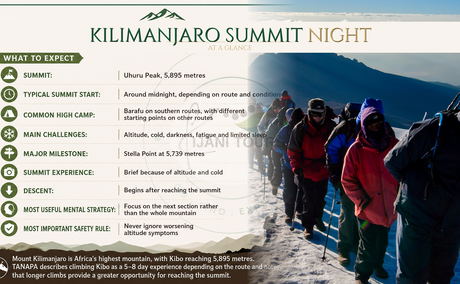
Kilimanjaro Summit Night: How to Prepare Mentally and What to Expect
Sun August 30, 2026
Read This Article
Is Tanzania Safe for Kids on Safari?: A Parent's Guide to Family Safari in Tanzania, 2026–2029
Sat August 29, 2026
Read This Article
Planning a Tanzania safari with children? This practical family safari guide helps parents understand when to go, which parks and experiences suit different ages, how to prepare for health and safety, and what to expect from accommodations, game drives, and wildlife encounters. It also explains how Kijani Tours can tailor a private safari to your family's needs, from the Serengeti and Ngorongoro to cultural experiences and Tanzania's coast, from Pangani to Mafia...
Climbing Kilimanjaro as a Woman: What No One Tells You Before You Go
Thu August 27, 2026
Read This Article
Climbing Kilimanjaro as a woman is absolutely possible, but there are practical things to prepare for before you arrive. This guide covers the realities many women want to know about, including hygiene at mountain camps, managing your period, physical preparation, altitude sickness, and what to expect on summit night. You will also learn which questions to ask Kijani Tours' team regarding privacy, female guides, hygiene and waste management, health monitoring, and emergency...
Share This Post