
Tanzania Big Cat Safari | Lions, Leopards and Cheetahs Tour
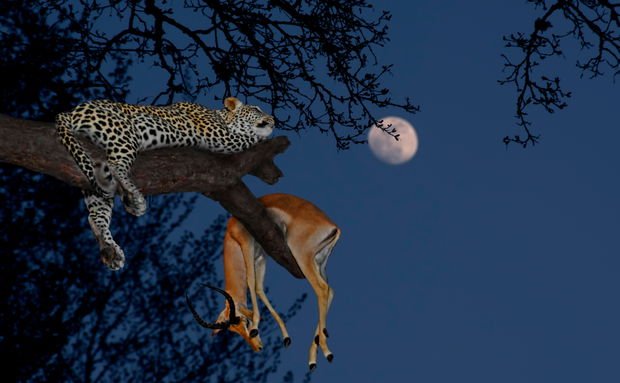
Understanding Lions, Leopards and Cheetahs Through Wildlife Behaviour and Conservation
Tanzania Predator Heritage Safari™ is a journey into the lives of Africa’s most iconic predators, exploring the landscapes where lions, leopards, and cheetahs survive, compete, and adapt. Across Serengeti National Park, Ngorongoro Conservation Area, and Lake Manyara National Park, guests go beyond traditional game viewing to understand predator behaviour, ecosystem relationships, and the conservation efforts that protect these remarkable species.
Guided by experienced local safari experts, this journey reveals the deeper stories behind every wildlife encounter, from the social structure of lion prides and the secretive movements of leopards to the speed and survival challenges of cheetahs. By connecting wildlife, landscapes, and conservation, Kijani Tours invites travellers to experience Tanzania’s big cats not only as incredible animals to witness, but as essential parts of a living ecosystem that must be protected for future generations.
The Tanzania Predator Heritage Safari™ is a specialised Big Cat Safari in northern Tanzania, exploring the best wildlife destinations, including Lake Manyara National Park, the Ngorongoro Crater, and Serengeti National Park. Designed for travellers searching for lions, leopards, and cheetahs in their natural habitats, this safari combines exceptional wildlife encounters with a deeper understanding of predator behaviour, ecosystems, and conservation.
Your journey begins in Lake Manyara, a diverse Rift Valley ecosystem of forests, wetlands, and open landscapes where wildlife thrives. Continue to the Ngorongoro Conservation Area, one of Tanzania’s most remarkable wildlife destinations, where predators and prey exist within a unique natural environment. The adventure reaches its peak in the Serengeti, one of Africa’s most famous big cat habitats and the ideal setting for observing lion prides, elusive leopards, and cheetahs.
Unlike a traditional safari focused only on animal sightings, the Tanzania Predator Heritage Safari™ helps you understand the stories behind the wildlife. Your experienced local guide interprets predator behaviour, hunting strategies, territorial patterns, and the relationships between big cats and their surrounding ecosystems.
Throughout the journey, guests discover why conservation is essential for protecting Tanzania’s predators. Learn how healthy habitats, wildlife corridors, protected areas, and responsible tourism contribute to the survival of lions, leopards, and cheetahs for future generations.
The Tanzania Predator Heritage Safari™ is more than a wildlife holiday. It is a conservation-focused journey into Tanzania’s wild heritage, connecting big cats, landscapes, and the people dedicated to protecting them.
Gallery
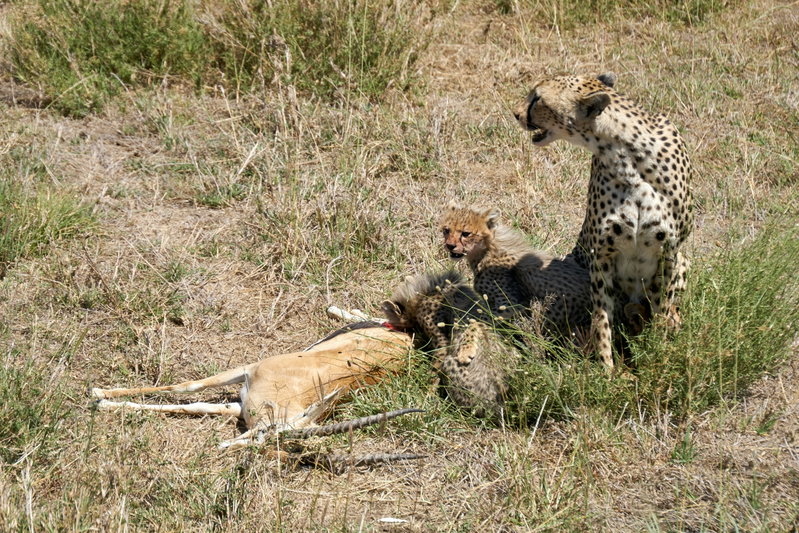
Tanzania Big cat safari
Day 1
Arrival in Tanzania: Beginning Your Predator Heritage JourneyThe moment you arrive at Kilimanjaro International Airport, Tanzania begins to reveal itself through warmer air, open landscapes, and the quiet presence of Mount Kilimanjaro. Your Kijani Tours representative welcomes you and transfers you smoothly to your Arusha hotel.
Tonight is yours to rest, settle in, and prepare for the adventure ahead. Tomorrow, your journey into Tanzania’s wildlife landscapes begins, exploring predator behaviour, conservation, and the ecosystems that sustain them.
Overnight: Arusha | Meals: Dinner
Day 2
Lake Manyara National Park: Forests, Wetlands, and Tree-Climbing Lions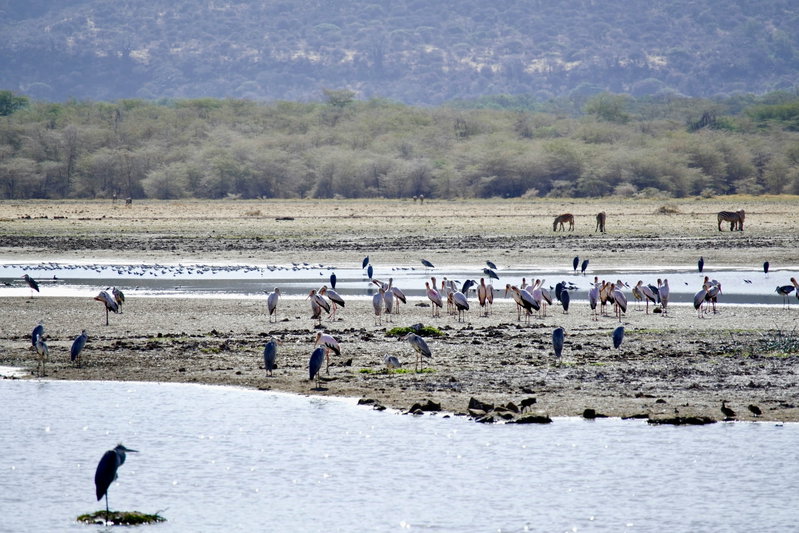
Into the Rift: Your First Wild Encounter Awaits
Explore one of Tanzania’s most diverse ecosystems, where forests, wetlands, and grasslands support a wide range of wildlife, including the famous tree-climbing lions of Lake Manyara.
As the afternoon light softens, your guide takes you through Mto Mbu village for a local dinner with the community, an authentic welcome to Tanzania that no five-star menu can match.
Overnight: Lake Manyara Serena Lodge | Meals: Breakfast, Lunch, Dinner
Big Cat Watch: Tree-climbing lions
Day 3
Ngorongoro Crater: A Natural Sanctuary of Predators and PreyDescend into the world-famous Ngorongoro Crater and discover the relationships between predators, herbivores, and one of Africa’s most unique ecosystems.
Overnight: Seronera Wildlife Lodge, Serengeti | Meals: Breakfast, Lunch, Dinner
Watch for: Lion prides, giraffe, elephant on transfer
Day 4 -5
Serengeti Predator Territory: Following Lions, Leopards and Cheetahs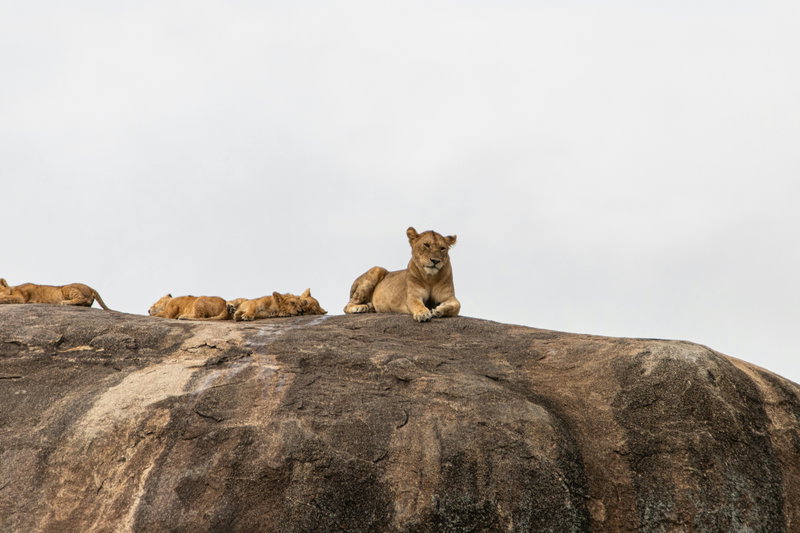
Full-Day Game Drive | Central Serengeti and Simba Kopjes
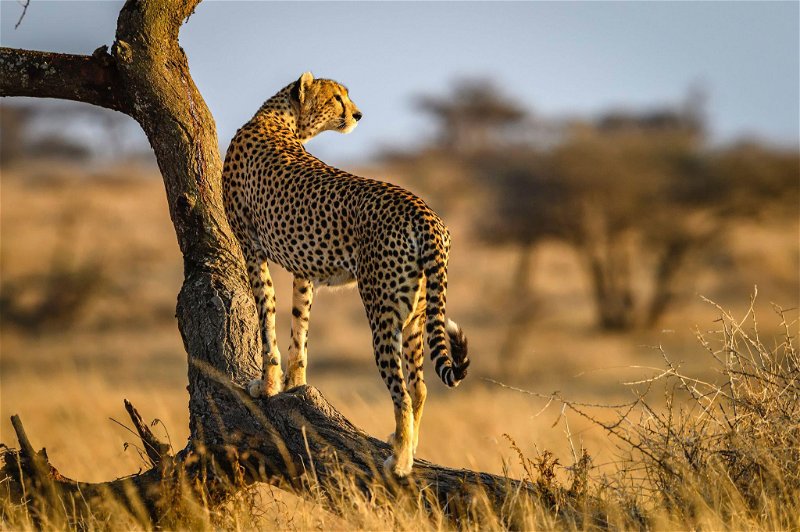
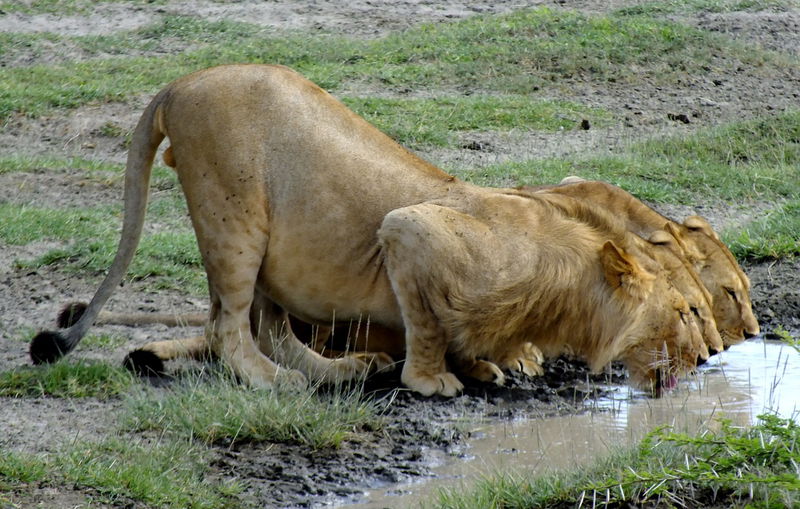
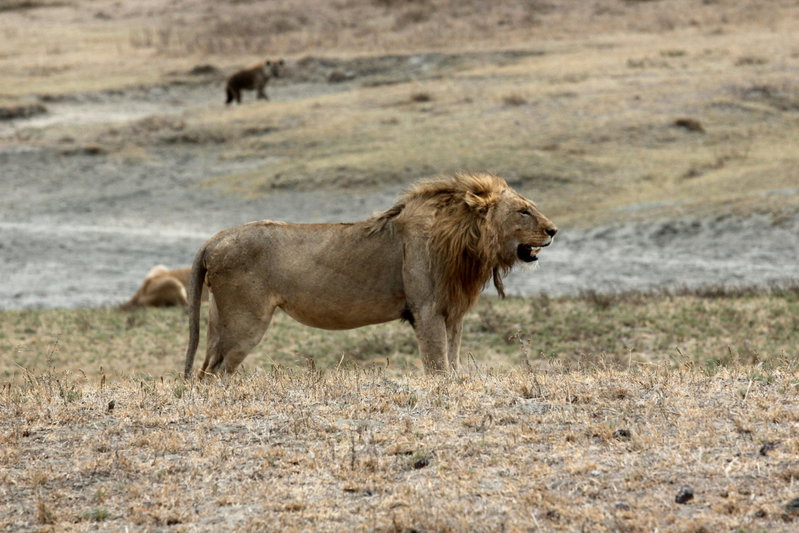
You are up before sunrise. Coffee in hand, you step out of your tent into the cool dark — somewhere out there, something is already hunting. Your Kijani Tours guide is ready, engine running, scanning the horizon. The Simba Kopjes are your first destination: ancient granite outcrops rising from the grassland where lion prides rest, play, and rule. Watch a male lion survey his kingdom from a rocky throne. By midmorning, your guide pivots — a cheetah coalition has been spotted moving through the open plain. You follow. The stalk. The sprint. The kill. You watch wildlife television come alive in front of your eyes. This is the Serengeti. This is what you came for.
Overnight: Serengeti Sopa Lodge | Meals: Breakfast, Lunch, Dinner
Big Cat Watch: Lions at Simba Kopjes, cheetah on open plains
Optional: Hot Air Balloon Safari over the Serengeti (pre-booked)
Day 6
The Leopard's Kingdom: Deep into the SerengetiFull-Day Game Drive | Serengeti — River Crossings and Forest Edges
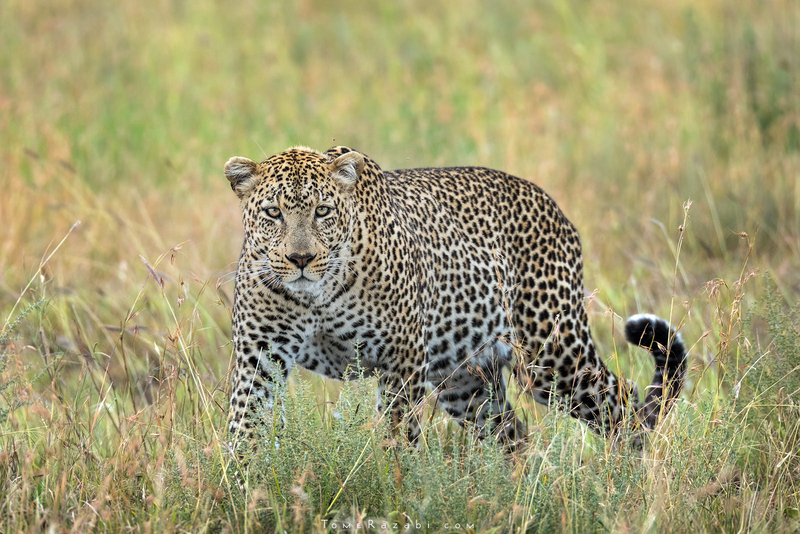
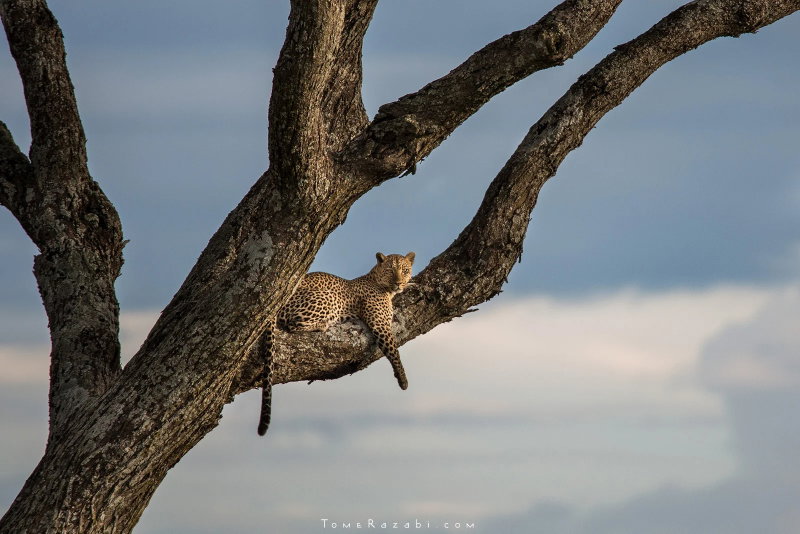
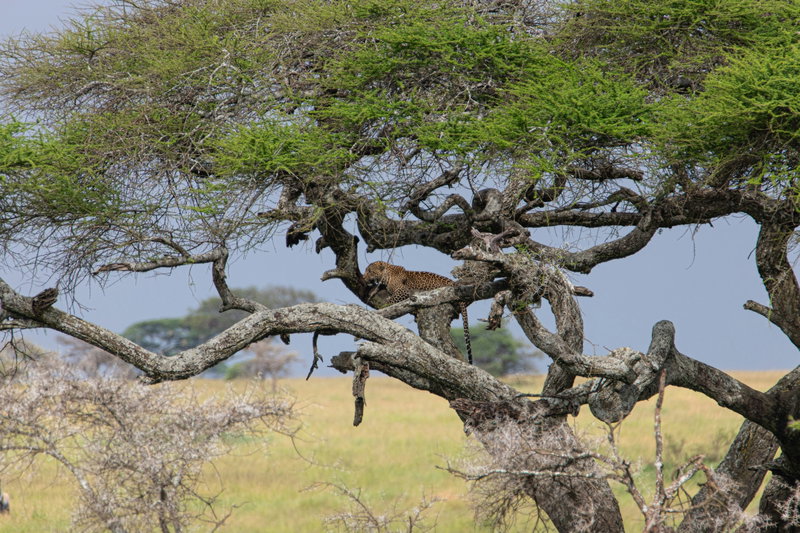
Today belongs to the most elusive of Africa's big cats — the leopard. Your guide takes you into the riverine forest corridors and rocky outcrops where leopards prefer to haunt—the engine cuts. You scan the sausage trees. And then — a flicker of spotted gold. A leopard, draped across a branch, tail swaying, watching you with amber eyes. You forget every photo you planned to take. Some moments demand you simply witness them. The afternoon opens up to more game viewing across Serengeti's southern corridor — hippos in the Seronera River, a leopard tortoise crossing the track, a lilac-breasted roller burning electric across the sky.
Overnight: Meals: Breakfast, Lunch, Dinner
Big Cat Watch: Leopard in riverine forest, lion on kopjes
Day 7
Serengeti → Lake Eyasi | Hadzabe and Datoga Cultural ExperienceLeave the wildlife landscapes of the Serengeti and travel toward Lake Eyasi, a remote region where ancient traditions and strong connections to nature continue today. This cultural journey introduces you to the Hadzabe, one of Africa’s last remaining hunter-gatherer communities, and the Datoga pastoralists, whose skills, traditions, and knowledge have been passed through generations.
Spend time learning about their relationship with the environment, traditional hunting practices, food systems, craftsmanship, and sustainable ways of using natural resources. Through meaningful conversations and community-led experiences, discover a different side of Tanzania where culture, resilience, and nature remain deeply connected.
Day 8
The Mountain Town: Moshi and Kilimanjaro's FoothillsTransfer to Moshi | Town Tour and Hidden Gems
Your final full day brings you to Moshi — a warm, vibrant town resting in the foothills of Mount Kilimanjaro, where the snow-capped summit floats above the morning clouds like something from a dream. But Moshi is far more than a gateway to the mountain. Your Kijani Tours guide reveals its hidden gems: natural hot springs bubbling up through lush vegetation, tumbling waterfalls in the forest above town, and a hands-on coffee tour through the ancient Chagga kihamba gardens where families have farmed coffee and bananas in the shade of indigenous trees for centuries. This is Tanzania beyond the safari — local, unhurried, and real.
Overnight: Moshi | Meals: Breakfast
Day 9
The Journey Home.Moshi → Kilimanjaro International Airport | Departure
This morning over breakfast, you will try to put into words what happened out there — the leopard's gaze, the cheetah's sprint, the lion cubs tumbling at dusk, the Serengeti horizon on fire. You will find words are not quite enough. Your Kijani Tours team transfers you to Kilimanjaro International Airport for your departure flight. You leave with a full memory card, a changed perspective, and the quiet, certain knowledge that wild Tanzania got under your skin — and you will be back.
Meals: Breakfast
Frequently Asked Questions
Learn about Tanzania’s lions, leopards, cheetahs, their habitats, behaviour, and conservation.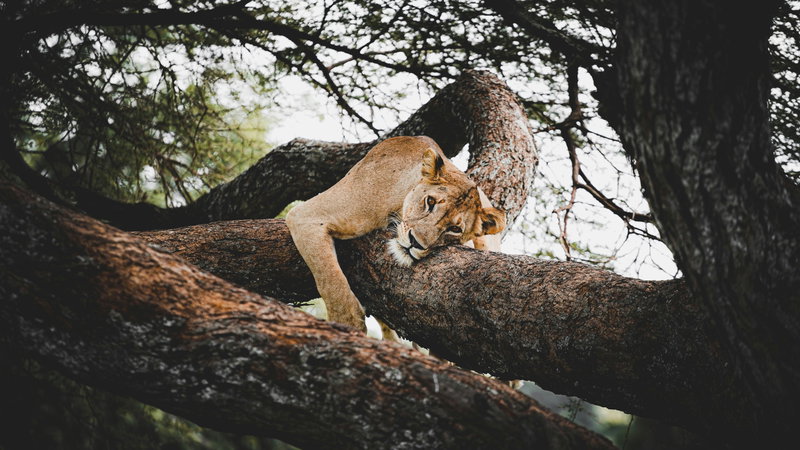
1. What is a Tanzania Big Cat Safari?
A Tanzania Big Cat Safari is a wildlife experience focused on discovering Africa’s most iconic predators, including lions, leopards, and cheetahs, within their natural habitats. The journey explores Tanzania’s famous wildlife ecosystems, including Serengeti National Park, Ngorongoro Conservation Area, and Lake Manyara National Park, where predators, prey, landscapes, and conservation efforts are deeply connected.
The Kijani Tours Tanzania Predator Heritage Safari™ goes beyond searching for wildlife sightings. It helps travellers understand predator behaviour, hunting strategies, social structures, and the role big cats play in maintaining healthy ecosystems. Each encounter becomes an opportunity to learn about Tanzania’s wildlife heritage and the conservation efforts protecting these species.
2. Where can travellers see lions in Tanzania?
Tanzania is one of the best destinations in Africa to observe lions in the wild, with some of the strongest opportunities found in Serengeti National Park and the Ngorongoro Conservation Area.
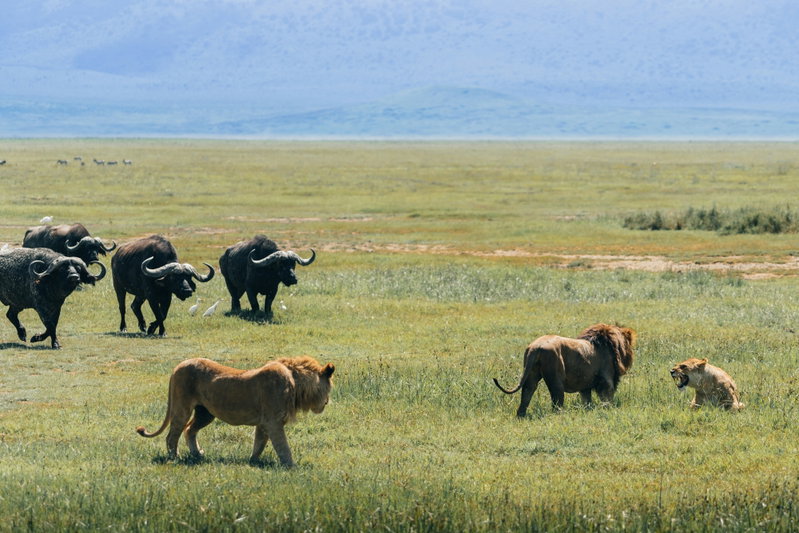
The Serengeti ecosystem provides vast grasslands, abundant prey, and key territories that support lion prides year-round. Here, travellers may witness lions resting after a hunt, moving across the plains, caring for cubs, or interacting within their social groups.
The Ngorongoro Crater offers another exceptional lion-viewing experience because its enclosed ecosystem supports a high concentration of wildlife. During the Tanzania Predator Heritage Safari™, guests learn about lion pride behaviour, territorial relationships, and the important role lions play within Tanzania’s natural ecosystems.
3. Where can visitors see leopards in Tanzania?
Leopards can be found in several regions of Tanzania, but the Serengeti ecosystem is one of the best places to search for these elusive predators.
Unlike lions that often live in groups, leopards are solitary animals known for their patience, adaptability, and ability to remain hidden. They are commonly found near riverine forests, woodland areas, and rocky landscapes where they can hunt, rest, and protect their prey.
During a Tanzania leopard safari experience with Kijani Tours, expert local guides interpret leopard behaviour, habitat preferences, and movement patterns to help guests better understand one of Africa’s most fascinating predators.
4. Where can visitors see cheetahs in Tanzania?
The best opportunities to see cheetahs in Tanzania are found in the open grasslands of the Serengeti National Park and surrounding Serengeti ecosystem.
Cheetahs depend on wide, open landscapes where they can use their incredible speed and hunting skills. Unlike lions and leopards, cheetahs rely heavily on visibility and space to successfully pursue prey.
A Tanzania cheetah safari allows travellers to discover how these specialised predators survive, including their hunting techniques, challenges with competition from other predators, and the importance of protecting open habitats.
5. What makes the Tanzania Predator Heritage Safari™ different from a normal safari?
The Tanzania Predator Heritage Safari™ is designed for travellers who want to understand wildlife, not only observe it.
Many safaris focus mainly on finding animals and taking photographs. This experience explores the deeper stories behind every sighting, including predator behaviour, ecosystem relationships, and conservation challenges.
Guests discover:
a) How lion prides communicate, hunt, and protect their territories
b) Why leopards depend on specific habitats and remain difficult to find
c) How cheetahs survive through speed, strategy, and adaptation
d) How prey species influence predator populations
e) Why protecting habitats is essential for the future of Tanzania’s wildlife
Kijani Tours combines expert local guiding, conservation storytelling, and responsible wildlife viewing to create a safari experience that connects animals, landscapes, and people.
6. What National Parks are included in the Tanzania Big Cat Safari?
The Tanzania Big Cat Safari explores three important wildlife destinations in northern Tanzania:
Lake Manyara National Park
A diverse ecosystem of forests, wetlands, and open plains where wildlife adapts to changing environments.
Ngorongoro Conservation Area
A unique conservation landscape where wildlife, communities, and natural systems exist together.
Serengeti National Park
The heart of Tanzania’s predator country and one of the world’s most important ecosystems for lions, leopards, cheetahs, and other wildlife.
Together, these landscapes reveal how different habitats support different predator behaviours.
7. How many days are needed for a Tanzania Big Cat Safari?
A Tanzania Big Cat Safari is best experienced over 7 to 10 days, allowing enough time to explore multiple ecosystems and increase opportunities for wildlife encounters.
A longer safari provides time to experience different landscapes, observe predator behaviour, and understand the relationship between wildlife and conservation. Kijani Tours can also combine this safari with other signature experiences, including Mount Kilimanjaro trekking, Chagga cultural heritage experiences, and Mafia Island marine conservation journeys.
8. Is the Tanzania Predator Heritage Safari suitable for wildlife photographers?
Yes. The itinerary is ideal for wildlife photographers who want opportunities to capture lions, leopards, cheetahs, landscapes, and predator behaviour in Tanzania’s natural environments.
The safari is designed with flexibility, allowing time for observation, photography, and understanding animal behaviour rather than rushing between sightings.
9. How does Kijani Tours support conservation through this safari?
Kijani Tours believes responsible tourism should contribute to protecting the places and wildlife that travellers come to experience.
Through the Tanzania Predator Heritage Safari™, guests learn about:
a) Wildlife habitat protection
b) Predator conservation challenges
c) Human-wildlife coexistence
d) The importance of protected areas
e) The connection between tourism and conservation
By travelling responsibly and supporting locally guided experiences, visitors become part of a wider effort to protect Tanzania’s wildlife heritage.
10. Can this safari be combined with Kilimanjaro trekking or beach holidays?
Yes. The Tanzania Predator Heritage Safari™ can be combined with other Kijani Tours experiences to create a complete Tanzania adventure.
Tanzania Predator Heritage Safari™
Understanding lions, leopards, and cheetahs through wildlife behaviour, ecosystem knowledge, and conservation.
Share This Page