

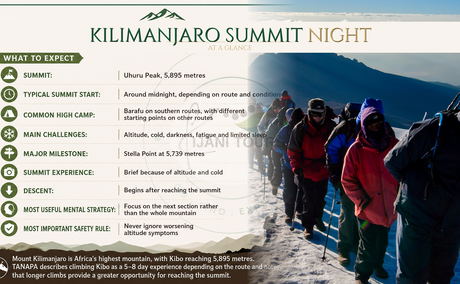
Kilimanjaro Summit Night: The Final Hours Before Uhuru Peak At midnight, the mountain disappears. Your headlamp becomes your horizon. Kilimanjaro summit night is the final and most demanding stage of the journey to Uhuru Peak at 5,895 metres. Starting around midnight, climbers face several hours of darkness, cold, fatigue, limited sleep and reduced oxygen availability. The challenge is physical, but it is also deeply mental. The key to managing summit night is...
Solo vs Group Kilimanjaro Climbs: What Actually Changes on the Mountain
Posted by Wolfgang on Tue December 9, 2025 in Solo vs Group Kilimanjaro Climbs.
Choosing between a solo (private) and group Kilimanjaro climb is one of the most overlooked decisions in trek planning, and it shapes nearly every aspect of the experience. The blog clarifies that no one truly climbs "solo" because KINAPA requires a licensed guide on every trek; what climbers actually choose is a private departure with a dedicated crew versus a scheduled group with shared logistics.
A private climb gives trekkers a personalized pace tailored to their acclimatization needs, deeper one-on-one time with their guide and cook, and a more introspective, solitary experience. The Northern Circuit is often cited as the strongest route match. A group climb offers built-in psychological support during hard moments like summit night, a genuinely international trail community, and a lower per-person cost since expenses are shared. Machame is the most socially popular route.
Regardless of format, the post stresses that safety and ethics don't change: a 20kg porter weight limit, twice-daily health monitoring, proper hydration and nutrition protocols, and Leave No Trace practices apply to every climb. The piece closes with an FAQ addressing common questions (cost differences, summit success rates, safety parity between formats) and a call to choose the climb style that matches the climber's actual reason for attempting the mountain.
Kilimanjaro Solo Climb vs Group Climb: How to Choose the Right Trek for You
Two climbers can walk the same Route in the exact same week and come home with completely different mountains in their memories. One was folded into a rotating cast of new friends from three continents, trading blister stories over ginger tea. The other spent six days almost entirely inside their own head, with only a guide's quiet Swahili and the crunch of volcanic scree for company.
Neither climber did Kilimanjaro "wrong." They simply chose a different climbing route, and that single decision, made weeks before either of them ever saw the mountain, shaped almost everything about the experience that followed.
This is the choice most first-time Kilimanjaro climbers underestimate: private (solo) climb versus group climb. It isn't a footnote on your booking form. It determines your daily pace, your acclimatization strategy, who you eat dinner with, the cost of a private versus a shared Kilimanjaro climb, and even your odds of reaching Uhuru Peak. At Kijani Tours, we walk every climber through this decision before route selection because getting it right changes the entire trek.
No Climber on Kilimanjaro Is Ever Truly "Solo"
Let's clarify the terminology first, because "solo climbing" is often misunderstood. Kilimanjaro National Park (KINAPA) requires every climber, without exception, to trek with a licensed guide. Free-solo ascents, the kind you might picture from Denali or the Alps, don't exist here.
What people mean by a "solo Kilimanjaro climb" is a private departure: a group of one (or a couple, or a small, handpicked party) with a dedicated crew assigned only to them. No fixed departure date shared with strangers, no merged campsite schedule, no pace set by the slowest or fastest member of an unrelated party.
On a Kijani Tours private climb, that means your own guide, your own cook preparing meals to match your appetite and altitude symptoms, and porters whose only job for the week is to get your camp ready before you arrive. You're not alone on the mountain. You're simply the only client the mountain crew is thinking about.
What a Private Climb Actually Changes
Pace Becomes a Summit Strategy, Not a Compromise.
Altitude sickness doesn't care about your itinerary. It cares about how your body handles elevation gain over time, and that's precisely what a fixed group departure can't accommodate. On a shared group climb, the day's pace is set for the middle of the pack. If you're strong, you wait at trail junctions. If you're struggling, you feel pressure to keep up rather than slow down, which is exactly the wrong response to early altitude symptoms.
On a private climb, your guide reads your body, not a schedule. Feeling the effects of altitude at Shira Camp? Rest an extra hour. Want to leave camp before sunrise to beat the afternoon cloud buildup on summit night? Done. This isn't a comfort upgrade. It's a genuine acclimatization advantage, and it's part of why private departures on routes like the Northern Circuit consistently achieve some of the mountain's highest summit success rates.
The Crew Relationship Deepens
Spend six or seven days with one guide and one cook, rather than splitting their attention among a dozen trekkers, and something shifts. There's room for real conversation: the history of the Chagga communities on Kilimanjaro's lower slopes, which plants along the Shira Plateau are traditionally used for medicine, and how glacier retreat has visibly changed the summit landscape over a single guide's career. That context rarely surfaces in a fast-moving group of fifteen. It surfaces constantly on a private climb.
Solitude Becomes Part of the Route
Without the pull of group conversation, a private trek turns inward. Solo climbers on Kilimanjaro frequently describe the Shira Plateau or the long summit-night push to Stella Point as the most psychologically demanding and personally clarifying stretch of the entire trip. If you're traveling through a major life transition, working through a creative project, or simply craving a week without small talk, this is the format built for that.
What a Group Climb Actually Changes
Shared Struggle Becomes Shared Momentum
Summit night above Barafu Camp, in the dark, at negative temperatures, with your oxygen thinning with each step, is where most Kilimanjaro attempts are tested. On a group climb, that's also where the format earns its keep. A tired trekker who sees a tent-mate push through the same exhaustion, or is handed a thermos of tea by someone who noticed they'd gone quiet, often finds the extra push that solo willpower alone can't manufacture.
This is the "nobody gets left behind" dynamic that group climbers describe as their biggest asset. For first-timers intimidated by the scale of a 19,000+ foot mountain, that built-in support system is often the difference between attempting the climb and putting it off another year.
A Genuinely International Trail Family
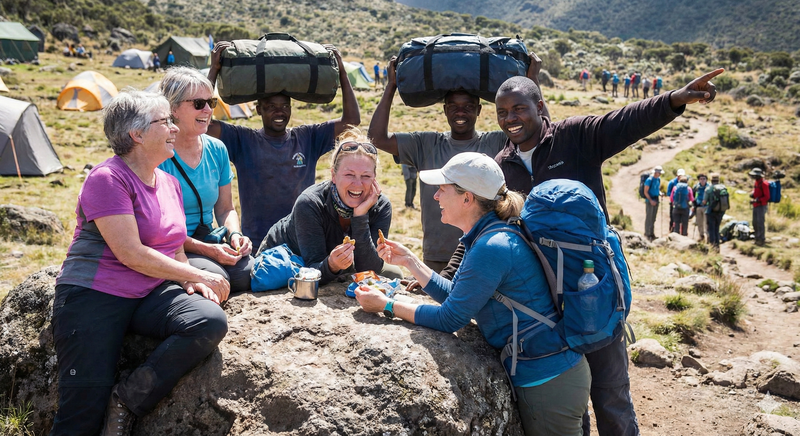
A Kijani Tours group departure regularly brings together climbers from different countries, careers, and age groups in one tent circle. Teachers, engineers, retirees, and photographers who'd never otherwise cross paths end up sharing a summit photo. The friendships that come out of six days of shared blisters and triumph tend to outlast the trip itself, which is part of why so many returning Kilimanjaro climbers say the crew of strangers became the story they tell most.
Lower Cost, Same Standard
Because camp setup, transport, and crew costs are split across the group, a shared Kilimanjaro group climb is the more budget-accessible way to reach the summit without cutting corners on safety, food quality, or ethical porter treatment. For climbers weighing Kilimanjaro cost against a fixed travel budget, this is usually where the group format wins outright.
Matching Your Climb Style to the Right Route
Not every Kilimanjaro route suits every climbing style. Here's how the three most requested routes perform in practice:
Lemosho Route. Widely regarded as the most scenically varied route on the mountain, it moves from the rainforest through the Shira Plateau before joining the southern circuit. Its longer distance and gradual elevation profile make it forgiving for both formats: private climbers get long, quiet stretches for reflection, while group climbers enjoy constantly changing scenery that keeps morale high throughout a longer trek.
Machame Route. The mountain's most popular route, known for its "climb high, sleep low" acclimatization profile and social, high-traffic camps. If you are drawn to the energy of a busy trail and want your group's climb to feel like part of a larger seasonal community of trekkers, Machame delivers that. It's a harder route for finding true solitude.
Northern Circuit. The longest route on Kilimanjaro, nearly circling the entire peak, sees a fraction of the foot traffic of other routes. Its extended time at altitude gives it one of the mountain's strongest summit success rates, and its remoteness makes it the standout choice for climbers booking a private, solo-style ascent.
The Standards That Don't Change, Regardless of Group Size
Whether you book a private climb or join a scheduled group departure, Kijani Tours holds every trek to the same operational baseline:
1) Porter welfare. A strict 20kg carry limit per porter and transparent, fair wages, because the people carrying your camp up the mountain are the ones who make either climb style possible.
2) Daily health monitoring. Heart rate and blood oxygen saturation are checked twice daily to catch early signs of altitude sickness before they become dangerous.
3) Altitude-appropriate nutrition. Meals centered on complex carbohydrates and protein to keep energy stable as elevation rises.
4) Hydration protocol. Guides actively track that climbers are drinking 3 to 4 liters of water daily, since dehydration compounds every other altitude symptom.
5) Emergency readiness. Wilderness First Aid-trained guides carry supplemental oxygen and evacuation equipment on every departure, private or group.
6) Leave No Trace practice. All waste is carried off the mountain, and a portion of every climb supports local conservation work to restore landscapes affected by climate change and tourism traffic.
Frequently Asked Questions: Solo vs Group Kilimanjaro Climb
1. What is the difference between a private Kilimanjaro climb and a group climb?
The main difference between a private Kilimanjaro climb and a group climb is the level of personalization, flexibility, and social experience. A private climb is tailored to your travel preferences, allowing you to choose a pace that suits your fitness level, spend more time at viewpoints, adjust rest periods, and have more direct interaction with your guide team.
A group climb follows a shared itinerary with other trekkers who are climbing the same route. It offers a more social experience where climbers encourage one another, share the mountain's challenges, and celebrate reaching milestones together.
Both options meet the same safety standards, employ professional mountain guides, and require a trained mountain crew. The best choice depends on whether you value personal flexibility or the shared experience of climbing with others.
2. Is a private Kilimanjaro climb safer than a group climb?
A private Kilimanjaro climb is not inherently safer than a group climb. Safety on Mount Kilimanjaro depends primarily on the quality of the guiding team, proper acclimatization, route selection, responsible pacing, daily health monitoring, and adherence to mountain safety procedures.
The advantage of a private climb is that the guide can focus more closely on your individual needs, including your walking pace, energy levels, hydration, and comfort. This can be especially beneficial for travelers who prefer a slower pace, families, older climbers, or those with specific trekking goals.
A well-managed group climb can also be very safe because experienced guides monitor all climbers and make decisions based on the team's overall health and condition.
3. Is climbing Kilimanjaro alone more expensive?
Yes, a private or solo Kilimanjaro climb is usually more expensive than a group climb because the costs of guides, porters, camping equipment, and support services are shared among fewer climbers.
However, the higher cost offers additional benefits, including a more personalized itinerary, greater flexibility, and more direct attention from the guide team.
A group climb is often more budget-friendly because costs are shared among several travelers. It is a good option for climbers who want to experience Kilimanjaro while meeting other adventurers along the way.
4. Who should choose a solo/private Kilimanjaro climb?
A private Kilimanjaro climb is ideal for travelers seeking a more customized mountain experience. It is particularly suitable for:
- Couples seeking a private adventure together.
- Families who want a pace designed around different fitness levels.
- Photographers who need extra time for landscapes, sunrise, and wildlife opportunities.
- Experienced hikers who prefer flexibility in their daily schedule.
- Travelers celebrating a special occasion or personal achievement.
- Climbers who value deeper interaction with their guide team.
- Private climbs are also a good choice for travelers who prefer a quieter experience away from larger groups and want the journey to align with their personal goals.
5. Who benefits from joining a group Kilimanjaro climb?
A group climb of Kilimanjaro is ideal for travelers who enjoy companionship, shared experiences, and meeting people from different parts of the world. It is especially suitable for:
- Solo travelers who want to connect with other climbers.
- Adventurers who enjoy teamwork and encouragement.
- Travelers looking for a more affordable climbing option.
- First-time trekkers who appreciate sharing the experience with others.
- People who enjoy celebrating challenges and achievements as part of a team.
- The friendships formed during a group climb often become an important part of the Kilimanjaro experience, as climbers support one another through the demanding sections of the journey.
6. Can solo travelers join a group Kilimanjaro climb?
Yes, solo travelers can join a group Kilimanjaro climb. Many people climb Kilimanjaro alone as part of their broader travel plans and choose to join a scheduled group trek to share the experience with other adventurers.
Joining a group allows solo travelers to enjoy the benefits of professional guiding, mountain support, and companionship without organizing a private climb. It is a good option for travelers who want the social atmosphere of a team while still arriving in Tanzania independently.
For travelers who prefer more privacy, flexibility, or a customized pace, a private solo climb may be the better option. The choice depends on whether the priority is connecting with other climbers or a more personal mountain experience.
Quick Comparison: Solo/Private vs Group Kilimanjaro Climb
|
Feature |
Solo/Private Kilimanjaro Climb |
Group Kilimanjaro Climb |
|
Schedule |
Flexible itinerary designed around the traveler’s pace and preferences |
Fixed itinerary shared with other climbers |
|
Flexibility |
More freedom to adjust rest periods, photography stops, and trekking pace |
Less flexibility because the group moves together |
|
Guide Attention |
More personalized interaction and direct support from the guide team |
Guide attention is shared among all group members |
|
Cost |
Usually higher because services are dedicated to a smaller group |
Usually lower because costs are shared among multiple climbers |
|
Best For |
Couples, families, photographers, private groups, and travelers seeking a personalized experience |
Solo travelers and adventurers who enjoy companionship and shared experiences |
Closing Remarks: Choosing the Kilimanjaro Experience That Matches Your Journey
Climbing Mount Kilimanjaro is not only about reaching Uhuru Peak; it is about choosing the right path to experience the mountain in a way that aligns with your personality, expectations, and travel goals. A private climb offers a more personal journey with greater flexibility, a pace tailored to your needs, and a deeper connection with your guide team. A group climb offers shared motivation, new friendships, and the unique feeling of achieving Africa’s highest summit alongside fellow adventurers.
There is no single “best” way to climb Kilimanjaro. The right choice depends on what you value most: independence or companionship, flexibility or shared adventure, or personal attention or group energy. At Kijani Tours, we help every traveler choose the approach that fits their goals and ensure the journey is built around responsible trekking, experienced local guides, ethical mountain practices, and respect for Kilimanjaro’s natural and cultural heritage.
Whether you choose a private ascent or join a group expedition, the mountain demands preparation, patience, and a team that understands both the challenges and the meaning of this journey. Your Kilimanjaro climb should not feel like a standard package—it should feel like a carefully guided experience tailored to you.
Plan Your Kilimanjaro Climb With Local Experts
Not sure whether a private or group climb is right for you? Speak with our Kilimanjaro specialists and receive honest advice based on your fitness level, travel style, schedule, and summit goals.
Share This Post
Latest News
Tanzania Travel Guide | Safaris, Kilimanjaro, Beaches, Culture and Responsible Travel
Kilimanjaro Summit Night: How to Prepare Mentally and What to Expect
Sun August 30, 2026
Read This Article
Is Tanzania Safe for Kids on Safari?: A Parent's Guide to Family Safari in Tanzania, 2026–2029
Sat August 29, 2026
Read This Article
Planning a Tanzania safari with children? This practical family safari guide helps parents understand when to go, which parks and experiences suit different ages, how to prepare for health and safety, and what to expect from accommodations, game drives, and wildlife encounters. It also explains how Kijani Tours can tailor a private safari to your family's needs, from the Serengeti and Ngorongoro to cultural experiences and Tanzania's coast, from Pangani to Mafia...
Climbing Kilimanjaro as a Woman: What No One Tells You Before You Go
Thu August 27, 2026
Read This Article
Climbing Kilimanjaro as a woman is absolutely possible, but there are practical things to prepare for before you arrive. This guide covers the realities many women want to know about, including hygiene at mountain camps, managing your period, physical preparation, altitude sickness, and what to expect on summit night. You will also learn which questions to ask Kijani Tours' team regarding privacy, female guides, hygiene and waste management, health monitoring, and emergency...
Share This Post