

About This Tanzania UNESCO World Heritage Guide This guide to Tanzania’s UNESCO World Heritage Sites has been created by Wolfgang Valerian, based in Tanzania. Wolfgang works directly with travellers exploring Mount Kilimanjaro, Tanzania’s national parks, Zanzibar’s cultural heritage sites, and community-based experiences throughout the country. Through years of designing and operating responsible journeys, Wolfgang combines UNESCO information with practical field knowledge, local interpretation, and an understanding of how travellers can experience Tanzania’s...
Elephant Herd Behavior: How African Elephants Protect Their Calves
Posted by Wolfgang on Wed April 16, 2025.
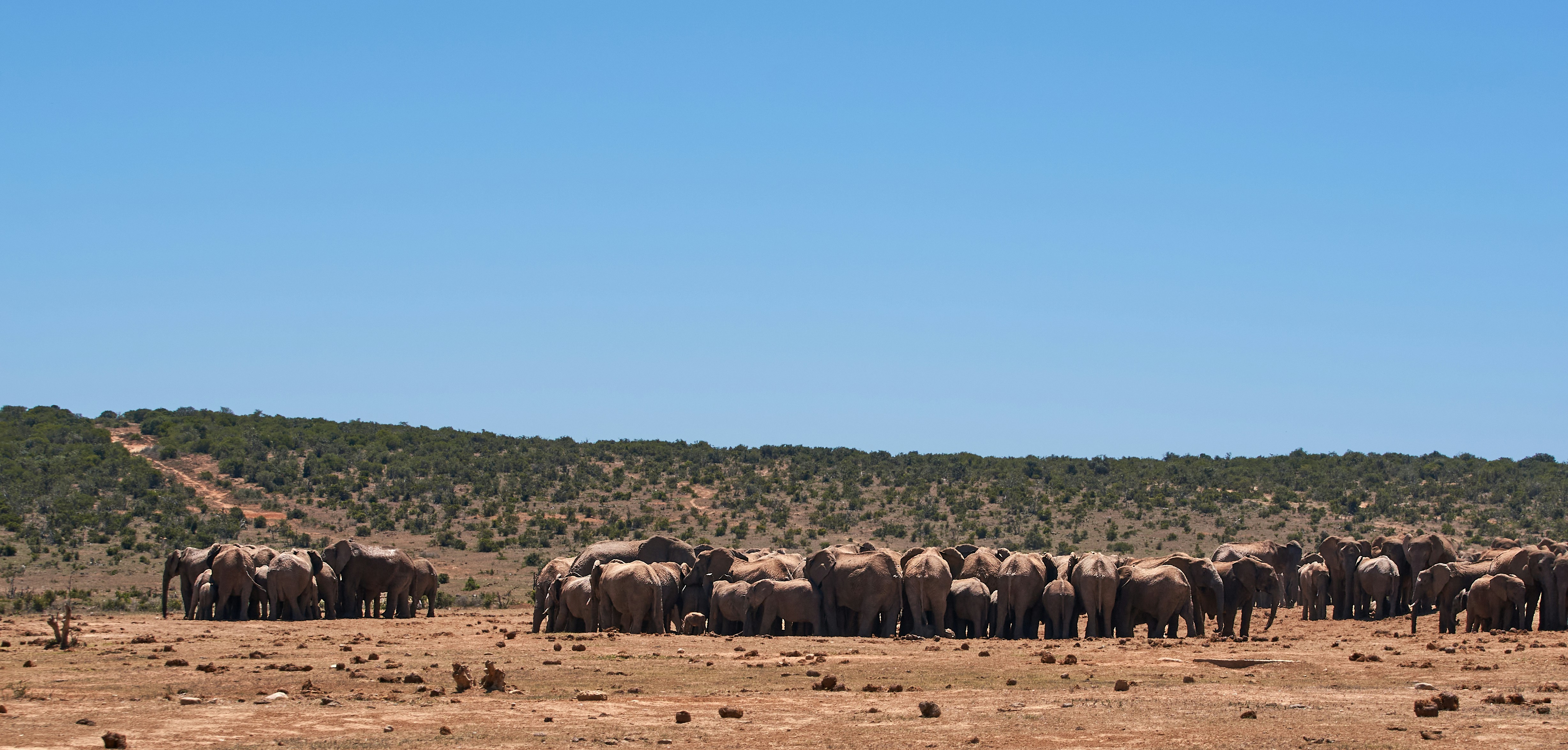
Every morning during Tarangire's dry season, something happens at the Tarangire River that most safari guests mistake for instinct. A matriarch pauses. The herd closes in. Four calves slip into a ring of adult females so tight you cannot see them from the vehicle. It is over in seconds. What you just watched has a name, a mechanism, and sixty years of field research behind it.
This is the guide to elephant bunching: what it is, why it works, who leads it, and what the aunts in the herd are doing while everyone watches the matriarch. It also covers what happens to a herd when that system breaks down and what a responsible game drive looks like from the elephant's perspective.
If you have seen it and wondered what you were really looking at, read on.
How Elephant Herds Protect Their Calves: Bunching, Allomothering and Matriarchal Leadership in Tanzania
By Wolfgang Valerian | Kijani Tours, Moshi, Tanzania
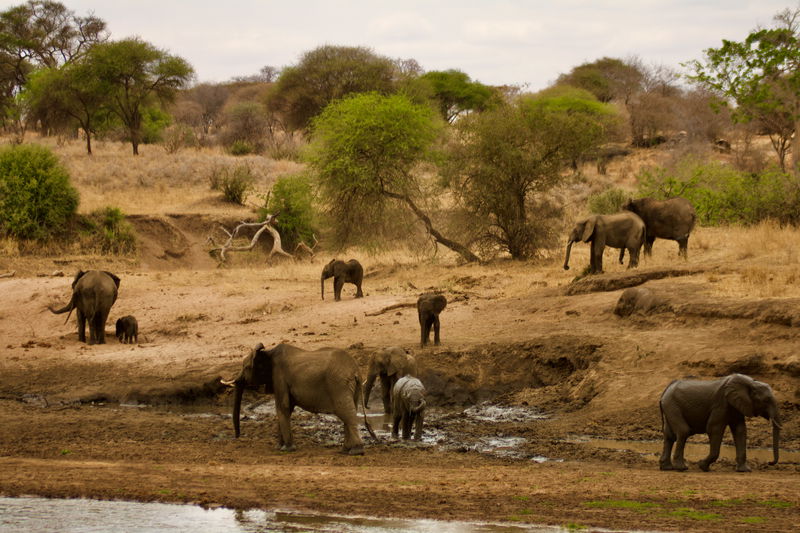
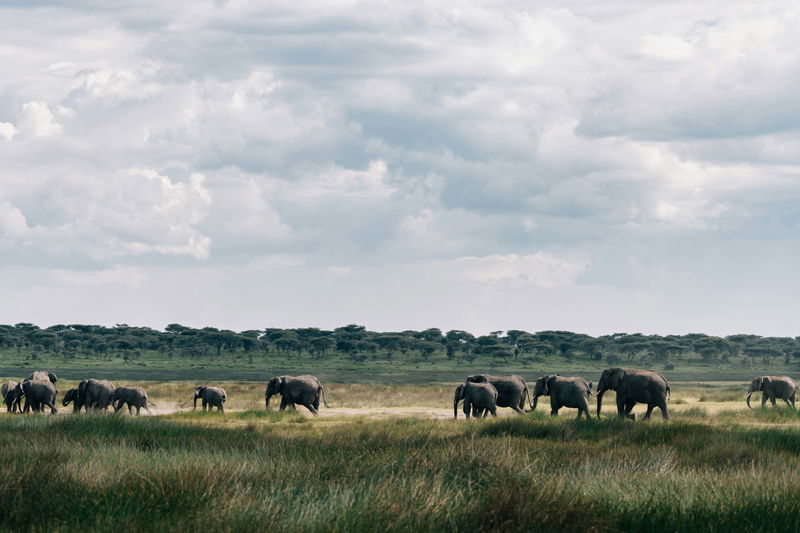
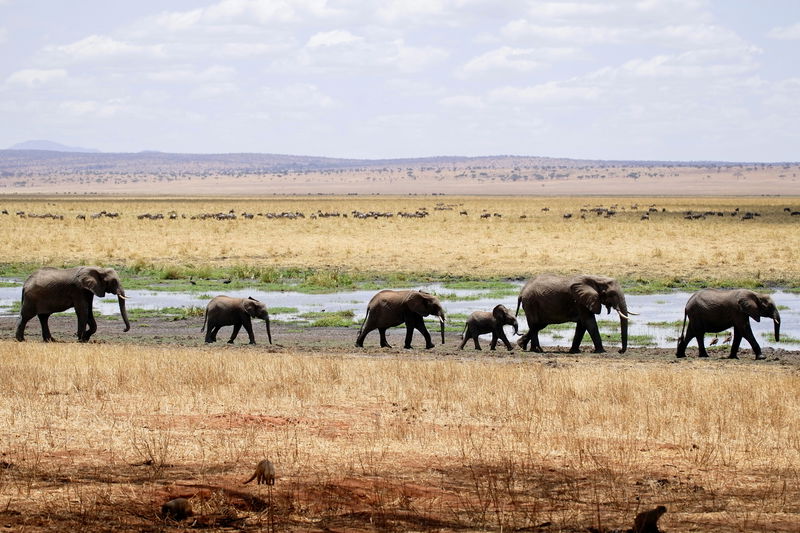
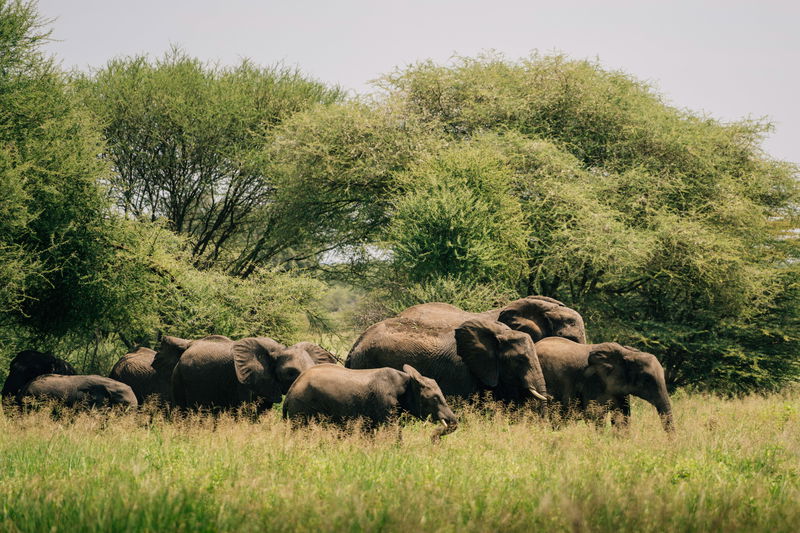
It is the dry season in Tarangire National Park, and the grass has turned the color of old paper. The Tarangire River is one of the few water sources that never fully disappears, and this morning, just after six, a matriarch is leading her family down the red-clay bank toward the water's edge. She is large, slow, and certain of where she is going. Behind her, pressed close on both sides, four calves move inside a ring of adult females whose shoulder height alone would stop most threats before they started. The calves are invisible from outside the ring. That is the point.
What you are watching is a behavior called bunching. It is not panic. It is not random crowding. It is one of the most well-documented protective strategies in the animal kingdom, passed down across generations through a social structure that researchers and field guides working in Tanzania's Tarangire-Manyara Ecosystem have studied for decades.
What Is Elephant Bunching?
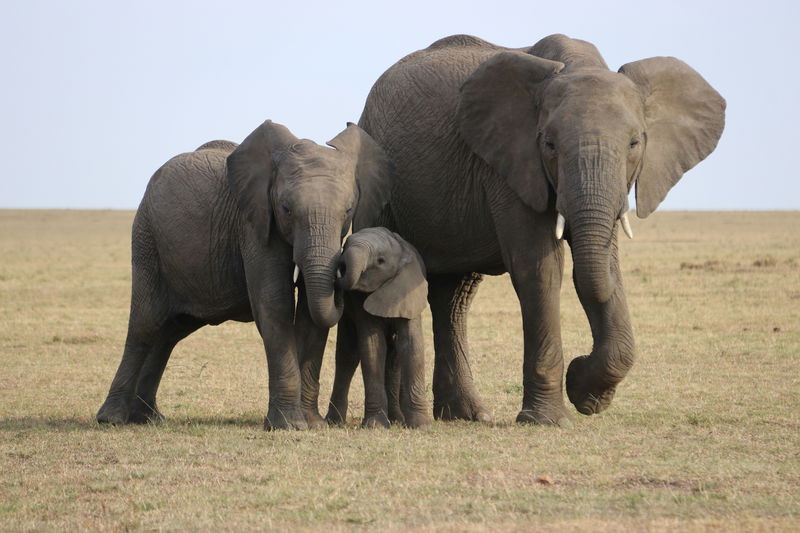
Bunching is the behavior in which adult elephants in a family group close ranks, positioning themselves tightly around calves so that the adults' bodies surround the youngest and most vulnerable members of the herd. The formation relies on a straightforward physical principle: a predator, a threat, or an unfamiliar disturbance cannot reach a calf at the center of a ring of three-toned adult females. But bunching is more than a physical barrier. It is also a communication event. As adults close in, they touch trunks, passing reassurance between individuals through touch. Low-frequency rumbles, sounds below the range of human hearing, travel through the group and through the ground itself, coordinating movement without alerting distant predators.
The behavior is documented across African elephant populations, from the Amboseli Basin in Kenya to Ruaha in southern Tanzania, but Tarangire offers some of the most observable bunching encounters on the continent. Tarangire National Park holds between 2,500 and 4,000 elephants during the dry season months of June through October, when herds converge on the Tarangire River from across the broader ecosystem. Family groups numbering 200 or more are regularly recorded. In those concentrations, with lion prides active along the riverbank and unfamiliar herds arriving daily, calves face genuine and varied threats. Adults respond accordingly.
The Matriarch: Living Memory at the Head of the Herd
Elephant herds are matriarchal. The oldest female leads, and her authority is not a social convention. It is practical survival intelligence accumulated over decades. Matriarchs in the Tarangire population can live to sixty years, and field research conducted by TAWIRI (the Tanzania Wildlife Research Institute) and the Wildlife Conservation Society through the long-running Tarangire Elephant Project shows that older females carry knowledge of water sources, safe migration corridors, and historical threat patterns that younger elephants simply do not possess. One documented example from the Amboseli long-term dataset, widely cited in elephant behavioral literature, shows that matriarchs over forty guided their herds to remote seasonal springs during severe drought years, enabling survival when younger-led groups did not locate water in time.
This means that when a matriarch raises her head, spreads her ears, and emits a low contact rumble, she is not reacting blindly. She is processing the current signal against a lifetime of stored experience. The herd responds to that signal because the matriarch's judgment has proven reliable, season after season. Bunching begins with her read of the situation and ends when she decides the threat has passed.
The consequences of losing a matriarch to poaching extend far beyond the loss of one elephant. Research published in Oryx and tracked in the Tarangire population data shows that poaching in the 1970s and early 1980s removed most experienced females from the herd's age structure, leaving young, female-biased groups without the leadership layer they needed. Recovery took decades, and the behavioral deficits were measurable: higher risk-taking and less reliable migration.
Allomothers: The Aunts Who Share the Load
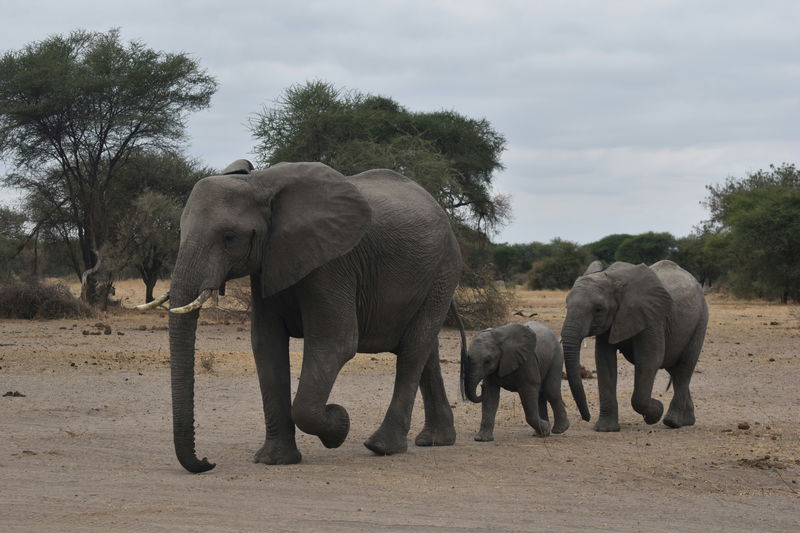
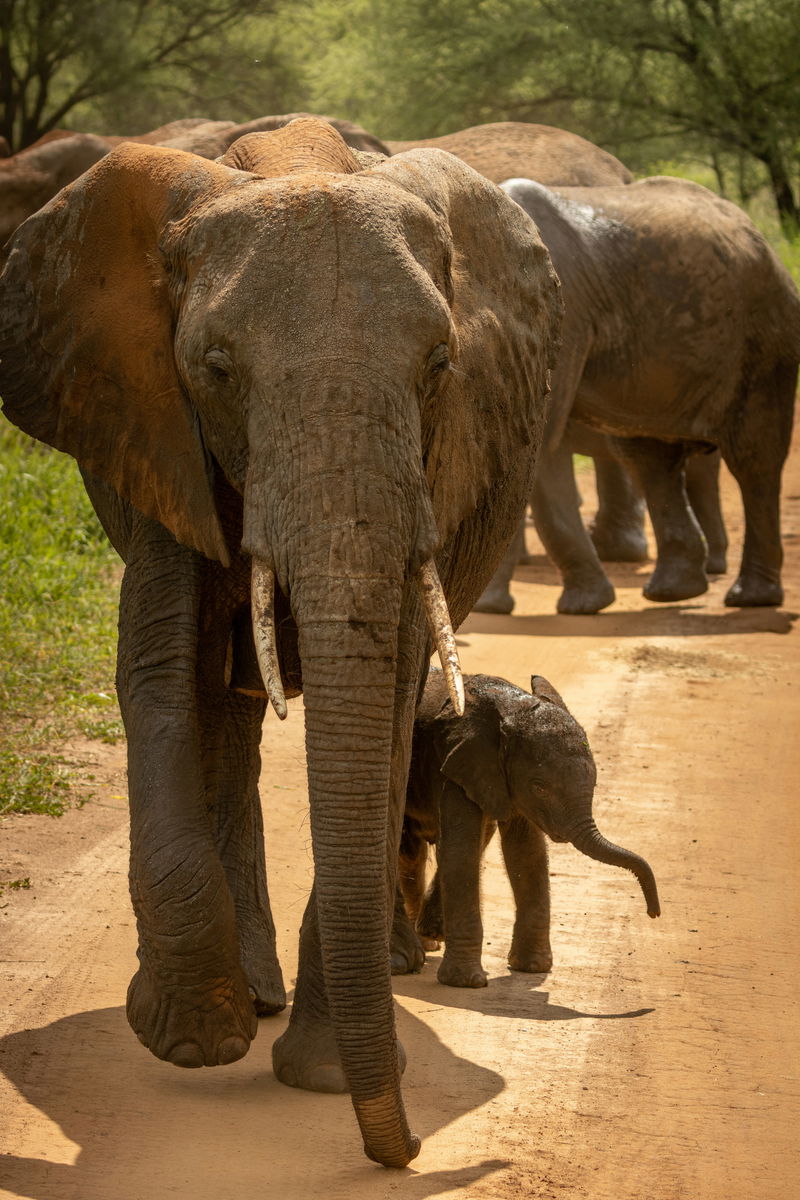
A calf in a healthy elephant family is not only in the care of its mother. Young females who have not yet given birth take on significant caregiving roles within the family unit. These females are called allomothers, and their contribution to calf survival is well-documented. Allomothers help guide calves away from danger, position themselves around calves during bunching events, offer physical reassurance through trunk contact, and, in some populations, have been recorded nursing calves that are not their own. The San Diego Zoo Wildlife Alliance describes allomothering as a key mechanism through which calves develop the social skills and environmental knowledge they need to survive independently.
For the herd, allomothering also serves as a form of training. A young female who has spent years protecting and guiding calves has already developed the instincts she will need when she has her first calf, typically between the ages of nine and twelve. The allomother learns by doing, and the calf benefits from multiple experienced caregivers. The herd's social fabric tightens. This is why family stability is not a conservation bonus. It is the mechanism by which elephant populations reproduce their own resilience.
How a Bunch Actually Works: The Sequence on the Ground
From a Kijani Tours game vehicle parked at a respectful distance on the Tarangire riverbank, the sequence of a bunching response is often visible in real time. The matriarch detects an anomaly first: a lion's movement in the acacias, a distant vehicle, or the scent of an unfamiliar bull. She pauses. Her ears spread wide, maximizing the surface area for sound collection. Her trunk lifts, tasting the air. That pause is a signal the whole herd reads.
Within seconds, adult females step inward. Calves, responding to the adults' changed posture and the contact rumbles passing through the group, move toward the center without being physically pushed. Older calves follow the younger ones. The adults orient outward, tusks facing the threat, trunks low and ready to lift or push a calf if necessary. The formation holds until the matriarch signals the all-clear, typically by relaxing her posture: ears folding back, trunk dropping, and forward movement resuming.
The whole event can last thirty seconds or thirty minutes, depending on the threat's persistence. What it does not look like is chaos. It looks like a rehearsed response, because in a very real sense, it is.
Emotional Cohesion: Why Bunching Is Also About the Bond
Elephants bunch in response to threats. They also bunch during grief, births, and after reunions with related family groups they have not seen for a season. The physical closeness is not only defensive. It is how elephants maintain the emotional bonds that hold the social structure together. Behavioral research from ElephantVoices, the research initiative founded by Joyce Poole and Petter Granli, documents trunk-to-mouth contact during bunching events as a specific reassurance behavior, a gesture that functions like a hand-hold, communicating 'I am here' between individuals under stress.
Understanding the emotional dimension of bunching changes what it means to witness it on safari. You are not watching animals react to danger. You are watching a social system regulate itself under pressure. The calves at the center of the formation are learning, in real time, what it feels like to be held by the community they belong to. That lesson accumulates over years. It becomes the basis for the allomothering behavior those calves will eventually provide to the next generation.
When Bunching Becomes a Warning Sign
Not all bunching in Tanzania is triggered by lions or predators. Herds under chronic human pressure (from persistent vehicle crowding, from fragmented habitats that force them through unfamiliar landscapes, and from the lasting trauma of poaching events) show elevated bunching frequency even in the absence of active threats. Researchers studying elephant populations in areas of heavy human disturbance document what is termed hypervigilance: herds responding to benign stimuli with full defensive formations, expending energy on protective behavior that would not be necessary in a stable landscape.
In Tarangire, the recovery from the severe poaching of the 1970s has been substantial. TAWIRI's Tarangire Elephant Project now monitors families with individuals over sixty years old, a sign that the age structure is recovering toward a functional matriarchal hierarchy. But outside the park boundaries, in the wider Tarangire-Manyara Ecosystem that stretches across community lands and agricultural zones, elephant families still navigate fences, farmland, and human settlements. The bunching that occurs in those spaces is different from what you see at the river in the dry season. It is a herd under load, holding itself together in a landscape that has not yet been made safe.
What Responsible Safari Travel Actually Means Here
Every vehicle around a bunching herd is a variable in the threat calculation the matriarch is running. This is not abstract ethics. It is elephant cognition in action. A matriarch who has learned to associate vehicle engines with danger will trigger a defensive formation at the sound of an engine that is too close, arrives too fast, or is positioned between the herd and the water. Her herd loses feeding time. Her calves experience a stress event. That cost accumulates over a season.
Kijani Tours operates in Tarangire, with guides trained to read elephant body language before positioning the vehicle. Distance is not fixed by a number. It is read from ear position, tail posture, and the direction of the matriarch's attention. When an elephant is comfortable with the vehicle's presence, the ears stay relaxed and forward. When tension rises, the ears spread, the head lifts, and the guide moves the vehicle back without the guest needing to ask or the herd needing to respond. The game drive you want is the one where the elephants treat your presence as part of the landscape. That is only possible if you never push to the point where they have to notice you as a threat.
Frequently Asked Questions
What is elephant bunching behavior?
Bunching occurs when adult elephants in a family group close ranks to surround calves, placing the youngest and most vulnerable at the center of a protective formation. It is triggered by threats (predators, unfamiliar sounds, vehicle pressure) but also occurs during emotionally significant moments, such as births, reunions, and periods of grief.
Why do elephant herds protect calves this way?
Calves placed at the center of an adult formation are physically out of reach of most threats. The formation also allows adults to communicate through infrasound rumbles and trunk contact, coordinating the herd's response while calming the calves. This behavior is learned through social exposure. Calves observe and experience it throughout their development.
Which Tanzanian Park is best for seeing elephant herds?
Tarangire National Park has the largest elephant population in northern Tanzania, with 2,500 to 4,000 elephants present during the dry season from June through October. Family groups converge on the Tarangire River, and encounters with large matriarchal herds, including calves and allomothers, are among the most consistent wildlife experiences in the country. Ruaha National Park in southern Tanzania also has very large elephant populations and less tourist pressure.
What is an allomother in an elephant herd?
An allomother is a female elephant who assumes caregiving responsibilities for a calf that is not her own. Allomothers are typically younger females who have not yet given birth. They help guide, protect, and, in some cases, nurse calves within the family group. Allomothering is a key mechanism for calf survival and a way for younger females to develop the parenting skills they will need when they have their own calves.
Does tourist presence affect elephant bunching?
Yes. Vehicles that approach too closely or too quickly, or from directions that block the herd's movement, can trigger defensive bunching. Responsible safari guides read elephant body language to position vehicles at safe distances that keep the herd relaxed. When vehicle pressure is managed properly, tourists can observe natural behavior, including genuine bunching responses to real environmental stimuli rather than stress-induced reactions to human presence.
How does a matriarch lead her herd during a bunching event?
The matriarch initiates the bunching response through posture and infrasound. She spreads her ears to gather sound, raises her trunk to sample scent, and emits low-frequency rumbles that signal the herd to close ranks. The herd responds to her threat assessment, informed by decades of accumulated environmental knowledge. When she relaxes, the formation disperses. The matriarch's experience, encompassing memories of specific water sources, predator territories, and seasonal risks, is the herd's irreplaceable leadership asset.
About This Guide
This article was written by Wolfgang Valerian, founder and visionary at Kijani Tours, a Tanzanian-owned tour operator based in Moshi. Kijani Tours operates responsible safari experiences in Tarangire, Serengeti, Ngorongoro, and Ruaha. Field observations in this guide draw on direct experience in the Tarangire-Manyara Ecosystem and are supported by published research from TAWIRI, the Wildlife Conservation Society, and ElephantVoices.
Tanzania Travel Guide | Safaris, Kilimanjaro, Beaches, Culture and Responsible Travel
Tanzania UNESCO World Heritage Sites: A Local Expert Guide
Wed July 29, 2026
Read This Article
Tanzania Safari Packing Guide: What to Wear and Bring by Season, Park, and Style (2026)
Thu July 23, 2026
Read This Article
A Tanzania safari runs on a strict set of practical constraints: a 15kg soft-duffel limit on light aircraft, a temperature swing of more than 20 degrees between a cold Ngorongoro dawn and a hot Tarangire afternoon, and a short list of things, camouflage prints and certain colours among them, that work against you rather than for you. Get those right and packing is simple. Kijani Tours runs game drives and walking safaris...
Tanzania Biodiversity Guide: Wildlife, Ecosystems and Conservation
Sat February 28, 2026
Read This Article
Introduction: Journey to the Heart of Tanzania There is something about Tanzania that refuses to stay behind when you leave. You carry it home without meaning to. The low rumble of hooves across the plains of the Serengeti. The sharp, cold breath of air near the top of Mount Kilimanjaro. The way the light settles over Lake Tanganyika at sunrise, turning the surface into hammered silver. Weeks later, a warm breeze hits...
Share This Post