

Think you really know hyenas? Picture this: under bright Serengeti sun, a lone hyena slips through the tall grass, focused on a herd of wildebeest. It’s not just some lazy scavenger you heard about. This animal hunts with smart tactics and sharp instincts. Sometimes it goes solo, sometimes the whole clan joins in. They track their prey, chase when it matters, and adapt on the fly. Fast thinkers, built for endurance, they...
The Ultimate 2026 Guide to Tanzania’s 17,000 lion`s and Legendary Prides
Posted by Wolfgang on Fri May 30, 2025 in Chronicles of the Lion Pride.
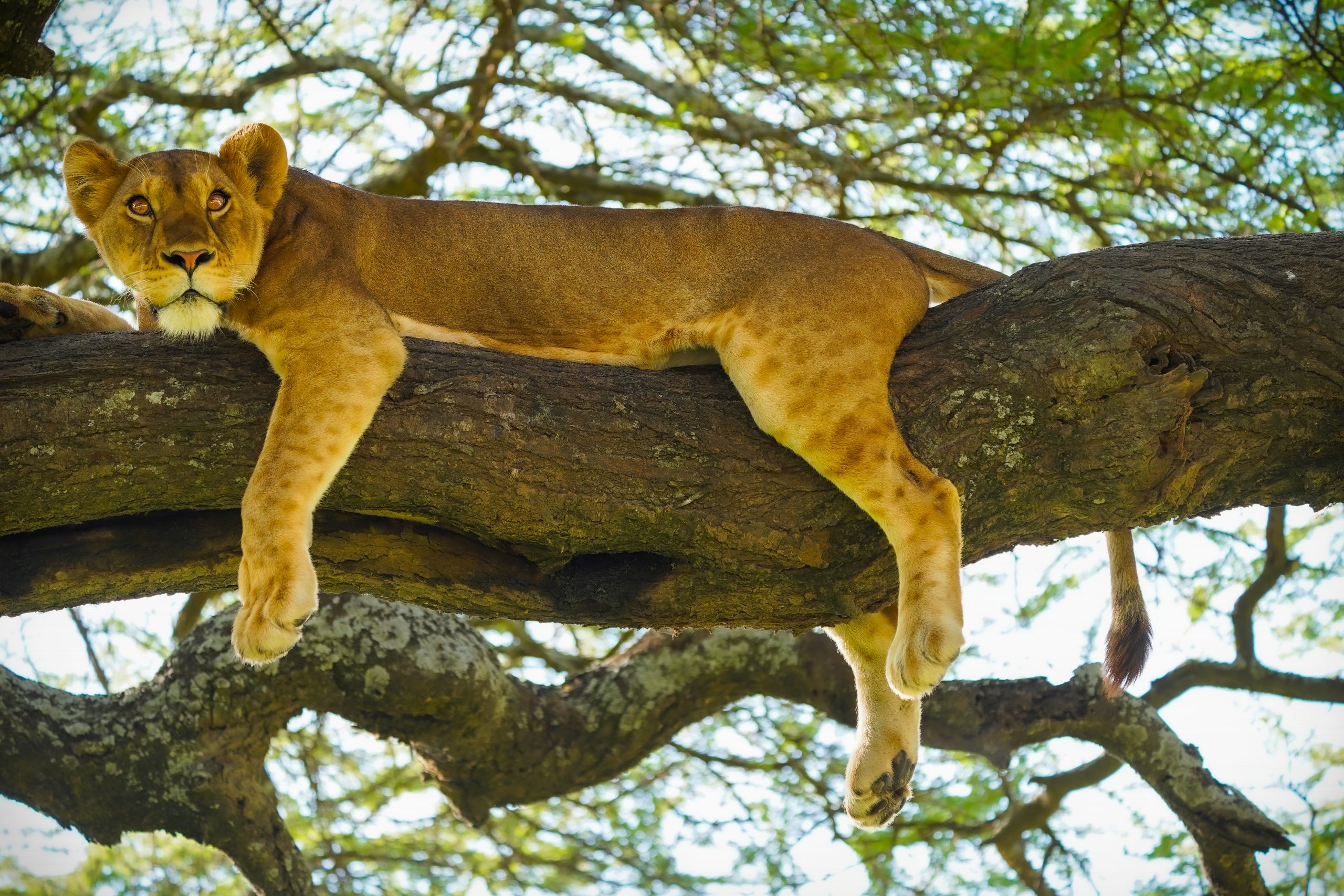
Night on Tanzania`s savannah feels different, heavier, quieter, as if the world is holding its breath. Then a male lion roars, deep and steady, and the sound travels through the darkness and straight into you. It’s not just noise; it’s presence. In many parts of the world, lions exist in pictures or behind barriers. Here, they are simply part of the land, moving through open plains and ancient landscapes where wild lives still unfold as they always have.
Watching them, you begin to see more than animals. You notice families resting together, mothers working as a team, cubs tumbling in play that doubles as practice for survival. You see strength, but also tenderness. Every place tells a slightly different story, shaped by the land and the seasons. Being here feels less like observing wildlife and more like quietly stepping into a world that has been going on long before us and, if protected, will continue long after.
Setting the Scene
Tanzania is more than a safari destination; it is the beating heart of Africa’s lion kingdom. With over 17,000 lions roaming its vast wilderness, nearly 70% of the continent’s population, this land offers travelers an unrivaled chance to witness prides in their natural glory. From the endless Serengeti plains to the miombo woodland of Selous Game Reserve or the lions of the rugged landscapes of Ruaha, lions thrive in protected habitats that cover nearly half the country. For guests of Kijani Tours, every roar across the savannah is not just a sound—it’s a reminder that Tanzania is truly the Lion Paradise of the World.
But the story goes deeper than numbers. Tanzania’s lions are safeguarded by pioneering conservation projects that weave together science, community, and tradition. Initiatives like Kope Lion in Ngorongoro and the Ruaha Carnivore Project in the south work hand-in-hand with local Maasai and other communities to reduce conflict, protect livestock, and ensure lions continue to reign for generations. These efforts mean that when you journey with Kijani Tours, you’re not only witnessing lions in action—you’re stepping into a living narrative of coexistence, resilience, and hope.
For travelers, this becomes something far deeper than a safari; it’s an education in balance and survival. Lions are apex predators, shaping ecosystems and keeping the wild healthy. By joining Kijani Tours, you become part of this story, supporting conservation, experiencing unforgettable encounters, and carrying home the roar of Africa’s most iconic species. Tanzania’s lions are not just seen; they are felt, lived, and remembered.
Chapter 1: The Super Prides (The Legacy of "The Killers")
If you have watched a nature documentary in the last decade, you have likely watched a Tanzanian lion. But the reality on the ground is more dramatic than any script. In the remote eastern Serengeti, an area closed to tourists for 20 years to allow cheetah populations to recover, a different kind of monster emerged. The Namiri Plains became the battleground for what researchers call "Super Prides."
While a typical lion pride consists of 6 to 12 members, the prides here shattered the mold.
The Story of the “Wauwaji” Coalition of the Namiri Plains
In the Namiri Plains of the Serengeti, the Wauwaji coalition, six male lions whose name means “The Killers” in Swahili, once ruled with unmatched strength. By joining forces with females, they created a rare “super pride,” a powerful alliance that allowed them to take down massive prey like buffalo and eland. For those lucky enough to witness it, their cooperative hunts were breathtaking, offering a glimpse into the extraordinary strategies lions use to survive in one of Africa’s most competitive landscapes.
By late 2018, the Wauwaji had vanished from Namiri, likely moving northwest in search of new territory. Their departure reshaped the balance of power, as smaller coalitions stepped in to fill the void. Yet their legacy remains, remembered not only for their dominance but for the way they influenced predator-prey dynamics across the Serengeti. For travelers, their story is a reminder that every safari is more than a viewing—it is a chance to witness history unfolding in a living, ever-changing ecosystem.
The Kibumbu Super Pride: At its peak, this mega-pride numbered nearly 30 lions. The once-mighty Kibumbu Super Pride eventually fractured into two distinct groups. One of these, known as Punda, is led by two youthful males around seven to eight years old. Their coalition oversees six lionesses and a lively cohort of ten sub-adult cubs. The other faction, numbering about twenty lions, remained under the leadership of Bob Junior, the son of the legendary Bob, who once ruled alongside his brother Ziggy. Despite boasting more than fifteen members, this pride does not qualify as a true Super Pride, since it lacks the typical dominance structure of five to six ruling males.
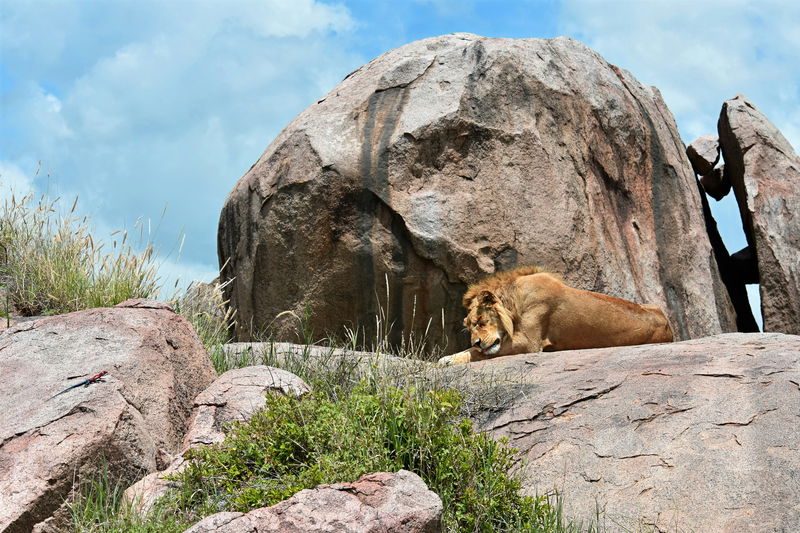
Beyond the Wauwaji and Kibumbu prides, the Serengeti has been home to several other legendary lion families whose stories continue to shape the ecosystem. One such group is the Moru Pride, often seen near the Moru Kopjes. Known for their resilience, this pride has endured repeated takeovers and challenges from rival coalitions, yet their lionesses remain the backbone of survival, fiercely protective of their cubs and territory. Travelers often encounter them resting among the granite outcrops, a reminder of how landscape and lineage intertwine in the Serengeti.
Another notable lineage is the Vumbi Pride found in the Western part of the park, made famous through wildlife documentaries for their dramatic hunts and intense battles with hyenas. Their cooperative strategies and strong female bonds highlight the adaptability of lion prides in areas of high competition. Similarly, the Masek Pride, based near the Ndutu region, has long been recognized for its role in following the Great Migration, often targeting wildebeest and zebra herds as they move across the plains.
Each of these prides tells a different story of survival—whether through dominance, resilience, or adaptation. Together, they illustrate the Serengeti’s living tapestry, where lion societies rise, fracture, and evolve, offering visitors not just sightings of lions, but glimpses into the ever-changing rhythm of life on the savannah.
The Legacy of Bob Junior, King of the Serengeti
No tale of the Serengeti feels complete without the legend of Bob Junior, son of the famed “Bob Marley.” For nearly seven years, he ruled as the undisputed “King of the Serengeti,” a reign that, in lion terms, was a lifetime of dominance. What made him unforgettable wasn’t just his powerful stature, but his calm, almost regal presence around safari vehicles. Unlike most lions who shy away, Bob Junior allowed travelers a rare closeness, offering them a glimpse into his world. For those who met him, it was more than a sighting; it was an encounter with a lion whose confidence and composure defined his reign.
In March 2023, his story took a dramatic turn. A coalition of three younger males, believed to be his grandsons or nephews, challenged him for power. Bob Junior did not run; instead, he faced them with quiet acceptance, embodying the natural rhythm of lion society where coalitions rise and fall. His legacy lives on in the generations that follow, shaping the Serengeti’s pride structures and predator dynamics. For travelers, his life is a reminder that the Serengeti is a living landscape, its history written not in books, but in the lives of lions whose stories unfold before our eyes.
The Kijani Context: When you travel with us to the Central Serengeti or Namiri Plains, you are traveling through the graveyard of empires. Our guides know these lineages. We don't just point at a lion; we tell you, “That is the grandson of Bob Junior. See the scar on his left flank? He got that fighting for the Seronera River crossing.” You are stepping into a Game of Thrones episode that has been running for millennia.
Chapter 2: The Biology of Royalty (Why the Mane Matters)
Why does the King wear a crown that could kill him? The male lion is the only cat species with a mane. For centuries, naturalists (including Darwin) believed it was armor to protect the neck during fights. But if you watch lions fight, as we often do on safari, you will notice a flaw in that theory: lions rarely attack the neck. They attack the hindquarters and the spine to paralyze their opponent.
The "Handicap Principle"
Groundbreaking research by Craig Packer and Peyton West in the Serengeti solved the riddle. The mane is not armor; it is a heat trap. Dark hair absorbs more solar radiation than blonde hair. In the blistering heat of the equator, a male with a thick, black mane is voluntarily raising his body temperature. He is constantly overheating. He is panting while others are resting.
So, why do it? It is a biological billboard based on the Handicap Principle. He is signaling to females and rivals:
"I am so genetically superior, so well-fed, and so flooded with testosterone that I can survive this debilitating handicap and still beat you."
What to Look For:
A. The Blonde vs. The Black mane:
In the wild, lion coalitions often tell a story far deeper than appearances. Picture two brothers: one crowned with a thick, midnight-black mane, the other with a thinner, sun-bleached fringe. To the casual eye, it might seem like a matter of style, nature’s fashion statement. But in truth, those manes are living records of health and strength.
The darker-maned brother carries within him higher levels of testosterone, a sign of dominance and vitality. His mane is not just a symbol of beauty, but a shield against parasites, a testament to resilience. His lighter-maned sibling, though equally fierce in spirit, bears the marks of vulnerability, his scraggly mane whispering of battles fought against illness and the quiet toll of survival.
This contrast is more than biology; it is a reminder of how nature writes its truths in visible ways. The mane becomes a language, a story of endurance, health, and the unseen struggles that shape life in the savannah. And when we look closer, we realize that every strand of hair is not just decoration it is a chapter in the lion’s living biography.
B. The Female Choice
In the heart of the savannah, choices are rarely random; they are written in the language of survival. When lionesses scan the horizon of their pride, their eyes are drawn to the males with manes as dark as midnight. It isn’t vanity that guides them, nor mere preference for beauty. It is instinct, sharpened by generations, whispering that these males carry something precious: resilience.
Studies reveal that lionesses overwhelmingly choose the dark-maned males as their partners. To them, those thick, shadowy manes are more than decoration; they are signals of strength, health, and endurance. By choosing these males, lionesses are not just selecting a mate; they are safeguarding the future. They want their cubs to inherit the “survivor genes,” the hidden legacy of vitality that increases the odds of thriving in a world where only the strongest endure.
This is nature’s quiet poetry: a mother’s love expressed not in words, but in choices that echo across generations. The mane becomes a promise, a living testament that survival is not just about today, it is about tomorrow’s cubs, tomorrow’s pride, tomorrow’s story.
Chapter 3: The Art of War (Hunting Strategy)
We have all heard the campfire tale: the lionesses do all the heavy lifting while the "lazy" King just naps in the shade. But if you look closer, what looks like a midday snooze is actually a high-stakes tactical choice. Nature played a bit of a trick on the males: that majestic mane is essentially a neon sign for prey and a massive heat trap, making stealth almost impossible under the African sun.
Instead of a lopsided workload, the pride operates like a specialized army. The lionesses are the Special Forces agile, silent, and precise hunters. The males? They are the Heavy Artillery, conserving every ounce of energy to defend the kingdom and the cubs with sheer, explosive force. It is not laziness; it is a brilliant division of labor where everyone has a role in the survival of the crown.
The "Wing and Centre" Formation
Lion hunting is not a chaotic scramble; it is a coordinated military operation. Research utilizing GPS collars has mapped their strategy:
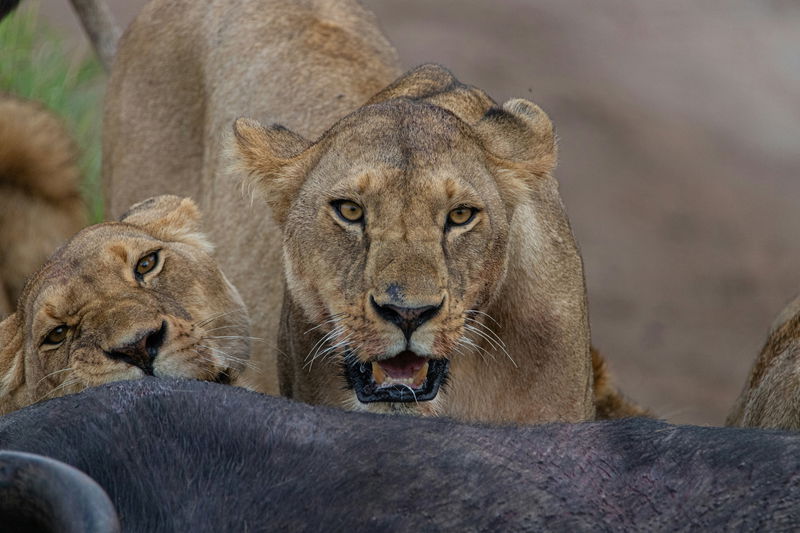
The Wings: The younger, faster lionesses fan out to the flanks, circling wide around the prey (zebra or wildebeest). They remain hidden in the grass.
The Centre: The older, more experienced lionesses show themselves. They don't charge; they just make their presence known.
The Trap: The prey, seeing the "Centre" lions, panics and runs away from them—directly into the jaws of the waiting "Wings."
The Ruaha Difference: Elephant and Giraffe Killers
Across most of Africa, lions give elephants a wide berth. The towering giants, capable of crushing a lion with ease, are simply too formidable to challenge. Yet in Ruaha National Park, a remarkable story unfolds, one that reveals how necessity can reshape behavior and culture in the wild.
When the Great Ruaha River decreases to a mere trickle during the dry season, survival demands innovation. Here, vast “Super Prides” of more than twenty lions unite, their strength magnified by numbers. Together, they dare to confront sub-adult elephants, turning their focus to prey that few lions elsewhere would attempt. This extraordinary adaptation, seen in almost no other place on earth, reminds us that even in nature, desperation can spark courage, and survival can inspire the rewriting of ancient rules.
Kijani Tours Insight:
Witnessing a full lion hunt is a privilege few ever experience; it demands patience, timing, and luck. Yet the prelude to the chase, the silent choreography before the storm, is far more common if you know how to read the signs.
Guides will teach you to watch for the “stare”, that electrifying moment when five lionesses suddenly halt, ears pricked, bodies sinking low in perfect unison. No words are spoken, no sound is made, yet the message is clear. In that frozen instant, the plan is communicated, and the savannah holds its breath, waiting for the strike.
Chapter 4: The Sociology of the Pride (The Crèche System)
A lion pride is more than a group; it is a sisterhood woven through bloodlines and generations. The females are bound together as mothers, daughters, aunts, and cousins, their lives interlaced in a tapestry of kinship. They are the true keepers of the land, the guardians of territory that passes from one generation of lionesses to the next.
The males, though powerful, are only passing figures in this story. They arrive as tenants, holding their place for a few fleeting years before being challenged and replaced by rivals. The pride endures because of the women, their unity, their resilience, and their unbroken bond that ensures the survival of the lineage long after the roar of any single male fades.
The Synchronized Births
One of the most remarkable survival strategies in the lion world is something called synchronous estrus. When a pride is taken over, the new males often commit a brutal act—killing the existing cubs to force the females back into heat. It is a harsh reality of the savannah, where dominance and lineage are constantly contested.
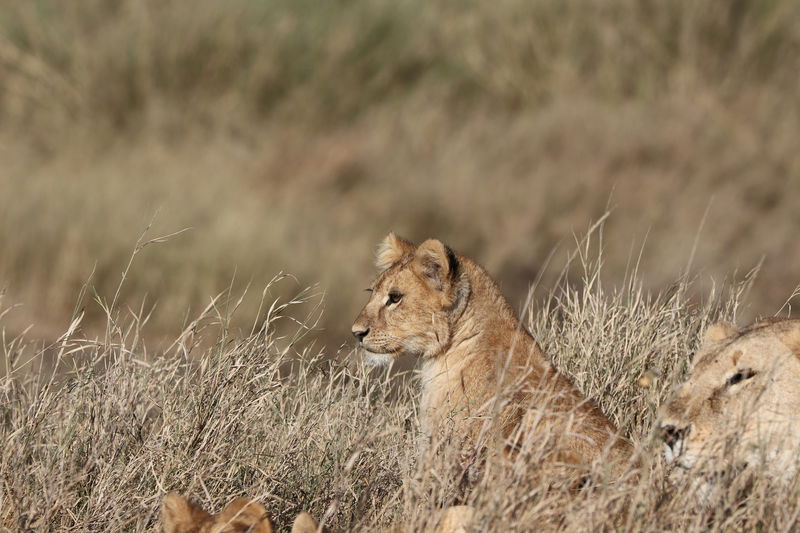
Yet the lionesses respond with resilience. They often conceive at the same time, aligning their cycles so that their cubs are born together. This creates what is known as a Crèche—a nursery where all the cubs are roughly the same age, raised side by side. In this shared motherhood, the sisters of the pride nurse, protect, and teach each other’s young, weaving strength from tragedy and ensuring that the next generation grows up in unity. It is nature’s way of turning loss into collective hope.
Communal Nursing
Within a lion pride, motherhood is not an individual burden but a collective vow. Each lioness extends her care beyond her own offspring, nursing any cub in need and weaving a bond of survival through shared milk and protection. The cubs grow together in the crèche, a communal nursery where trust, warmth, and guardianship are spread across many mothers. This system matters deeply because a cub’s life is fragile; while some lionesses hunt, others remain as vigilant sentinels, ensuring no little one is left alone. Against the constant threats of hyenas and leopards, this sisterhood becomes a living shield, their unity transforming vulnerability into resilience. The crèche is more than a nursery—it is a circle of kinship, a sanctuary where cooperation nurtures fragile beginnings into strong futures, giving each cub the chance to grow, play, and one day roar across the savannah.
The "Ghost Years" of the Male lions
What happens to the male cubs? Around age 3, when their manes start to grow, they are banished. They become nomads. For the next 2-3 years, they wander the dangerous "interstices" between territories. They are homeless, stressed, and often starving. This is the Refining Fire. Only the strongest, smartest, and most cohesive coalitions of brothers survive this period to challenge for a pride of their own.
The Statistic That Haunts: Only 1 in 8 male cubs born in the Serengeti survives to become a pride male. When you see a magnificent adult male roaring on a rock, you are looking at a genetic lottery winner.
Chapter 5: Regional Guide (Where to Find Your Pride)
Tanzania is a land so vast it feels endless, a place where every horizon hides a different story of the wild. Saying “I’m going on safari” barely scratches the surface, because here, each destination offers something unique, something unforgettable.
If your heart longs for the thunder of hooves and the drama of the Great Migration, the Serengeti is where you belong. If you dream of watching elephants wander gracefully among ancient baobabs, Tarangire will move you. For raw, untamed predator-prey encounters, Ruaha’s or Selous`s remote wilderness is unmatched. And if its beauty painted in pink by flamingos you seek, Lake Natron will take your breath away.
In Tanzania, the question isn’t whether to go on safari; it’s where your spirit wants to be part of the story. Each choice is a doorway into Africa’s living classroom, where nature teaches through awe, struggle, and wonder.
The Lions of Serengeti (The Drama Capital)
Step into the heart of the Serengeti, where the drama of the wild unfolds in every sunrise. Here, lion prides reign as the true monarchs of the savannah, family groups bound by loyalty, survival, and the rhythm of nature. A pride often consists of lionesses working together to hunt wildebeest and zebra, while powerful males guard their territory against rivals. Each encounter tells a story: battles for dominance, tender moments between mothers and cubs, and the quiet strength of coalitions that shape the destiny of the pride.
Decades of research reveal that medium-sized prides thrive best, balancing cooperation with competition. Yet, in times of abundance, “super prides” of more than 40 lions have been seen roaming the plains, a breathtaking sight that reminds us of the Serengeti’s richness. As the Great Migration sweeps across the land, these prides position themselves strategically along rivers and grasslands, waiting for the herds that sustain them.
At Kijani Tours, you step beyond sightseeing into the living story of the savannah. Picture a lioness gliding low through golden grass, every movement a lesson in patience. Hear a male’s roar thunder across the rocky kopjes, a sound etched in ancient power. These are not mere sightings; they are encounters with Africa’s untamed spirit, raw and unforgettable.
Best For: First-timers, photographers, and seeing large numbers of cats.
The Scene: Endless short-grass plains of Ndutu in Southern Serengeti. The backdrop of the Great Migration (1.5 million wildebeest) ensures the lions here are well-fed and incredibly active.
The Kijani Tip: Go to the Moru Kopjes. These granite rock formations are the favorite lookout points for lions (the real-life "Pride Rocks"). It’s the best place to see cubs.
The lions of Ngorongoro (The Fishbowl)
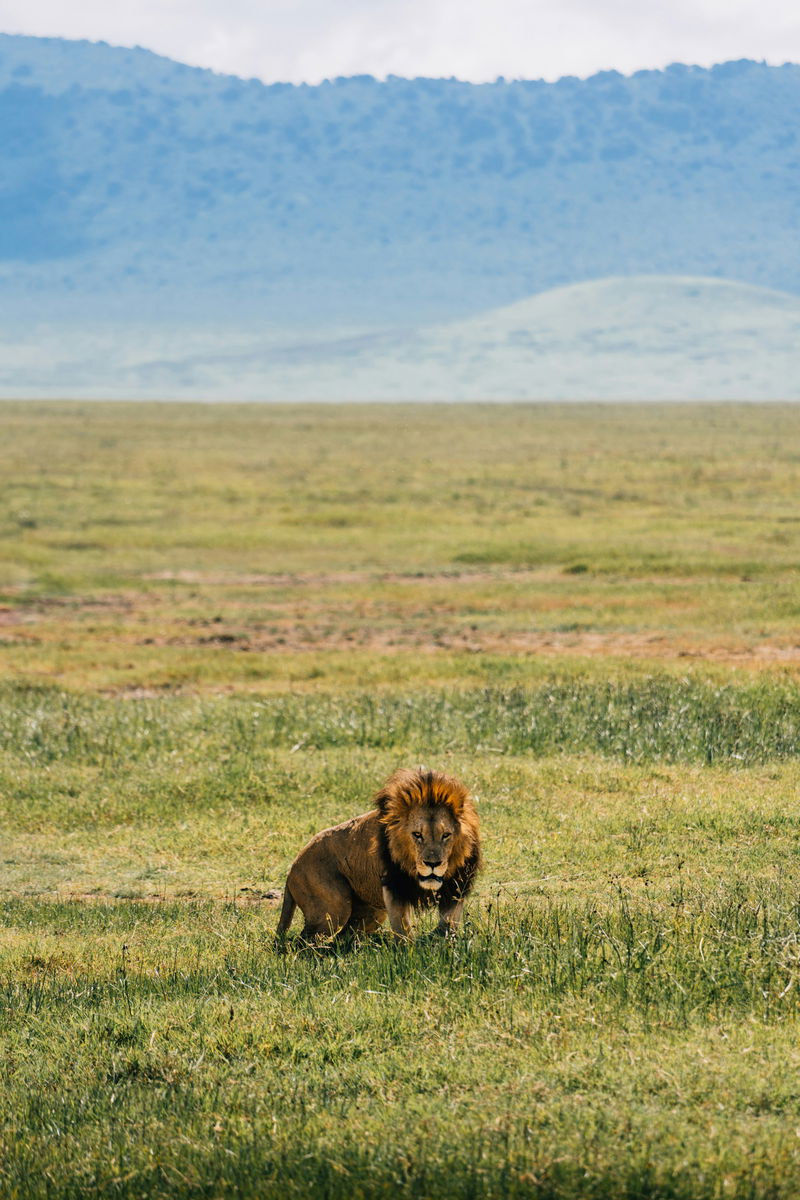
Within the emerald walls of the Ngorongoro Crater, a hidden kingdom of lions thrives—each pride carrying stories of resilience and survival that stretch back generations. Unlike their Serengeti cousins, these lions live in a more enclosed world, shaped by the crater’s unique geography and dense wildlife. Researchers have long marveled at their lineage, tracing it to a small founding population, which makes every roar across the caldera rim not just a sound of dominance, but a living echo of history. Lionesses here move with quiet precision through grasslands teeming with zebra and wildebeest, while males guard territories in a constant dance of rivalry and endurance.
For travelers, meeting Ngorongoro’s lions is more than a safari; it is stepping into a living epic. Imagine watching a pride gather at dawn, golden light spilling across the crater floor, or hearing the thunderous roar of a male that seems to shake the very earth beneath your feet. Conservationists remind us that these lions’ survival depends on corridors linking Ngorongoro to the wider ecosystem, ensuring their bloodlines remain strong. At Kijani Tours, we invite you to not just witness these lions, but to feel the pulse of their world, an adventure where science, storytelling, and raw wilderness converge in one unforgettable encounter.
Best For: Guaranteed sightings and close-ups.
The Scene: A volcanic caldera teeming with 25,000 animals. The lions here are the most densely packed in the world.
The Reality Check: The Crater lions are genetically isolated. Because the walls are so steep, new blood rarely enters. It is a "zoo in the wild," beautiful but fragile.
1. The Lions Ruaha National Park (The Frontier)
In the vast wilderness of Ruaha National Park, where the red earth meets endless skies, three lion prides rule the land, each with its own kingdom, its own story.
The Glade Pride
At dawn, the Glade Pride emerges from the open grasslands. They are hunters of light and shadow, moving silently across the plains where antelope graze. Known for their boldness, the Glade lions often test their strength against buffalo herds, their roars echoing like thunder across the savanna. Travelers who pass through the glades speak of their golden coats shimmering in the morning sun, a sight both majestic and fearsome.
The Baobabs Pride
Deep among the ancient baobab trees, another pride thrives. The Baobabs Pride is patient, wise, and enduring—like the trees themselves. They rest in the shade of the giant trunks, guardians of Ruaha’s timeless heart. Their hunts are strategic, often waiting until dusk when the shadows stretch long. The baobabs stand as silent witnesses to their triumphs and struggles, roots entwined with the stories of generations of lions.
The Riverine Pride
Where the Great Ruaha River winds through the park, the Riverine Pride reigns. They are masters of water and reeds, their territory rich with hippos, crocodiles, and thirsty prey. The river’s song is their lullaby, and its banks their battlefield. Cubs play along the shallows while lionesses stalk silently through papyrus thickets. The Riverine lions embody resilience, thriving where land and water meet.
Together, these three prides form the living heartbeat of Ruaha. Each pride tells a different story of courage, patience, and survival. And when their roars rise in unison under the starlit Tanzanian sky, it feels as though the whole park itself is alive, speaking in the voice of lions.
Best For: Purists, repeat visitors, and those who hate crowds.
The Scene: Baobab-studded landscapes, dry riverbeds, and red earth. Ruaha holds 10% of the world’s lion population.
The Vibe: This is raw Africa. The lions are bigger, wilder, and hunt larger prey (buffalo and giraffe). You can go 3 days without seeing another vehicle.
The Lion of Nyerere National Park (Part of Selous Game Reserve)
Deep within the untamed core of Nyerere National Park, where the Rufiji River winds its way through vast expanses of miombo woodlands and open savannas, the lions reign over ever-changing territories. Each pride carries its own untamed saga, forged in the heartbeat of the wild and guided by the rhythms of the land, shaped by dust, wind, danger, and the life-giving flow of water that decides who thrives and who endures. Within Nyerere National Park, three lion prides stand out as the most renowned. Each has its own territory, history, and unique way of life, and together they reveal the fascinating social dynamics of lions in the wild. Below, we explore their stories.
The Savannah Pride
In the sunlit grasslands, the Savannah Pride flourishes. They are daring hunters, frequently observed moving together across the plains, their golden eyes set on herds of zebras. Their roars echo like distant drums, proclaiming their supremacy to all who traverse the open fields.
The Woodland Pride
Within the dense underbrush and cool acacia woods of Selous, the Woodland pride resides. Cunning and observant, they capitalize on the thick vegetation to pursue their prey. Passersby seldom catch a glimpse of them until the chase begins—silent forms that erupt with sudden strength.
The River Pride
By the grand Rufiji River, the River Pride holds dominion. Their realm is abundant with hippos, crocodiles, and thirsty antelopes. Cubs frolic at the water’s edge while lionesses guard the shores. The river serves as both their source of life and their arena, where survival unfolds in waves and roars. United, these prides reflect the essence of Selous: power, endurance, and determination. As darkness descends and their roars echo into the starry night, the very wilderness appears to communicate in the dialect of lions, eternal, wild, and unforgettable.
Best For: Boat safaris and walking safaris.
The Scene: A water-world of ox-bow lakes and the Rufiji River.
The Behavior: Here, you see lions interacting with water—swimming across channels to get to islands, hunting along the muddy banks.
Chapter 6: The Conservation Equation
In 2026, the question is no longer "Where can I see lions?" It is "How can I save them?"
Lions are disappearing. In the last 25 years, Africa has lost 50% of its lions. The culprit isn't usually trophy hunting; it’s human-wildlife conflict. As human populations grow, livestock moves closer to lion territory. If a lion kills a cow, a herder might retaliate with poison.
The "Lion Guardians" (Ilchokuti)
This is where hope lies. Organizations like KopeLion in Ngorongoro and the Ruaha Carnivore Project have revolutionized conservation. They employ the Ilchokuti, a traditional Maasai and Barbaig warriors who were once lion hunters, to become "Lion Guardians."
A. They track lions daily.
B. They warn herders via mobile phone when lions are near: "The pride is at the watering hole, take your cows south."
C. They help reinforce "Living Walls" (chain-link bomas) to protect livestock at night.
The Economic Truth: Lions are expensive to keep alive. They require vast tracts of land that could be used for farming. When you book a safari with Kijani Tours, you are paying the "rent" for their habitat. Your park fees fund the rangers. Your lodge stay employs the local community, proving that a lion is worth more alive than dead. You are not just a tourist; you are an investor in their survival.
Chapter 7: Planning Your 2026 Lion Safari
Ready to witness the Kingdom? Here is how to do it right.
The "Slow Safari" Mindset
The biggest mistake travelers make is the "Checklist Mentality"—racing around to see the Big 5 in two days. Lion behavior is subtle. It unravels slowly.
The Strategy: We recommend spending at least 3 nights in one location.
The Routine: Spend a whole morning with one pride. Watch them wake up. Watch the cubs annoy their fathers. Watch the greeting ceremonies. You will learn more in 4 hours of stillness than in 4 days of racing.
Best Time to Visit Tanzania and watch lions in action
Jan–March (Calving Season): From January to March, the Southern Serengeti’s Ndutu region becomes the stage for one of nature’s most dramatic spectacles, the calving season. Hundreds of thousands of wildebeest drop their calves across the plains, filling the landscape with new life. But with this abundance comes danger, as predators like lions seize the opportunity, turning the savannah into a theater of survival.
For travelers, this is the Serengeti at its most intense: lion prides on the hunt, wildebeest mothers fiercely protecting their young, and the air thick with tension and drama. It’s a rare chance to witness the raw cycle of life and death up close, where every sunrise promises high action and unforgettable encounters in Africa’s wild heart.
June–October (Dry Season): This is the best time to visit Tanzania for lion watching because it is the dry season, when wildlife gathers around rivers and springs, making sightings more frequent and dramatic. With little rainfall, the skies are clear, travel conditions are easier, and the thinning grasslands improve visibility. This period also coincides with the Great Migration in the Serengeti, where millions of wildebeest and zebra move north, creating unforgettable predator-prey encounters as lions take advantage of the abundance of prey.
Travelers should note that July and August are peak safari months, so early bookings are essential. Nights can be cool in areas like Ngorongoro, requiring warm clothing for morning drives, and landscapes are drier and dustier, but this trade-off ensures the most reliable lion sightings. In short, the dry season offers the perfect blend of comfort, spectacle, and adventure, making June to October the ultimate window for experiencing Tanzania’s lions in their natural glory.
Photography Gear Guide
If you are traveling to Tanzania with a camera in hand, photographing lion prides is one of the most rewarding experiences the savannah can offer. These majestic animals are not just symbols of strength; they are families, living in complex social structures that tell powerful stories of survival and kinship. Capturing them requires more than luck; it calls for patience, respect, and an understanding of their behavior. This guide will help you step into their world, showing you how to frame not just images, but moments that reveal the raw beauty and emotion of Africa’s lions.
Lens: You need reach. A 100-400mm is the minimum. A 600mm lens is ideal for eye close-ups.
Angle: Ask your Kijani guide to position the vehicle low. We use open-sided vehicles that allow you to get down to the lion's eye level (safely).
Lighting: The "Golden Hour" (6:30 AM – 7:30 AM) is non-negotiable. The light is soft, and the cats are active. By 10:00 AM, the heat haze kills sharp photos.
Final Reflection: Where the Story Rests
As the sun dips below the horizon, painting the clouds in shades of bruised purple and burnt orange, the African savannah begins its final act of the day. You sit in the silence of the Kijani Tours vehicle, the dust settling around you. Just meters away, the King of the Serengeti stands. He doesn't look at the camera; he looks through the soul of the wilderness itself. He lets out one last, thunderous roar that shakes the air in your lungs, a sound that says, I am still here. This land is still mine.
The "movie" of Tanzania doesn't end when you fly home. It stays in the way you tell stories to your friends. It stays in the sudden realization of how small we are, and how magnificent the wild remains. The gates to the kingdom are open. The pride is waiting. The only question left is: Will you be there to hear the roar?
Are you ready to feel the vibration?
Start Your Journey
Contact the Kijani Tours team today https://www.kijanitours.com/contact/contact-us/. Let’s build an itinerary that goes beyond the checklist and deep into the pride.
Plan Your Personalized Safari Experience
Start planning a safari made just for you. Tell us your travel style, interests, and timeline, and we’ll design a meaningful, eco-friendly journey through Tanzania’s wildest and most beautiful places.
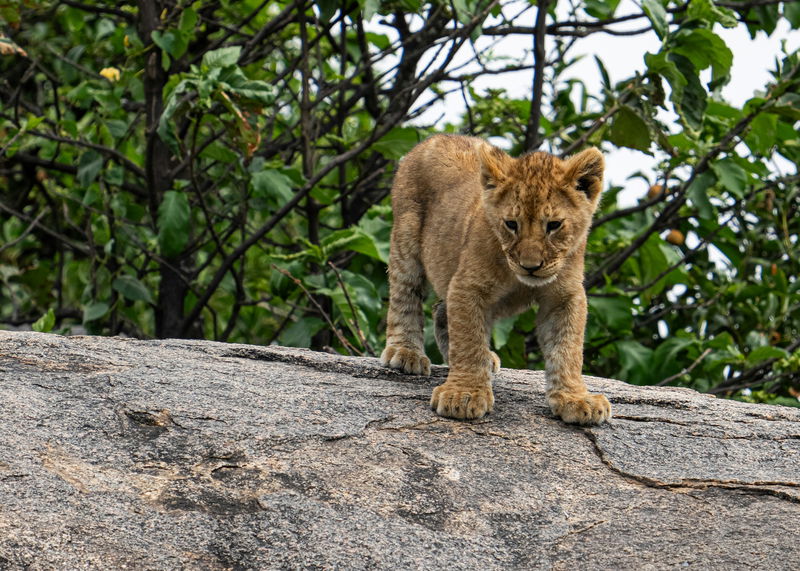
Exploring Tanzania with Purpose: Travel, Connection, and Giving Back
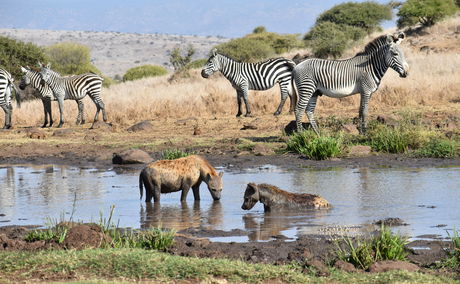
Do Hyenas Hunt? Secrets of the Savanna’s Hidden Hunter
Sat March 21, 2026
Read This Article
Responsible Trekking in Moshi and the Eastern Arc Mountains
Sat February 21, 2026
Read This Article
The trail doesn't just take you up a mountain; it takes you into a secret that Northern Tanzania has been whispering for millennia. Beyond the postcard-perfect summit of Kilimanjaro lies a world where the air smells of wild jasmine and ancient moss, where stone-walled villages in the Pare Mountains still follow the rhythms of the moon, and where the "sky islands" of the Usambaras hide creatures found nowhere else on Earth. But...
Summit to Savannah: The Ultimate Kilimanjaro and Safari Combo
Thu February 19, 2026
Read This Article
Before dawn on Mount Kilimanjaro, every step toward Uhuru Peak is a test of will against thin alpine air. You move through five distinct ecosystems—rainforest, moorland, alpine desert, and arctic summit—until sunrise spills over Africa’s highest point. The climb demands resilience, but it offers something rare in return: clarity, strength, and a deep connection to the land. Days later, the stillness of the summit gives way to the sweeping plains of the...
Share This Post